
Introduction and acknowledgements
Fatfreq are a Singaporean in-ear monitor manufacturer, originally producing IEMs for stage and recording musicians. Over recent years they have built up a bit of a cult following in audiophile circles for their more “audiophile basshead” tunes models in the Maestro series, using some interesting proprietary tuning tech to deliver models with frankly insane levels of bass output. I first came across them at Canjam London back in 2024, sampling some of their new Maestro series. More recently at this year’s London event, I got a chance to check out their first foray into the world of planar magnetic IEMs with their collaboration with Effect Audio, the Quantum. I was so impressed with the sound after my initial demo, I ended up coming home from Canjam with a set – many thanks to Yeo from Fatfreq for the excellent “tour” around their various models, and for pointing me in the direction of this (not so) little gem.
As with all my reviews, the words and opinions expressed below are 100% my own, with no input sought or received from the manufacturer, and no incentive for posting a good writeup. This review is based on a solid month’s listening as my daily driver IEMs, so there will be somewhere north of 100 hours on the drivers, for those who care about things like burn in. Please take the views expressed with the requisite pinch of salt – this is just my honest take on what I’m hearing.
At time of writing, the Quantum is selling for £679 in the UK, and around the $750 mark elsewhere.
Unboxing and accessories
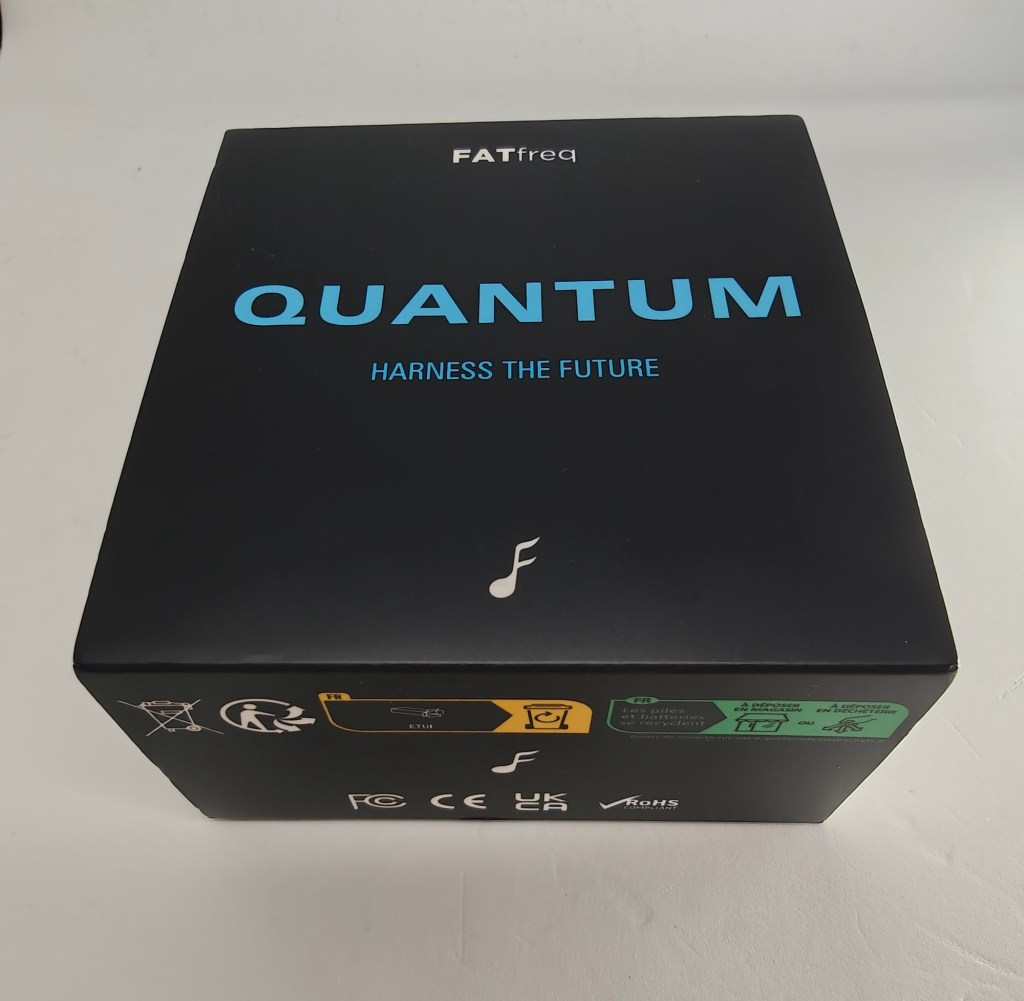
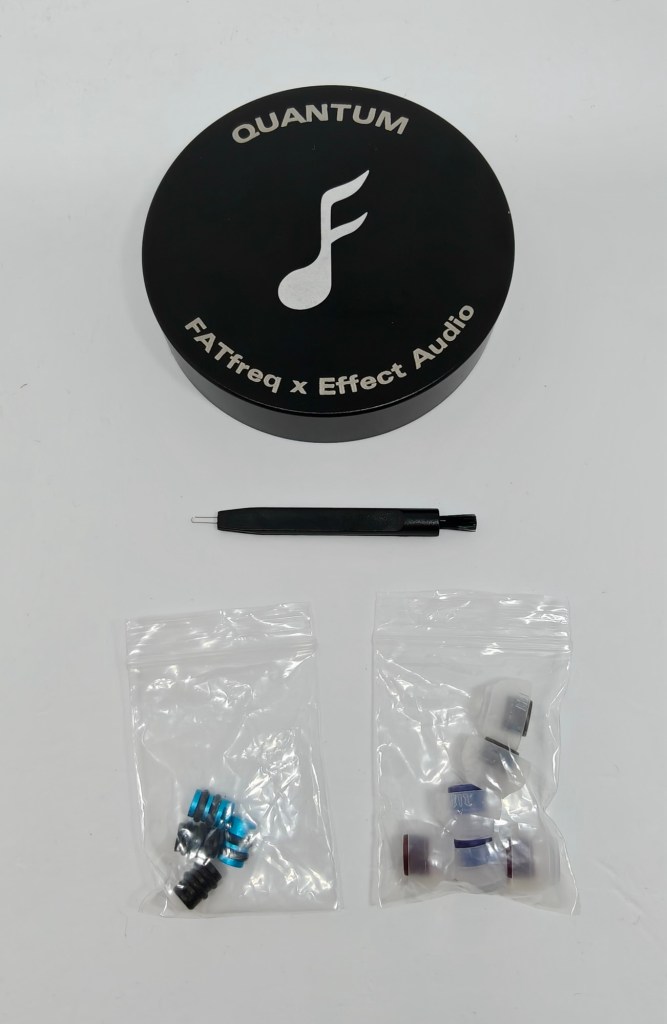
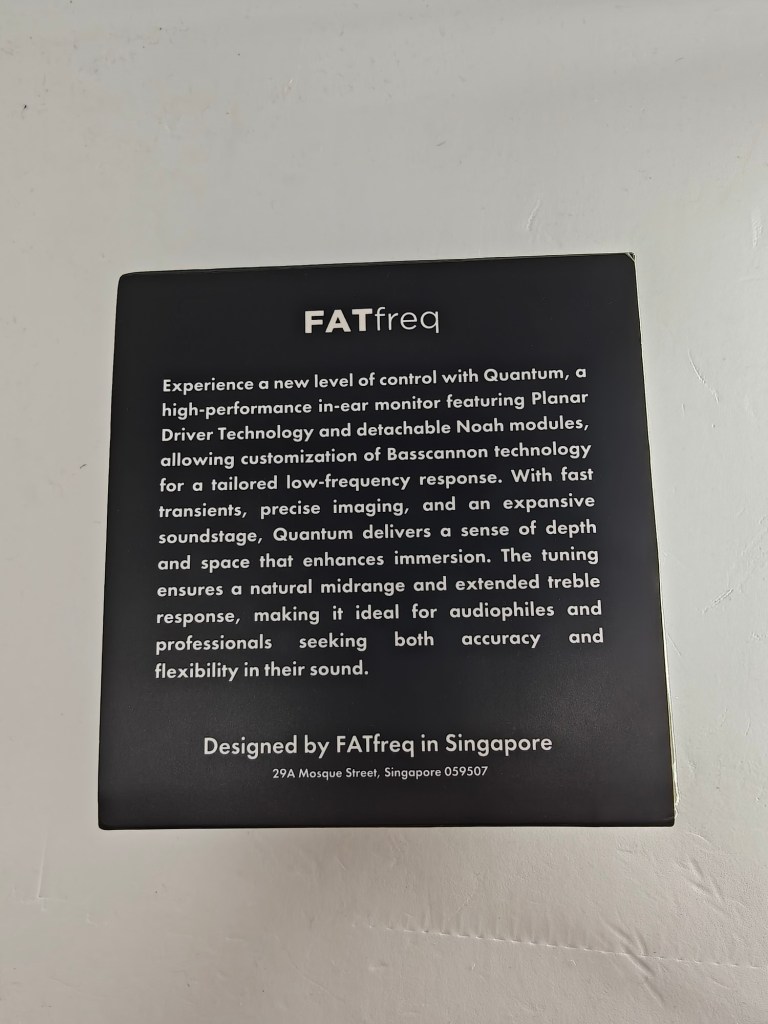
The Quantum comes in a box almost as small as its name, so it’s fair to say this is a pretty minimal unboxing experience. That’s not to say that it’s not well decked out – to the contrary, Fatfreq and Effect Audio have managed to pack a decent amount in to a tiny space. The IEMs are presented in a small cubed box with a black cardboard sleeve over the top showing the name of the in-ears, some simple blurb about the IEMs on the back of the sleeve and the web address of the company. Sliding the sleeve off reveals the fatfreq logo on a white cardboard box, which opens up to reveal the ubiquitous “Welcome To The Family” Fatfreq business card and a solid metal puck-style IEM case. Again, it’s simply adorned with the name of the IEM, the Fatfreq logo and the wording “Fatfreq x Effect Audio” on the top of the lid, with a nice double logo engraved on the bottom of the case.
Unscrewing the lid reveals the IEMs themselves, already attached to the included Ares S cable, two small plastic bags containing some different sized Tri Clarion tips and two Noah tuning modules (the third is fitted to the IEMs for transit). The only other thing included is a small IEM cleaning brush. Pretty simple, but pretty effective – the case is big enough to fit the IEMs and cable comfortably (if a bit snugly), and while it is a little large to slip into a trouser pocket, it’s soli enough to provide some pretty sturdy protection, unless you’re in the habit of stress testing your IEM cases with a Challenger tank. As an owner of FAR too many IEMs, I like this approach to packaging – it won’t blow you away with the opulence of the load-out, but they have splurged on the important stuff: a good case, excellent cable and decent after market tips. What more do you need?
Build quality and design
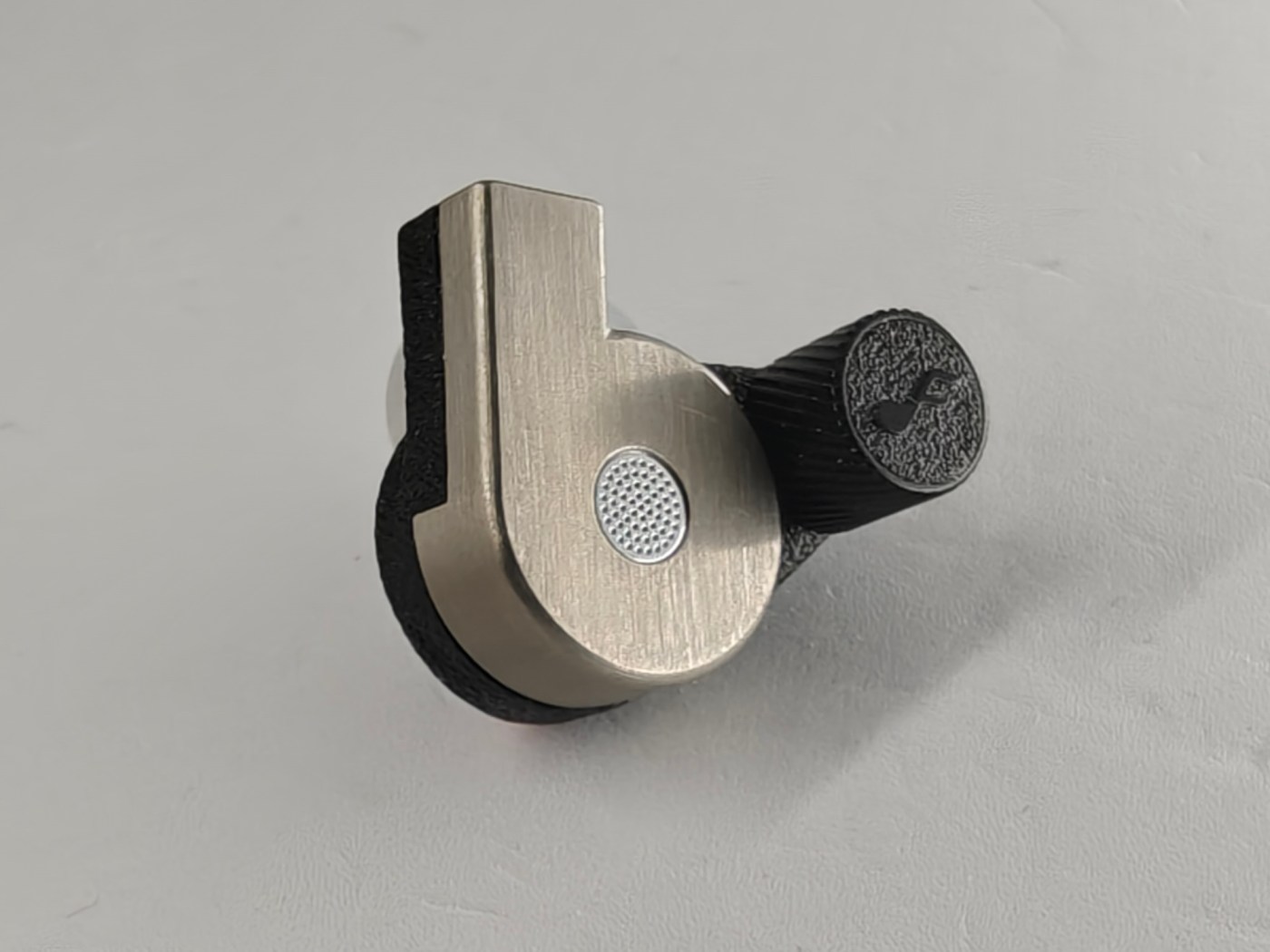
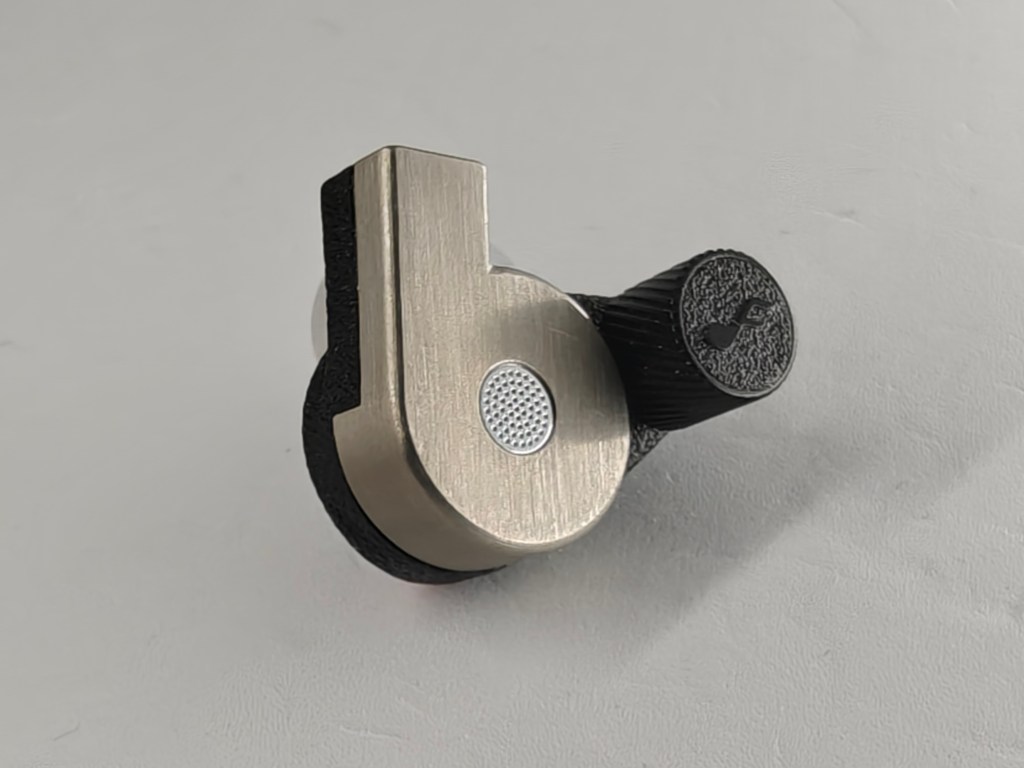
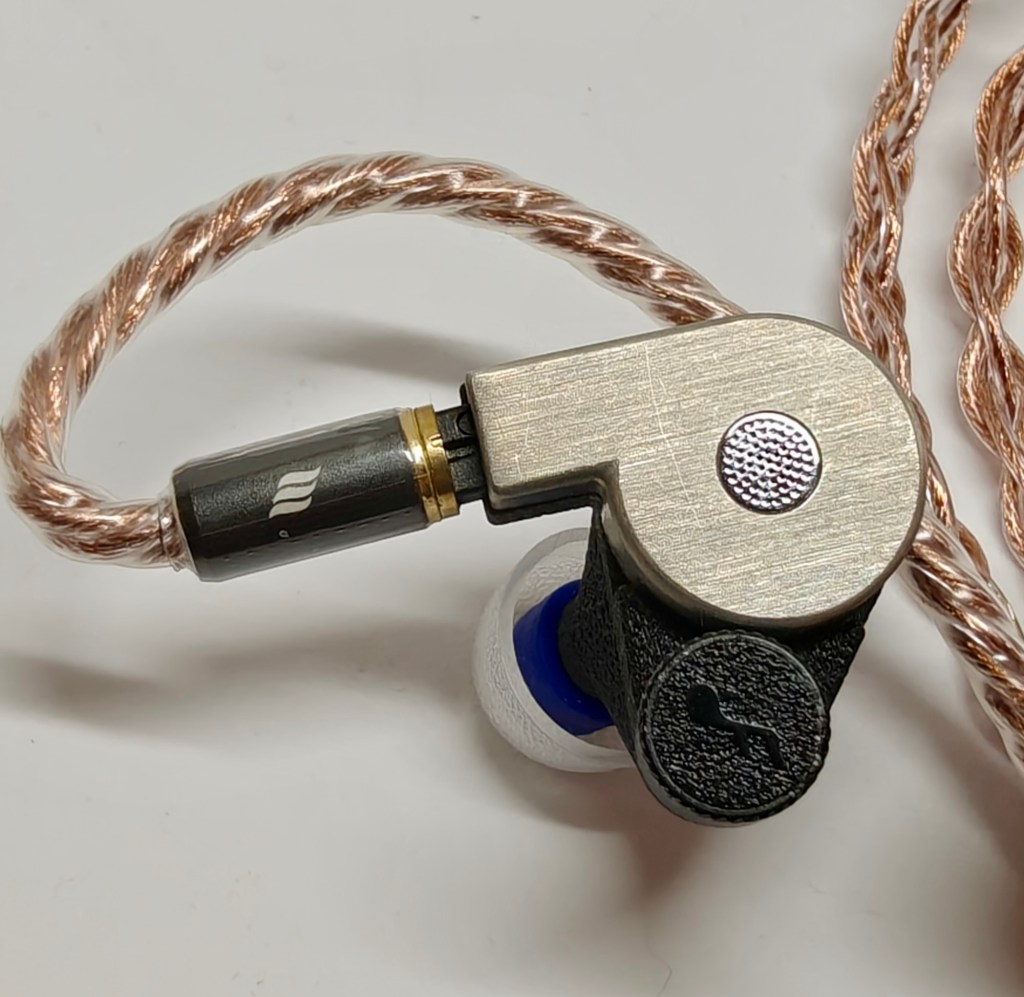
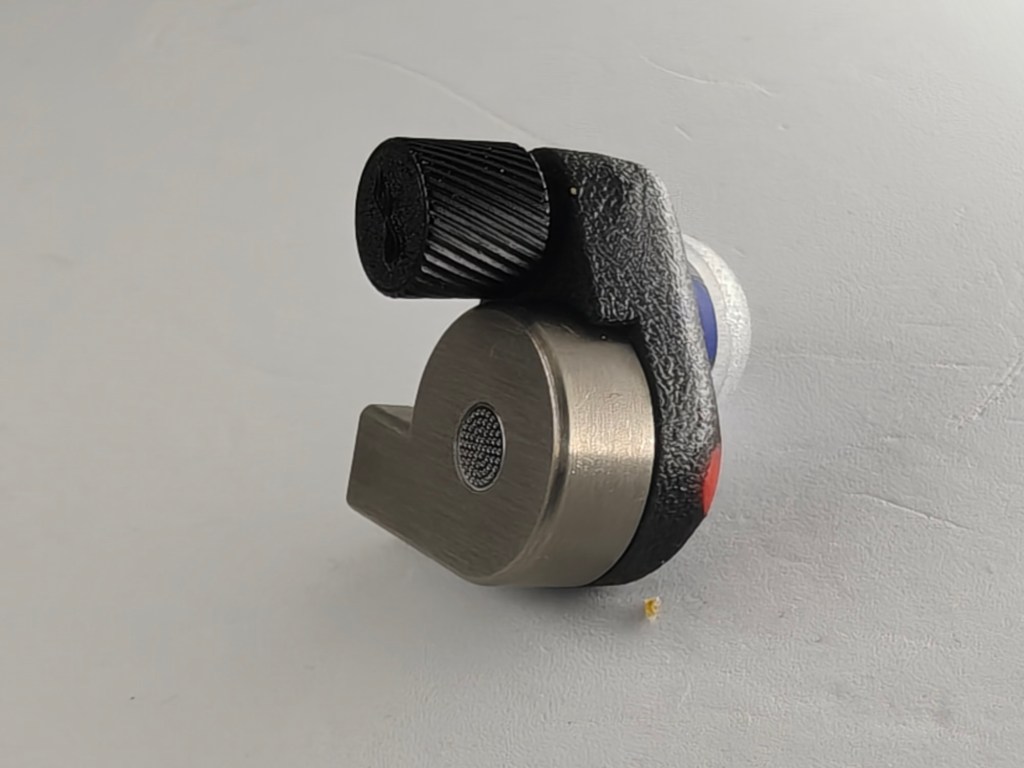
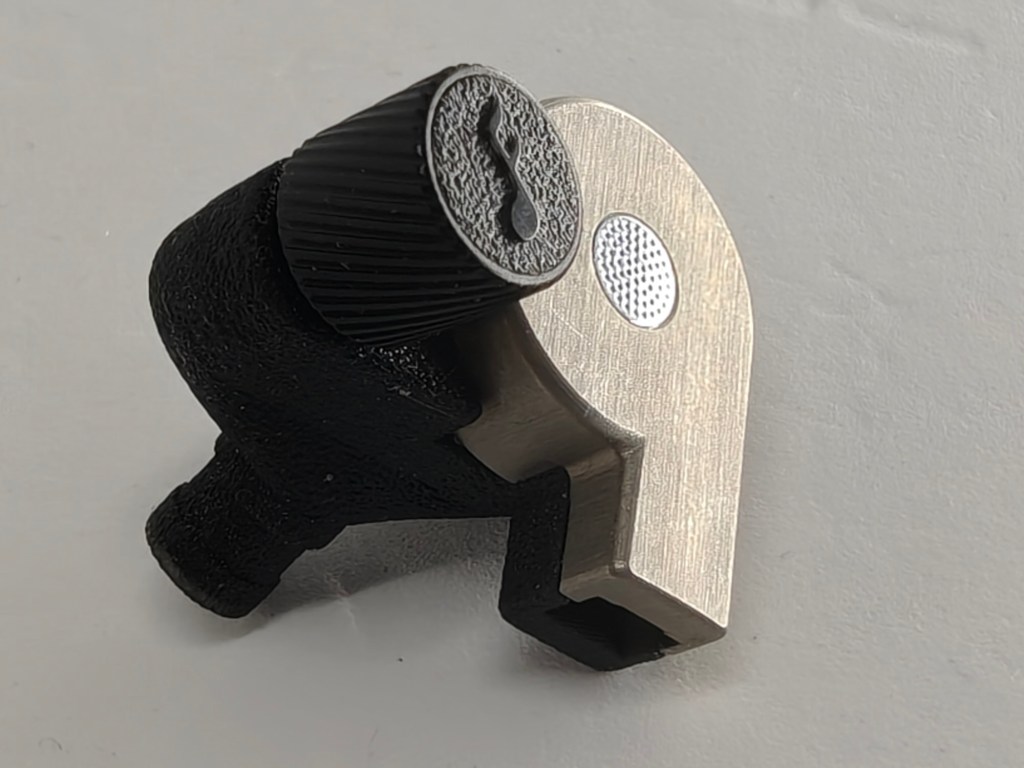
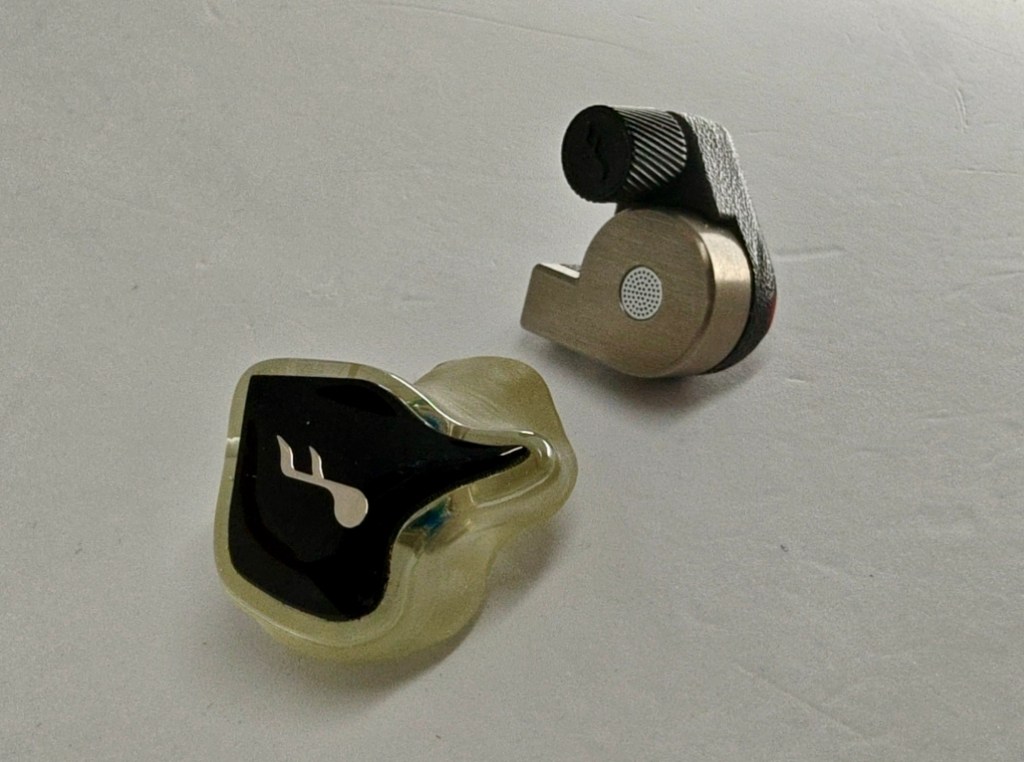
The Quantum has a pretty unusual design. It’s fair to say it’s pretty unique, with a solid metal outer shell in brushed aluminium, in the shape of an upside-down “P” (or the bottom half of the Fatfreq musical note logo). The middle of the “P” is taken up with a circular metal vent grille, giving a pretty steampunk sort of aesthetic to it. The inner half of the IEM shell is made of some form of black polycarbonate, with a slightly rough texture that is pleasant in the hand (and ear) but has just enough traction to feel grippy. The inner face is a fairly smoothed-out take on a pseudo-custom sort of fit, with an angled nozzle of medium to short length. The bore of the nozzle is sealed over with a wax guard in the same sort of vent grille design as the outer faceplate. The acrylic shell protrudes slightly below the metal outer, as it also houses the hole for the NOAH venting system, into which you can plug one of the tuning plugs mentioned in the tunability section below.
With the stock “SuperStage” filter in place, the tuning plug actually sticks out about 3mm from the rest of the outer face, giving an interesting profile to the IEM and removing the option of wearing these while side sleeping. The SuperStage module is made from a similar sort of acrylic as the inner shell, with a small Fatfreq logo embossed on the cap, which is the only external branding visible on the IEM.
The overall look and feel of this IEM is pretty unique, and I personally really like the mechanical style of design. It also looks like it could take some serious wear and tear without any major issues, which is always good with any semi-expensive or expensive audio gear.
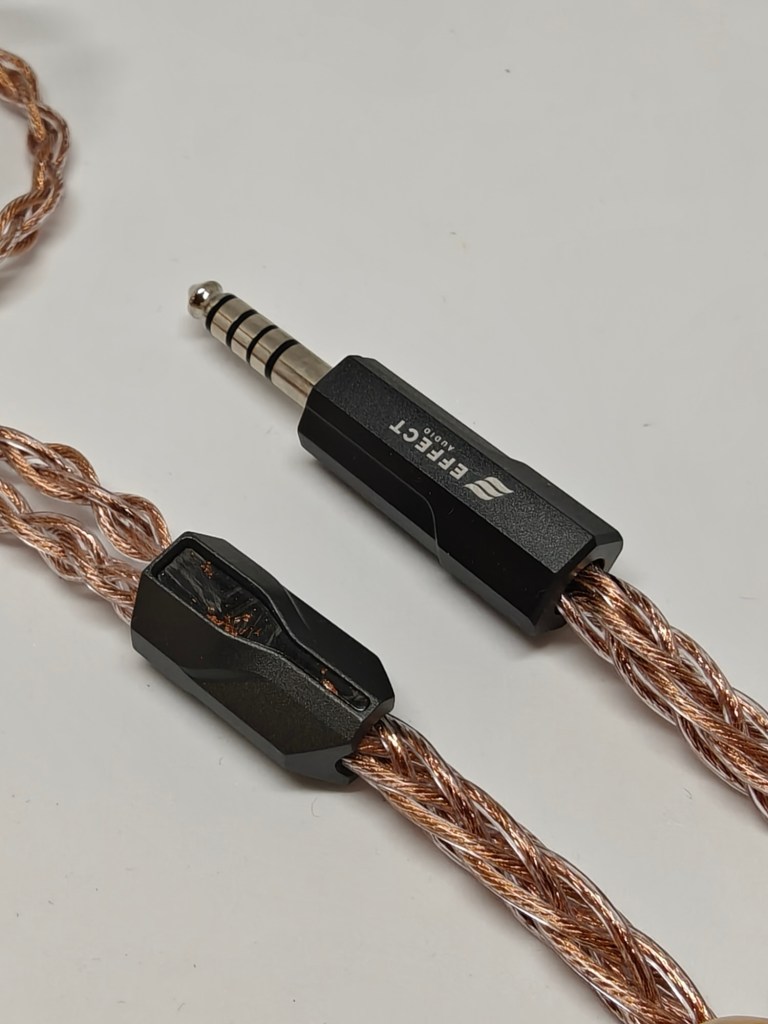
The included cable is the Effect Audio part of the collaboration, with the Qauntum being paired with the Ares S II from EA. As befits a custom cable maker, the Ares is a beautiful looking and handling cable, with a chunky octagonal cable splitter with a really unusual looking forged carbon and copper style inlay on the front. The cable is terminated in a 4.4mm balanced Pentaconn connector sporting the Effect Audio branding, which again looks very visually appealing.
There are a huge amount of reviews online about this cable already, so I won’t write too much more, suffice to say that it was the obvious choice for this IEM, given it uses Effect Audio’s new Dual Variant QuantumCopper™ design, which apparently blends two distinct types of copper in a solid-core 8 wire cable to “deliver richer sub-lows, a stronger bass kick, and thick, alluring vocals” (as per the Effect Audio website). In a lot of cases I will happily cable roll with new IEMs I get in order to see if there are any subtle tweaks that a different cable can make, but given the Ares S II retails for $199 on its own, I haven’t felt the need to discover what another cable could do for the Quantum as yet.
Ergonomics and tip choice
The Quantum has a semi-custom style of design, with some pretty smooth contouring more akin to the way companies like 64 Audio design their shells than the true “pseudo-custom” designs of the Maestro series. For my ears (slightly larger than normal), it provides an excellent fit. It takes a little adjustment occasionally, but once screwed in to the ear and locked down with the nicely weighty cable, it remains seated and stable for extended listening.
The Quantum ships with Tri Clarion tips, with provide a decent fit and seal for me. As the nozzle is only medium to small in length, I find I get a slightly better deep fit with something like Coreir Brass tips, the extended metal nozzle tubing helping get a properly deep insertion. JVC Spiral Dots and Eletech Baroque also work well with these in ears, the slightly wider and grippier design locking the IEMs in place a little further back in the outer ear.
As at the time of writing, my personal favourite (and best fitting) tip for this IEM is the Tang Sancai Noble, which shares a similar metal nozzle design to the Coreir brass, but just fits a little better and more comfortably in the ear for longer listening sessions. With the Noble, the bass is slightly accentuated while still remaining tight, and the top end becomes just a little cleaner and crisper without leaning bright or thin. Definitely a recommended pairing to try out.
As you can imply from the above observations, the Quantum is pretty susceptible to tip choice and insertion depth in terms of the overall tuning, so you might want to play around with some of your favourite tips in order to get the sort of seal and “flavour” to your sound that you want – as with the included cable, the Clarion are a adequate choice if you want to just dive right in, however.
Tunability and baseline sound signature
This is the part of my usual reviews where I dive into the general sound signature of the gear being reviewed, trying to summarise the overall “feel” of the tuning. This is slightly more complicated when dealing with an IEM like the Quantum, which has multiple tuning filter options alongside the fairly high sensitivity to tip rolling referenced above, so I’m going to start by outlining the various choices available before deep-diving into my favourite.
SuperStage module
Starting with the “default” setup of the SuperStage modules, the Quantum throws out a deep but balanced sonic signature, with plenty of weight and punch in the low/sub registers, decent meat in the mid bass leading up to a nicely placed Goldilocks midrange with just a hint of sweetness and some crispy but never biting treble. Overall, I would categorise the Quantum/SuperStage combo as bass-boosted neutral, with a significant bass shelf in play even on the SuperStage module, but one that leaves the mids and highs plenty of room to breathe.
The staging is vast with this module, pushing the soundstage out in all directions from the listener and painting a pretty 3D sonic image (usually referred to as “holographic”, with plenty of depth as well as width. Despite the largeness of the stage, the vocals never feel recessed or pushed away from the listener, keeping the engagement levels high. There is also plenty of fine detail and clarity in the upper end to throw around with these filters fitted, to go along with that classic planar driver speed. Add in a smoothness in the upper frequencies due to the ResoFlow tech inside, and you get a fast, bassy and large sounding tuning that doesn’t skimp on the midrange or the technicality.
SuperStage (half inserted)
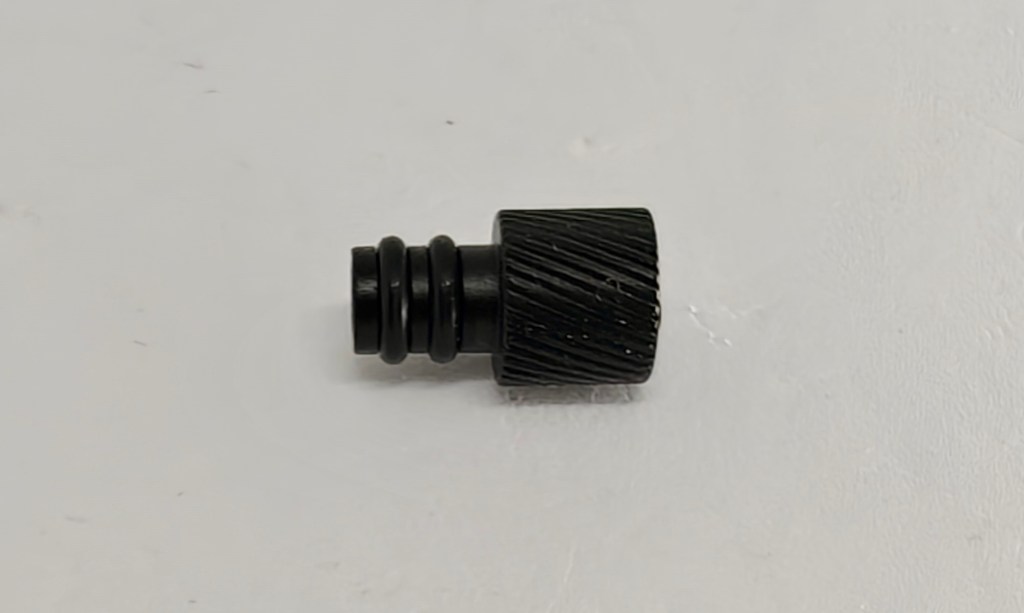
There is also the option to “half insert” the various tuning modules, leading to another slight tweak to the tuning. In this case, half insertion of the SuperStage module (up to the first rubber ring / “locking point” when pushing in) gives a slight decrease in mid and sub bass presence, and a similar marginal increase in the sense of openness and scale of the soundstage. All this comes with a hint less isolation (to my ears), but again, that could be as much from the decreased bass output as any actual difference in the dB being attenuated. It’s a pretty minor difference all round, so unless you feel the bass on the default tuning is still too much for your preference and want to eke out the maximum stage size from a pair of IEMs, I prefer the “default” full insertion of the SuperStage module.
Power module (black)
Leaning the other way, the power module aims to maximise the sub bass and low end punch and volume. You lose some of the excellent stage size and holography of the SuperStage, but in return, you get a decent amount more in the low end and a more intimate presentation, with a little uptick in isolation. It seems to impact sub bass more than mid bass, adding a slightly meatier sound to the bottom end of the bass guitar and kick drums on tracks like “Black Betty” by The Dead Daisies, but not swamping the track with low end. Switching to something like “Why So Serious?”, the sub bass is now more prominent than with the (hardly anaemic) SuperStage module, washing the whole track with some seriously physical rumble, but still managing to let the ticking come through clearly at the 3 and a half minute mark. You get a slightly more intimate and upfront tuning, with the stage pulling a little closer in along all three axis, giving less of an impression of space and compacting the sound. Again, this is only slight, with the Quantum still presenting a large stage, just not as mind (and ear) expanding as the SuperStage variant. There is definitely more physical “slam factor” with this tuning, so if you aren’t a fan of large soundstaging, this could be of interest.
Blue module (control)
The blue module is designed to attenuate (control) the sub bass, leading to more perceived presence in the mid bass. This translates in my ear into a slightly warmer tinge to the tuning, with a perception of increased thump around instruments like bass guitar. Staging again takes a hit, contracting slightly compared to SuperStage, and giving the perception of slightly less air due to the increased warmth and balance of mid bass in the mix. Of all the filters, this is my least favourite flavour, bringing the Quantum more into line with more conventional tunings in this price bracket and losing a little bit of the special sauce that makes it so unique. If you’re a midbass fan and don’t mind warmer tuning with less sub-bass bias, this allows you to tilt the Quantum that way, but the loss of that ultra-expansive feel to the soundstage isn’t quite worth the tradeoff for me.
No filter
There is a final option of running the Quantum without any filter at all, and to be honest, you could do this if you really wanted the biggest possible sense of stage, but that comes with a noted decrease in isolation (due to the large hole by the ear!) and an appreciably diminished bass response. Only for those who don’t need isolation and are allergic to bass. Interestingly, the stage size is hardly any bigger or wider than the SuperStage modules either.
Initial impressions
[Taken from my Canjam 2025 “Stars Of The Show” impressions, if these words sound familiar]
If I had to briefly summarise this IEM, it would be bass-boosted neutral, with a decent bass shelf in play even on the SuperStage module, but one that leaves the mids and highs plenty of room to breathe. The staging is vast, so the vocals never feel recessed or pushed away from the listener, and there is plenty of fine detail and clarity in the upper end to throw around along with that classic planar speed. Add in a dose of smoothness in the upper frequencies due to the ResoFlow tech inside, and you get a fast, tastefully bassy and large sounding IEM that doesn’t skimp on the midrange or the technicality.

Bass
Starting the more detailed breakdown with the Superstage module fitted and running through my usual demo playlist, “Heaven” by Emile Sande kicks off with a good but not overwhelming level of sub-bass. The track is rich and rumbly where it needs to be, and is definitely pretty elevated but isn’t at “blow your brains out” level. The first thing that surprised me was the sweetness the Quantum imparts to Sande’s vocals on this track, smoothing out some of the harshness without losing the delicacy or detail. Sticking with sub-bass, “Why So Serious?” is handled well, with a heavy rumble as the famous sub bass kicks in. The Quantum does excellently in terms of not letting the elevated bass mask any of the detailing above, highlighting the ticking detail in the track around the 3:36 point. Similarly, the faint click in the left foreground on Escala’s “Palladio” is clearly audible, if a little subdued. It wins points on this track for the texture and grain of the cello, though, the Quantum painting the string instruments with an excellent and very un-planar timbre.
So, prominent sub-bass? Check. Moving up the frequency range, “Drift Away” by Dobie Gray is another well rendered track, with a prominent and meaty mid bass that manages to remain tasteful rather than headache inducing. The tone on the bass guitar in the foreground is velvety but still textured, coming across with a nice sense of fluidity and refinement. On basshead gear this can turn into a sort of “whuuung whuuung” style of bass, but the Quantum handles it admirably. Similarly, the bass on “Hello, It’s Me” by Florida rockers Sister Hazel slinks into the ear with plenty of volume, retaining the fine grit and reverb of the bass guitar strings without making the bass sound dry or chalky, and sitting underneath Ken Block’s distinctive baritone vocal nicely.
In general, the midbass presentation is large, but very well controlled in both speed and texture, holding similar ground to the sub-bass in being north of neutral but not excessive, in part due to the excellent control the Fatfreq “Basscannon” tech gives the low end, allowing some pretty big bass to coexist peacefully with the mid and high frequencies sitting above. Firing up “Bad Rain”, the snarling bass riff is grippy and voluminous, backed up with some pretty physical slam on the kick drums as the large planar driver moves the air into your ears. The Noah pressure relief system stops the Quantum from getting too physical, but given the quantity of bass on display here, that’s probably a good thing. Going for something grimier, “The Name Of The Game” by The Crystal Method gives a nice growl to the bass, filling the back of the soundstage in the listener’s head with a driving low end that is thumping and gritty at the same time. It’s not out and out basshead boom, but it fills out the track nicely, leaving space for the random effects pinging off in the left and right ears and capturing the modulation of the synth / guitar style instrumentation as the track winds on.
Overall, the bass on the Quantum is in my own personal Golidlocks zone – meaty and prominent enough to satisfy my inner bass-lover, but hugely detailed and nimble enough not to blur or muddy the music it underpins. Fatfreq have made a name for themselves recently with the quantity of bass on some of their IEMs, but it shouldn’t be underestimated how much sonic quality their tuning and tech allow the Singaporean manufacturer to wring out of their planar or dynamic driver setups, all with zero bleed into the frequencies above.

Mids
Moving upwards, the mids are very nicely present on this set, following a sort of gentle Xxx curve, with plenty of forward positioning on the soundstage giving them a large but not too intimate sort of presentation. Listening to “Anastasia” by Slash, the classical guitar sounds realistic and euphonic, with plenty of air around the notes and the subtle finger movements and vibration of the strings coming through clearly before the main electric riff kicks in. There is a good sense of “grunge” and distortion to the electric guitar on this track, with a decent note weight that gives rock riffs a good amount of fatness. The other immediate impression you get with the Quantum midrange is one of speed, with the planar driver doing excellently at keeping up with the most frenetic of tracks. It leans more neutral than forward or stylised, but it does have a hint of sweetness to the presentation which takes the harshness out of most tracks, but leaves all the detail behind.
Listening to my usual sibilance test tracks like “Whiskey And You” by Chris Stapleton and “Starlight” by Slash present plenty of rawness, but nothing bothersome to the eardrum. Everything seems to be dipped in a little honey on Stapleton’s voice, taking the rough edges and making them just smooth enough to sound pleasant without being blunted or cloying, and adding enough air around the singer to paint all the subtle room details in the track quite clearly in the ear. Similarly for “Starlight”, the pinch harmonics in the intro ping off in the ear with crispness but no pain, all dissonance without discomfort, capturing the subtle fretting of the guitar and the vibrato on the strings cleanly. This is a good track to highlight the separation capabilities of the Quantum, with the planar driver neatly pulling all the constituent elements apart so they can be tracked with ease by the listener, without destroying the core of the music in doing so.
The Quantum is a good vocal performer, capturing plenty of the emotion in a track while retaining a high level of technicality (probably a fair bit higher than its pricetag). Lining up something like “Run” by Leona Lewis, the Quantum presents her delicate intonation and soft vibrato as if the singer is singing directly into your ear, full of breath and subtle inflection. It is a good IEM for connecting the listener to the emotion in a voice, pulling out just enough fine detail to really capture what the singer is trying to convey but marrying that with enough musicality not to make the output sterile or dull. Overall tonality and timbre for both vocals and instruments is pretty realistic, with just a slight stylised warmth taking it away from true neutral, but keeping instruments like piano and trumpets sounding lifelike rather than overly euphonic or digital.
The large (for an IEM) planar driver fares well with guitar based music and rock in general, playing through “Mandolin Moon” by Sister Hazel with a joyfulness that makes it hard for the listener not to start tapping their feet along with the infectious chorus. As the name implies, the song has some sweetly chiming Mandolin in the chorus, along with some scratch-boards and other subtleties that are all layered beautifully by the Quantum, adding richness to the track without making it feel busy or crowded. “Coco” by Foy Vance is another laid back joy of a track on the Quantum, with the subtle palm muted fretting of the intro chords picking up clearly in the ear and the acoustic guitar sounding sweet and musical. Vance’s voice sounds gravelly and full of character, and it’s just an overall enjoyable rendition of this track.
The last thing to comment on in this section is the overall speed of the driver tech, which probably comes as no surprise given the nature of planar drivers. Tracks like “World On Fire” and “Shadow Life” by Slash fizz into life in the eardrum, with a fatness to the riffs that doesn’t drown out the fast paced picking of the ex-G’n’R axeman on both tracks. Especially on “Shadow Life”, the control of the drivers is obvious, with the Quantum keeping a tight grip on the choppy riff that underpins the whole tune without blurring any of the individual notes, stopping and starting on the proverbial sixpence. Again, this is all done with a richness that is unusual for a planar driver (in my limited experience). The Quantum sounds almost organic in tonality, without any metallic sheen or edge, leaning more towards the musical sort of weightiness of tone that stage brands like JH Audio have made their own. Loading up my last test track for this section, “Holy Wars” by the thrash metal legends Megadeth kicks off with a fatness f note that again belies the speed, each frantic cymbal splash, kick drum blastbeat or guitar chug all occupying its own space, never blending or blurring. It’s an impressive rendition of this track irrespective of the pricetag, so to find it in a sub-$1k in ear is a good indication of where the Quantum is playing technicality-wise.
Treble
One of the key pieces of tuning tech used by Fatfreq for this in-ear is the ResoFlow Acoustic System, which combines a precision-tuned resonator with a reverse exponential horn waveguide (as described on their website). Fatfreq claim this results in a smooth, natural treble extension without losing any micro-detail or air. While I’m no treble-head, I can confirm that the treble on the Quantum is airy but buttery smooth, packing plenty of sparkle and delicacy but totally lacking in any sort of spikiness or metallic sheen that can sometimes come with the use of large planar drivers. The treble holds ground with the midrange in terms of prominence, giving the Quantum a nicely balanced feel to the upper frequencies and plenty of treble quantity to match up against the upward tilted low end.
Starting with a few tracks by classical fusion quartet Bond, “Oceonic” and “Quixote” both sound airy and atmospheric, the high violin notes and synth underpins floating around in the top half of the stage. Similary for another modern classical fusion band I listen to, Duel’s “Chi Mai” sparkles where it needs to, rendering the high violin very delicately in the ear without any hint of vinegar or shrillness, and again layering on the atmospheric synth notes over the top with a velvety smoothness and weight.
Lining up “Go” by The Chemical Brothers, the driving hi-hats that move the track along come through crisp but not over-emphasised, with a nicely realistic decay and metallic zing that leaves the notes just enough time to linger in the ear before fading away. The rolling synth that moves across the background at the 1:15 mark is sparkly and light, packed with plenty of detail, and the track is another winner on the Quantum.
In general, with the staging is the most obviously impressive thing about the Quantum followed by its overall resolution, the treble is equally impressive, marrying excellent extension and clarity with a solidity and smoothness that is difficult to pull off. I’m not a fan of overly crystalline or hot treble tones, so the Quantum sits firmly in my preference zone anyway, but even a basshead like myself can’t help but be impressed by what they have achieved with the driver tuning and ResoFlow technology here. This is high end treble reproduction – granted, it won’t blow away multi-kilobuck flagships if you’re looking for the last word in raw technicality, but the fact it’s good enough to compare to a lot of current flagships should tell you enough on its own. A very well tuned high end to my ears.
Power requirements and synergy
There is no way around it – if you want the Quantum to start untangling its full potential (pun intended), you need power. Not the sort of power you need to run an HD800 or Hifiman Susvara, but definitely more than than you usually need to get an in ear monitor moving. It slurps current and wattage like a high end planar headphone of years gone by, so powering it with a weak source like the Sony ZX300 leaves the overall sound feeling a little limp, and the bass a little less grippy and authoritative than it does with better amplification, even if you do manage to get it to decent listening levels.
Switching up to something like the A&K SE180 (SEM4) on high gain, and it still takes up to the late 70s / early 80s on the volume pot to get to a reasonable volume output (and I’m not a high volume listener). The difference is that the staging and grip in the low end is appreciably better. Similarly, stepping up to my ACRO CA1000 or running off a desktop amp like the SMSL HO100 brings even more tightness and headroom. Bottom line, don’t underpower these in ears if you want to enjoy all they have to offer.
In terms of source matching, the Quantum have quite a textured midrange, so while they aren’t the most revealing IEMs you will ever hear, they do resolve well for this price bracket – matching with a source that leans a little warm or more organic in tone seems to bring the best out of them to my ears and provides just enough soul to go with the technicality.
Stage, separation and layering
Lining up “Coco” by Foy Vance, this is a great track to highlight the staging on the Quantum, which to be frank is pretty enormous for a sub-$1k in ear. The soundstage on these IEMs is just flat out huge, presenting a sonic image that extends outside the head in all directions and has room to accommodate the big note size the 14.2mm planar driver kicks out.
Similarly, listening to “Trouble” by Ray LaMontagne, the track sounds like it’s being played out in two small booths either side of my head, not inside my ears. There is never much in terms of front-to-back staging on this recording, but the extreme panning of the drums (left) and bass (right) is executed brilliantly by the Quantum, keeping LaMontagne’s crooning dead centre and filling up the space in the track to make it pretty cohesive and just downright enjoyable to listen to.
Overall, the placement of notes is very good, putting instrumentation and vocals in clear locations across the stage in all three dimensions. Listening to “Sometimes We Cry” by Tom Jones and Van Morrison, the Quantum places the two iconic singers clearly right and left of centre respectively, painting the image of both vocalists singing directly at each other on the same stage. On less accurate gear the singers meld into the centre stage, but the Quantum is crisp and precise with this track, adding greatly to the presentation.
Flicking across to something like “Coming Home” by Sons Of Apollo, the Quantum does an admirable job of laying out Mike Portnoy’s opening drum fill across the back of the stage, starting out wide left and rolling like thunder across the back of the listener’s shoulders to finish on the far right of the stage. Layering and separation is very good for the price bracket too, with the 14.2mm driver doing an excellent job of keeping this busy track clearly separated. Similarly for “Holy Wars” by Megadeth, the ultra-busy instrumentation on the thrash metal classic is all there and all easily trackable in the ear.
Despite the large size of the stage, the Quantum doesn’t pull notes too far apart on this track, so everything still feels dense and connected where it should, without any blurring between the frantic guitar and the pounding double bass drum and bass line blasts. In summary, the Quantum is an impressive technical performer in the sub-$1k market for these technical aspects, taking full advantage of the planar platform and venting technology to deliver something very technically accomplished but still musical.
Comparisons
Noble Audio Van Gogh (1xDD 3xBA hybrid, c. $699 at time of writing)
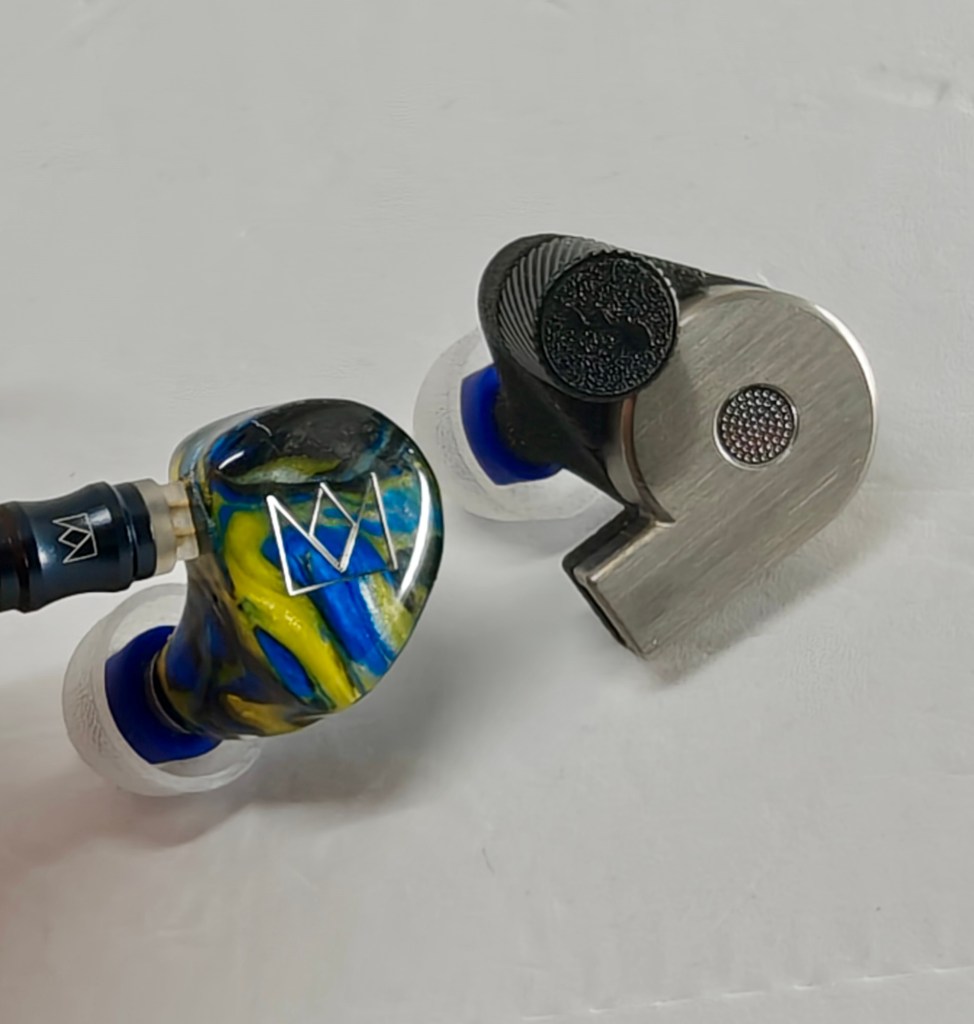
The Van Gogh is an interesting tuning from Noble, coming across as a pretty velvety and U-shaped take on a bass-forward tuning, with plenty of detail like the Quantum but a much more prominent low end rumble. The bass is definitely higher in quantity than the Quantum with SuperStage module fitted, veering into serious basshead territory in terms of both power and slam. The Van Gogh uses an 8mm Mg-Al dynamic driver with a dual magnetic circuit, and it does produce some serious low end oomph when called for. Listening to something like “Drift Away” by Dobie Grey, the bass guitar refrain on the Quantum sounds bassy and full but the Van Gogh floods the low end with more quantity, leaving the Quantum to sound the cleaner and airier, with a bigger sense of space in the track. Grey’s vocals are well presented on both, with the Quantum pushing the vocal more forward on the stage compared to the Van Gogh’s relatively more recessed stage positioning. The crisp hi-hats in this track cut through well on both sets, with the Van Gogh’s BA driver setup pulling through plenty of detail. It’s noticeable that the sound feels a little closer in and warmer on the Van Gogh, with less of the vastness and separation between instruments that the Quantum offers.
The Van Gogh comes across as slightly warmer in comparison to the Quantum, although neither are overly clinical in their presentation anyway. Playing “C’est La Vie” by Slash, there is more of a physical sense of slam to the kick drums, and slightly more power behind the low end, but the bass and drums do almost feel like they are encroaching on Myles Kennedy’s vocals, they are so potent. The Quantum presents the vocals with more air around them, lifting them above the driving bass and drum underpin, and giving more of a jagged edge to the angular guitar riffs in the track. Both give very good renditions of this track, so it’s more a flavour preference than a “better or worse” choice here.
Treble wise, both IEMs have plenty of presence and zing, so there isn’t too much to choose between them here – if you prefer a crisper and cleaner presentation, the additional tuning options of the Quantum and the better sense of airiness up top will probably lean these IEMs your way, and if you prefer a sweet but crisp tuning that dovetails nicely with warmer sources, the Van Gogh will probably slide to the fore.
Technically, both IEMs are playing in the same space, with both resolving at a good level (very good for the price bracket, in fact). The Quantum is the more overtly detailed IEM on some of my usual test tracks, due to the slightly broader staging and less bass presence, but when you listen carefully, there really isn’t much in it between these two. Both will bring out plenty of foreground and background detail, just in a slightly different way.
Stage size is won by the Quantum, presenting a larger and cleaner stage. The Van Gogh images well and never sounds congested or cluttered, but presents its stage in a smaller and more spherical way with more clearly defined boundaries to the sound, in contrast to the Quantum’s massive “out of the head” and almost borderless staging effects.
In terms of driving power, the Quantum is significantly more thirsty, taking an additional 20-25 points on the volume pot with the ACRO CA1000 to get to a similar listening volume, whereas the Van Gogh is pretty easy to drive off almost anything. The driver in the Quantum responds well to more powerful sources (current and wattage), and really needs a beefier portable source or more desktop-grade power output to get the best out of the planar driver, whereas the Van Gogh is infinitely less picky. Both scale well with better sources, however, so they both need to be fed well to get the best out of them.
In terms of build and ergonomics, the Van Gogh sports a pretty tiny acrylic body, with a hand painted design on the shell inspired by Vincent Van Gogh’s “Starry Night” (hence the name of the IEM). It’s a completely different look to the steampunk chic of the Quantum, looking like a high end custom IEM design and being visually pretty stunning. If looks matter to you and you don’t like the metal design of the Quantum, the Van Gogh is definitely the prettier of the two IEMs. The shell size is also significantly smaller than the Quantum, with a really small and ergonomic fit that should work well in all but the tiniest of ears. There are some nice touches across the board with the Van Gogh, with the IEM nozzles being carved into a Noble design and the included 4.4mm cable being pretty low profile but having some nicely prominent Noble branding on the neck cinch and connector.
In terms of cables, both IEMs sport an 8 wire cable, with the Ares looking more visually engaging with its exposed copper cabling and chunkier connectors, and the Van Gogh cable looking pretty sleek with a thinner and more compact build, and with the cables being covered in a black plastic sheath. The Van Gogh cable is more supple and smaller profile (in keeping with the rest of the IEM). Both cables are definitely “after market” quality, so it depends on your personal preference which is better here.
Overall, these two are too close to call for me – the Van Gogh is a surprise basshead delight, just edging the Quantum in low end oomph and slam factor but losing out to the insane staging of the SuperStage module. Two very good takes on a bassier but still technical sound, with the Quantum offering a more flexible and tweakable tuning, as long as you have the source to power it. The Quantum also wins the accessory battle (just!) by way of its hard puck storage case versus the velvet carry bag of the Van Gogh, but apart from that, these are two very well matched and very high performing IEMs.
Flipears Legion (1xDD, 1xBC, 1xEST) c. $849 at time of writing)
The Legion is a recent model from the Arsenal series of IEMs released by Filipino IEM manufacturer Flipears. It is a triple driver hybrid, using a single 10mm dynamic driver paired with Flipears’ proprietary “Earquake” bone conduction driver for the bass and mid bands and a single electet tweeter for the high end.
Sonically, the Legion aren’t a million miles away from the Quantum, with a slightly bass lifted but well balanced overall tuning. The Legion do run considerably warmer in terms of overall sound than the Quantum though, with a fatter and more “romantic” sheen to the tuning.
The Quantum do lean slightly more detailed than the Legion as a result, resolving the fainter details and grain in the vocal and subtle instrument noises on “Someties We Cry” by Tom Jones and Van Morrison with more clarity. This is driven in part by the extra air on the staging, the colder (but not cold) Quantum allowing the notes more room to breathe, and adding a crisper edge to vocals.
The Legion isn’t a muddy sounding or veiled IEM, but in comparison to the more incisive sound of the Quantum, it sounds almost stuffy in places. This trades off with a greater sense of emotion in voices than the Quantum, with a little more realism and weight to the sound, and a more fleshed out tone.
In terms of bass, both IEMs are reasonably well matched where it comes to quantity, with both giving a north of neutral but not overwhelmingly bassy sound. The Legion has a little more punch in the midbass to my ears, with a real sense of slam and physicality from the dynamic driver. Sticking with Tom Jones, his cover of “Lust For Life” of the Reload collaboration album sounds punchy and full, the kick drums hitting forcefully as the iconic bass lines kick in. In contrast, the Quantum presents the drum hits a little more cleanly, but with less oomph, giving the music more room on the stage but presenting Jones’ and Hynde’s vocals with less body and more grit in the ear. The bass guitar note are tauter but slightly more detailed sounding on the Quantum, and weightier but still resolving on the Legion.
The main area of difference in the low end is the impact of the bone conduction driver in the Legion. It’s called an Earquake driver for a reason, giving out a noticeable vibration in the ear when worn. The effect is difficult to quantify exactly, but it does seem to add a veneer of dimensionality and solidity to the sound that complements the weight of the dynamic driver, producing something more physically “present” than the Quantum’s impressive planar driver on its own. It’s an unusual sensation, but very immersive, and does add a bit of that “at the concert” kind of feeling to tracks that is difficult to replicate by more conventional driver technology.
While they are not too dissimilar sonically, where they diverge is with the design and packaging. The Legion presents a very opulent unboxing experience, with a large and spacious carrying case, a similarly high end cable and eartips and an absolutely stunning physical design. The Legion’s faceplate is hand-painted and cast is some form of metal, resembling the helmet of a legionary from ancient times. It’s a stunning looking three dimensional piece of art, making the Legion stand out as much for its looks as its sound. Basically, if you preferred the brutalist architectural movement, the Quantum will be your sort of thing – if you like a bit of modern art or sculpture, the Legion look almost as good as they sound.
Overall, these IEMs are well matched, with the Legion providing the more luxurious and aesthetically pleasing package, with a more physical edge to the low end due to the crazy vibration of the Earquake driver. If you prefer a more tunable sound with a little more reslution and clarity, or lean away from warmer tunings, the Quantum will probably suit you better. Both are excellent choices in this particular price bracket.
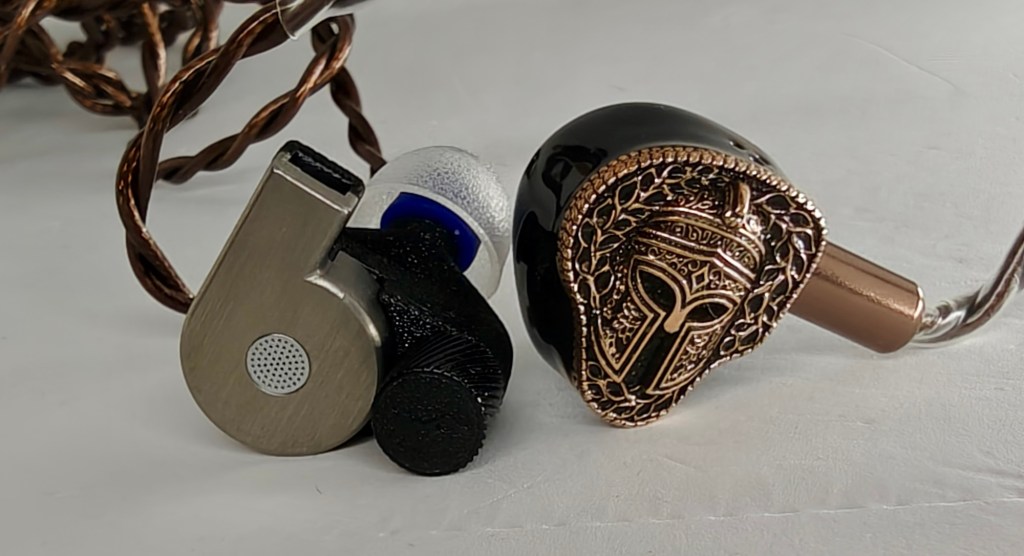
Hercules Audio Noah (1xDD 3xBA) c. $400 at time of writing
The Noah is another one of the current “hot” models on Head-Fi, picking up plenty of buzz in the recent Canjams across the globe. It has a tuning that is based on its flagship sibling the Moses, and shares some similar design and technology, just in a package costing over $2000 less. It’s slightly less expensive than the Quantum, but is close enough in terms of both popularity and tuning to be worth comparing.
Starting with the packaging, the Noah is far more traditional, coming in a shoebox sized package. Slipping off the nice graphic sleeve to get to the actual accessories, the Noah comes with a chunky IEM case with a semi-hard fabric shell, with a pre-formed insert to wrap the cable around and keep the IEM shells from touching each other in storage. It’s a lot less pocket friendly than the Quantum metal puck case, and not quite as bomb proof, but the tradeoff is that you get a case that easily fits your IEMs along with some tips and possibly even a small dongle without any clever packing.
The rest of the loadout is similar – the Noah sports one aftermarket quality cable (the 4-wire Arc from its own range) vs the Ares 8-wired cabling on the Quantum, an IEM cleaning tool and a set of branded tips from Divinus (the Velvet) instead of the Tri Clarions packed by Fatfreq. The only difference is the USB-C to 4.4mm phone dongle included by Hercules Audio, which allows the Noah to be run from any mobile or PC device sporting USB-C. The audio quality is surprisingly good for a bundled dongle, so this additional piece of hardware is a thoughtful touch for when you just want to grab your IEMS and phone and go.
Build on both IEMs is metal, with the Noah sporting an all-aluminium shell. It sports a more stnadard “pseudo-custom” style of shell, and while it is pretty large, it isn’t as big or protruding as the Quantum with the SuperStage modules fitted. Fortunately, both IEMs fit well in the ear, although the Noah is probably the slightly less snug fit for my own personal ear anatomy.
So far, so similar. So, how do they sound? Starting with the bass, the sub bass frequencies are relatively similar in quantity and physicality, with “Heaven” by Emile Sande coming through with just a hint more heft and thrum on the Noah, surprisingly. Mid bass is slightly weightier on the Noah too, “Bad Rain” by Slash coming through with a hint more growl on the bass guitar and a tad more slam on the kick drum, versus the slightly cleaner and airier rendition from the Quantum. You can obviously bring these two IEMs closer if you switch to the power modules on the Quantum, so bear that in mind when thinking about these comparisons in context. Detail and texture is similar from both drivers, with the Quantum again sounding slightly cleaner around the edges of the bass notes, but not drastically out-resolving the Noah to my ears. There is a slight uptick in texture and detail when listening to the cello in the into of “Palladio” by Escala, but despite packing in more grain and detail into the notes, the Quantum is slightly less clear than the Noah in presenting the small click that occurs in the left foreground around the 4 second mark, burying it a little closer to the bass note underneath. Overall, both pack high end bass (and not just for the price tag), with the Noah having a little edge in richness and mid bass heft, leaning to a slightly warmer tone to the low end.
Mids are again fairly well matched, with both IEMs handling “Starlight” by Slash well. The Noah is the warmer of the two, with a little more weight to the vocal and slightly less crispness to the hi-hat that plays over the intro. Both IEMs capture the string vibrato and pinch harmonics in the intro well, with the Quantum picking out just a little more detail. Neither IEM are harsh or sibilant to my ears on this track. In terms of pace, both IEMs are reasonably closely matched, neither struggling with smearing or bleed on tracks like “Shadow Life” by Slash or “Holy Wars” by Megadeth. The Noah has a slower decay to the frantic bass drum notes, which leaves it sounding less clinically precise than the Quantum as the track fires into life, but more physically solid and engaging.
Treble is a tale of preferences as much as anything, with the Quantum presenting clean, crisp notes on an airier stage, versus the Noah and its warmer, less crispy upper end. If you are a fan of sparkle and upper-frequency clarity, the Quantum definitely leans more into that sort of bracket versus the more weighted and energetic tuning of the Noah.
Stage wise, not much beats the Quantum at this sort of price bracket, with the Fatfreq IEM producing a wider, deeper and more holographic sounding stage to my ears, compared to the more compact (in comparison) Noah. Layering and separation are in the same ballpark, with the Quantum sounding just a shade clearer and cleaner due to its cooler tuning and greater space on the stage.
Power wise, you can run the Noah well from the included dongle or pretty much any DAP you have, whereas the Quantum needs a beefy source to wake up properly (and c.15 to 20 clicks difference on the A&K SE180 in high gain to get to the same listening volume).
Overall, these were two of my favourite IEMs at Canjam London 2025, so it’s difficult to choose between them. The Quantum leans a little cooler and more clinical, with the edge is staging and some technical aspects. The Noah counters that with a more energetic and engaging tuning that gets the foot tapping and the head moving, and a lovely richness and weight to the sound that doesn’t sacrifice technicality to achieve. Both are stellar performers in this price range, so it really comes down to whether weight and engagement is your jam, or whether you value stage and sparkle over all else.
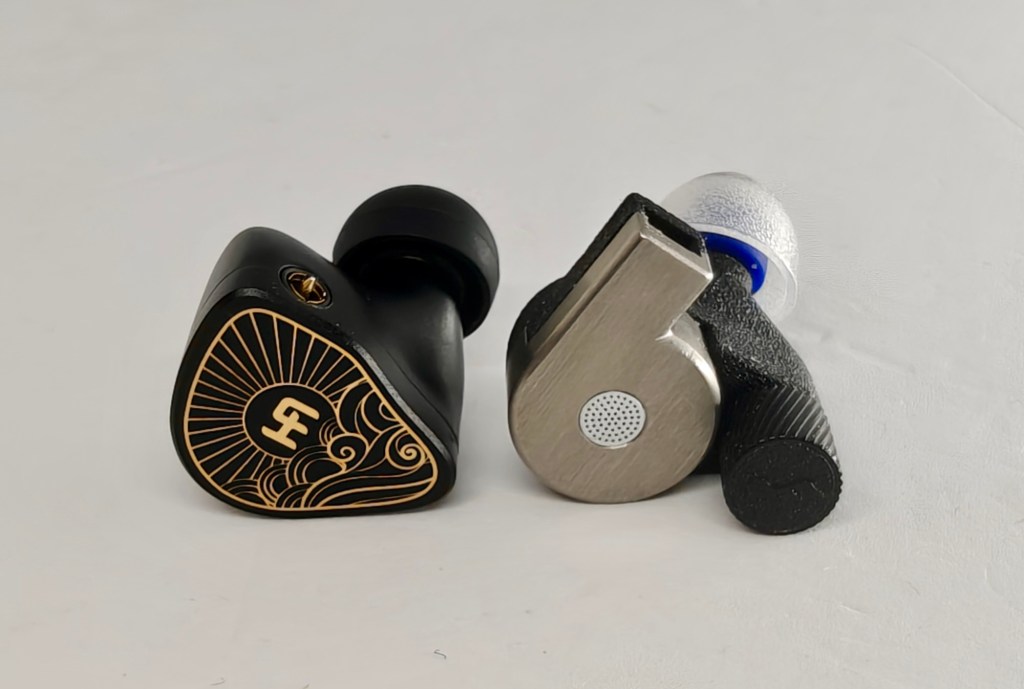
Fatfreq x HBB Deuce (2xDD) c. $250
This is a quick comparison as these two IEMs play in a very different space. The Deuce is Fatfreq’s collab with online reviewer HBB, and consists of twin dynamic drivers in a much smaller presudo-custom design universal shell. The loadout and packaging is similar to the Quantum, using the same small packing box, except this time the Deuce comes with a non-aftermarket cable and a simple fabric carry case, and some generic tips. To be fair, there is a substantial price difference between the two models, so it’s obvious where Fatfreq cut some corners with the bill of goods between the two models, but the overall design and feel of the IEMs themselves is nice in the hand.
Tuning-wise, the Deuce offers a bassier take on a shallow V shaped tuning, probably sitting at the more balanced end of the “Maestro” series in terms of how V-shaped it is. The emphasis here is on the sub bass over mid bass, but the mids don’t get pushed too far back in the overall shape, giving a bassy but balanced vibe.
To quickly summarise the difference between the two, the Deuce is substantially bassier (especially in the sub bass), and can be taken to an entirely different level of brain damage with the addition of the enclosed impedance adapter to kick the low end DD into overdrive. Quality wise, the planar driver in the Quantum digs out more detail, but it isn’t a night and day difference, with the Deuce holding up pretty well in terms of quality, just losing out in the last elements of clarity or resolution to its bigger brother.
Similarly for the mids, the deuce is smooth and well tuned, but not as technically competent as the Quantum. Both provide a musical slant on the tuning without being too stylised or coloured, so unl;ess you need the additional detail and staging, it’s down to tuning preference to pick between them.
Treble is won fairly easily by the Quantum, with the Deuce being no slouch, but paling in comparison to the excellent resolve and smoothness of the Quantum upper registers. Soundstage isn’t bad on the Deuce, but again it’s not in the same ballpark as the Quantum and the Noah tech onboard.
Both IEMs provide a warmish but balanced tuning, so it’s a simple choice between the technical excellence and grand staging of the Quantum or the bigger bass and smoother presentation of the Deuce – you can’t go wrong with either, and both are definitely tuned exceptionally well for their respective price brackets. My preference for at home listening is the Quantum, but if I’m heading out and about, I’m far more likely to throw the Deuce in my bag for a quick listen on the move.
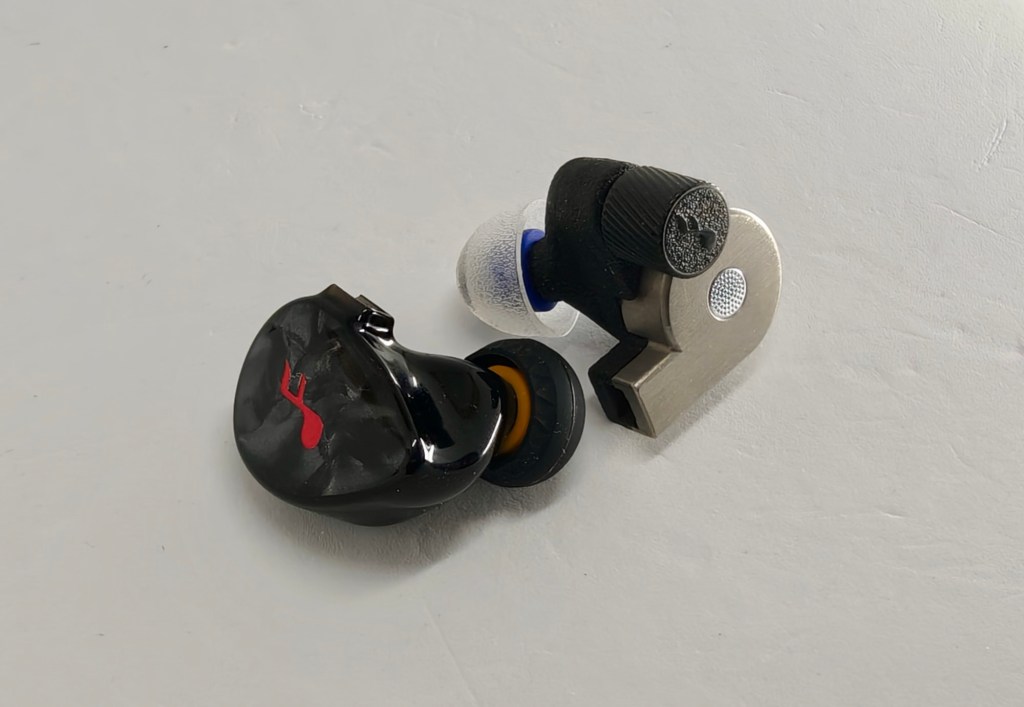
Fatfreq Babyfreq2 (1xDD 1xBA) c. $500 at time of writing
Another quick comparison is with the Babyfreq2, which is a set of custom IEMs I recently received from Fatfreq after getting impressions done at Canjam London. They are closer in price to the Quantum, but still hovering just under the $500 mark at current pricing.
The Babyfreq2 are a silicone body custom IEM, so can’t really be compared to the Quantum in terms of fit or comfort seeing as they have been designed specifically for my ears. IN terms of accessories, the Babyfreq2 comes with a similar loadout to the Deuce, with a generic 2-pin cable, a wax cleaning tool and the IEMs themselves, sent in a small fabric carry case, with all the value being concentrated in the custom build of the IEMs themselves.
Tuning wise, the Babyfreq2 tread a similar path to the Deuce, using a 12mm DD to provide the large bass that the Maestro series has become known for (and utilising the same Basscannon tech), which as with the other Fatfreq models I’ve tried, doesn’t bleed into the midrange. The difference is in the additional BA tweeter that is used to provide a little more prominence and sparkle to the mids. Compared to the Quantum, the Babyfreq2 has a little more bass in terms of quantity, and is closer (but not quite the same) in terms of quality. The Babyfreq2 is less sub-focussed than the Deuce, so closer in overall tuning to the Quantum, with just a hint more emphasis.
Midrange is well done, not as detailed as the Quantum but still no slouch. It sits a little more into the overall v-shaped tuning of the BF2 compared to the more stage-front positioning of the Quantum, but it isn’t a million miles away from a technical or tuning perspective, with the Quantum coming through just a shade crisper in comparison to the more rounded and organic tone of the Babyfreq2.
Treble is closer on the BF2 than the Deuce, but still doesn’t quite match the Quantum for sparkle or overall quality. It’s also a little less emphasised, sitting a little more into the background than the more prominent tones on the planar model.
Overall, the Babyfreq2 is more similar than different in terms of tuning ethos, so while it can’t quite compete with the technical chops of the Quantum to my ears, it comes close enough to make it another choice of sonic preference as much as anything else. If you prefer the bigger low end of the Maestro models and would like a custom fit over better techs and accessories, the Babyfreq2 is another good value proposition from Fatfreq in terms of bang for buck. If you can afford the extra and want a similar take on musicality with better resolution and a grander stage, the Quantum is my recommendation.
Final thoughts
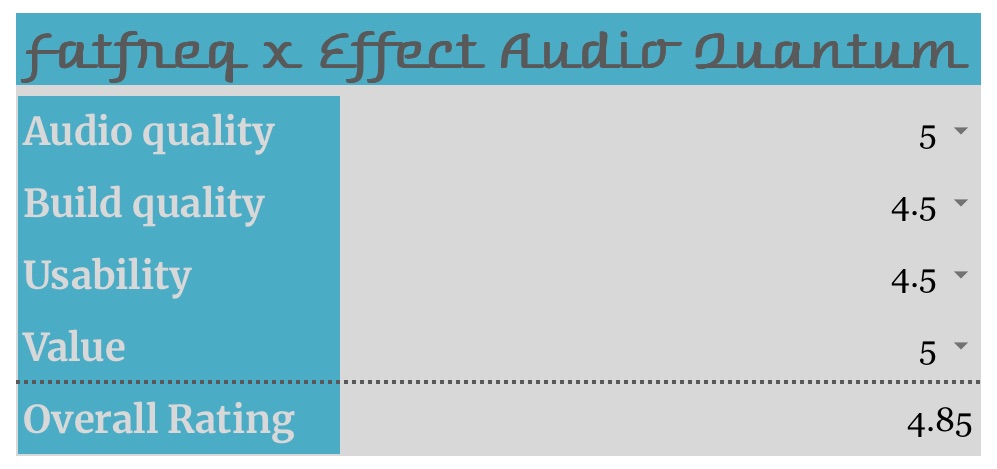
When I went to Canjam London this year, I wasn’t expecting to come away with a planar driver in-ear, and definitely not one that has impressed me so much. The Quantum a very strong entry into the competitive sub-$1000 IEM market, with a winning blend of musicality and technicality, and a truly killer soundstaging capability that puts it out there as a unique sounding but very enjoyable IEM that competes with much higher priced in-ears in multiple areas. The Noah modules give an element of tunability, and the high quality case and Effect Audio cable make this a compelling proposition for most audiophiles, as long as you can handle the unique cyberpunk styling of the IEMs themselves.
Overall a very impressive (and impressively balanced) model from the ever-growing Fatfreq range, and one that deserves all the attention it has been getting. An easy recommendation from me.
 glassmonkey
 jackpot77
 TheOneInYellow
 trekasaurus
 Timothy Cose


 Audio Primate
Leave a comment