

Introduction
After posting about my stars of the Canjam show (see previous post [here]), here are the impressions from all the other gear I managed to listen to at this year’s show. Please note that even though this stuff didn’t make my “top 4”, most of it was equally as impressive – this was a great year for audio quality, IMHO.
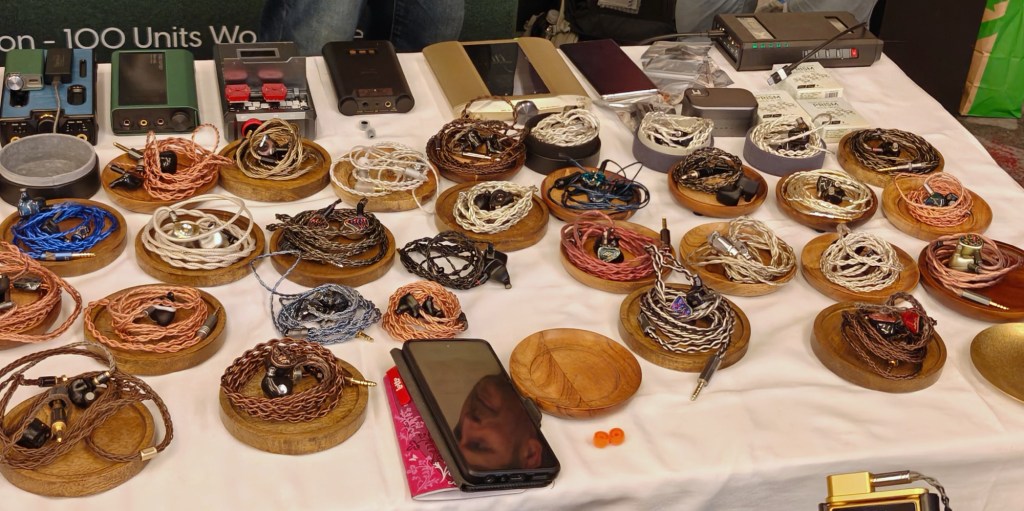
Sources used
As with the previous post, for consistency I compiled all impressions using an Astell & Kern CA1000 with a pre-loaded playlist of demo tracks to listen to all of these IEMs and headphones. I chose the CA1000 out of my collection as it has all the required ports (2.5mm / 3.5mm / 4.4mm / 6.5mm), plus with 15Vrms output power, it is pretty much able to drive anything barring really power hungry over ear cans like the Susvara. Where tips were not provided with any IEMs listened to, I used my trust JVC Spiral Dots+. Please bear in mind that these are show impressions from a busy conference hall, based off one or more 10 minute listening sessions throughout the day, so take everything with the requisite pinch of salt.
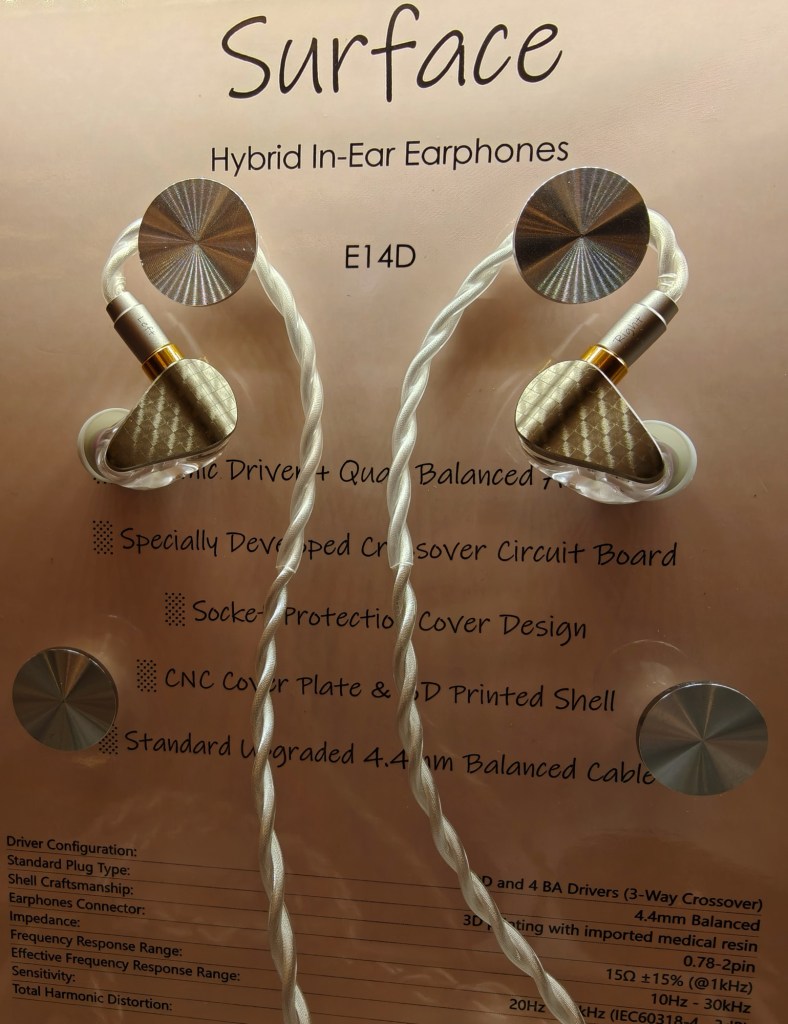
DDHifi Surface
DDHifi are a pretty interesting brand in the current Head-Fi landscape, concentrating more on accessories and items like cables, adapters and DAC dongles. They had an interesting collection on their booth, but I was interested in demoing their new IEM range. Unfortunately due to various people being there every time I managed to sit down at the table, their new 5-driver hybrid IEM the Surface was the only one I managed to get impressions of.
DDHifi Surface – (1xDD 4xBA – c. $270) – tested at volume 65 on High Gain
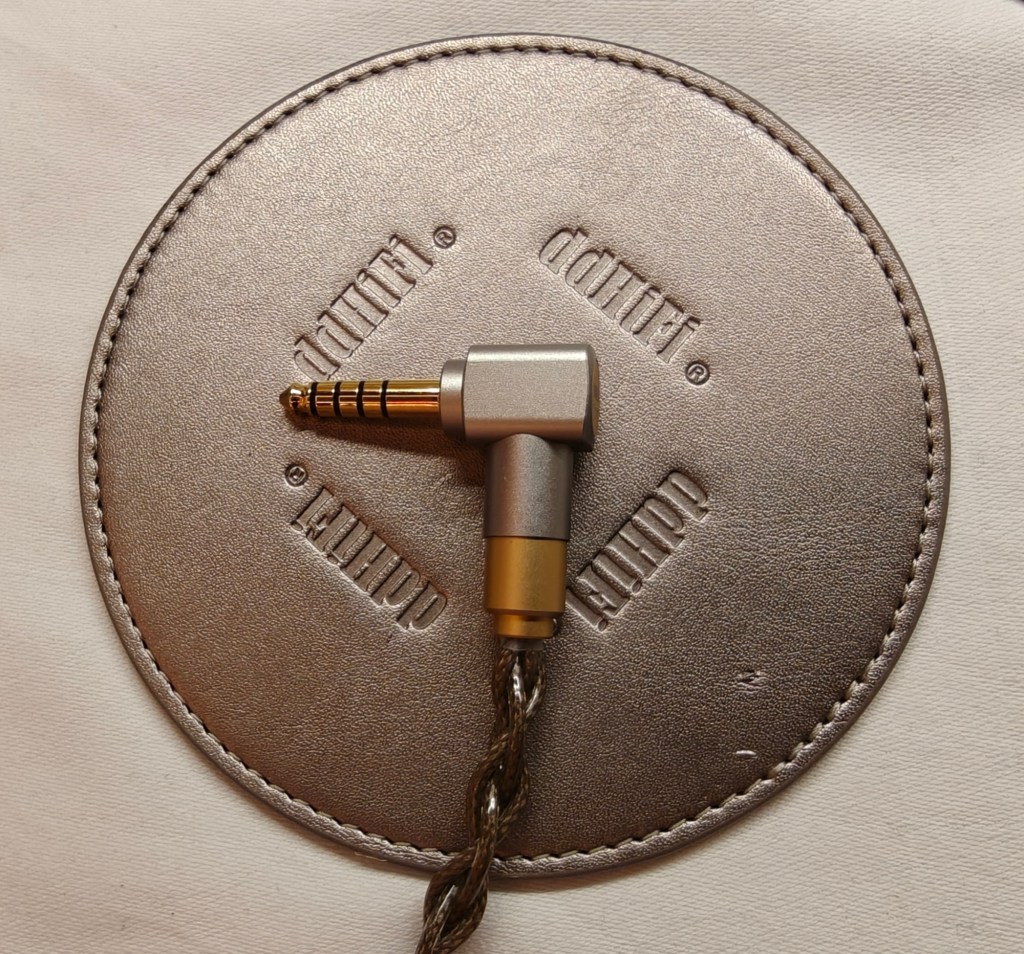
The Surface is a collaboration with well respected manufacturer Moondrop, and looks like a very industrial version of one of their classic designs like the Moondrop Variations. It comes with a pseudo-custom shape, a transparent acrylic body and an eye catching all metal faceplate. The design highlights the tindiness of the internall design, with the dynamic driver and four armatures powering the sound all clearly visible. In terms of fit, the Surface was nice and erognomic, with a good quality cable (the demo unit came with a DDHifi Nyx cable attached, which is a nice aftermarket option with an unusual (but excellent) right angled 4,4mm connector, which more manufacturers should definitely implement.
Sound wise, the Surface sports a bass-lifted Xxx style of tuning to my ears. It veers more towards L-shaped than a V or a U, with a thick velvety low end. Kicking off in the sub-bass, Heaven by Emile Sande starts with a decent thrum of sub-bass. It isn’t as dry and technical as some other sets I listened to at the show, erring more towards the soft and pillowy side, with a nice sense of wetness or bloom to it. Similarly with “Why So Serious?” from The Dark Knight soundtrack, the classic bass drop was presented well but not absolutely huge in terms of quantity or quality (still more than plenty for most people though). There is a fine ticking sound that kicks in over the pulsing sub rumble around the 3:35 mark on flagship level gear – for the Surface, the bass kept that masked until around the 3:45 mark. which is OK, but nothing too impressive. The Surface fares better on “Dubai Blues” by Chickenfoot, with the ghost notes on the drum pattern cutting through the mix reasonably crisply thoughout.
Listening out for more bass masking, the small click in the left foreground of “Palladio” by Escala is audible at around the 6 second mark, but feels quite soft and not overly crisp. That is balanced out by the significant weight the Surface gives to the cello in this track, which sounds pretty beefy and rich. Bass could be described as “tastefully thick” in most cases, with tracks like “You’ve Lost That Lovin’ Feeling” by Elvis Presley and the Royal Philharmonic painting the track with plenty of chunky midbass, and giving Elvis’ vocals some good density and heft. That does come at the cost of a little clarity, with Elvis sounding pretty chesty and slightly smoothed over on this track compared to other gear at the show.
Firing up “Drift Away” by Dobie Grey, the prominent midbass in this track veers fully into ice cream headache territory, resonating in the skull of the listener and shaking a few fillings loose in the process. The slam and weight continues with “Bad Rain” by Slash, with a pretty crisp slam and punch to the bass drums in the intro, and a fat and heavy tone to the bass guitar that kicks the track into life. The bass sounds pretty smooth however, with the rasping snarl that usually defines this track feeling somewhat filled in by the wetness of the low end – again, the word pillowy springs to mind. “Ratio” by Massive Wagons is another good example, with the track sounding like a headache-inducing wall of sound, giving the track a very “live in the rock club” kind of feel.
That sort of liquid bass tuning works well for more laid back fare, with “Acid Eyes” by Scottish troubadour Paolo Nutini coming out of the IEM nozzles with a very smooth and enjoyable tone. Generally, I’d say this is an IEM that leans more towards fans of a big midbass and a big sound over fans of bass texture or resolution. The other technical aspects are decent for the price, with a nice left/right placement of drum hits on the rolling drum fill in “Coming Home” by rock supergroup Sons Of Apollo, and plenty of crunch and “gaaah” in the guitar on this track. Other guitar based fare like “Stalight” by Slash comes through as decently crisp but not over-sharp, with the opening harmonics in the track coming through cleanly but without some of the bite you usually get. It does balance out the harshness of Myles Kennedy’s vocals in some parts of this track though, so if you have a library full of sibilance and don’t mind an extra portion of bass with your music, these would be a very forgiving choice.
The weight coming up from the bass can bleed into the mids sometimes – on “Broken Halos” by Chris Stapleton, the singer’s voice comes through as too chesty, with too much mid bass in the track. The acoustic guitar playing over the top is nicely euphonic, so there is some control there, but this definitely isn’t as locked down as some of the other high end performers in the sub-$400 bracket at the moment. The tone is good, though, with “Millionaire” by the same artist sounding nicely musical. The tone is pretty warm and rich, whcih works nicely for piano led music. “Run” by Leona Lewis has a really nice timbre on this track, even if her breathy vocals are rendered a little too thickly for my taste. Matt Andersen doesn’t fare too well with these IEMs, his track “Give Me Some Light” sounding a little too congested and again chesty in places, but in contract very nice and musical in others.
Finishing up the midrange testers, “Everything Good Is Bad” by JJ Grey and Mofro actually sounds really engaging through these IEMs. It’s a pretty syrupy version of the track, but it suits the gospel-flavoured chorus well and the thick guitar chords take on some serious weight. It definitely got my feet tapping along, which is a decent sign.
Listening for some treble cues, “Go” by The Chemical Brothers has a banging, big sound, with the swirling synth work that floats around the top of the track sounding a little smoothed over but actually holding its won reasonably well against the big bass. Again, looking for crispness, the instrumental “Figaro’s Whore” by Sons Of Apollo is a little blunted, not quite as crisp as the biting organ can be rendered on other IEMs. Using violin and synth track “Chia Mai” by Duel, the Surface actually sounds pretty balanced here, with the treble sounding audible but leaning more towards soft and delicate, indicative of the Xxx lean to the tuning. It isn’t a dark sounding IEM, it just gives the upper end a few less dBs to play with compared to the prominent midbass.
Overall, the sound from the Surface was decent for the asking price, and despite the reasonably close lateral staging, it actually extends pretty deep from front to back, so you do get some good technicality for the price bracket in some aspects. Overall, it’s a good everyday carry for your commute / beater sort of IEM, but if you’re looking to spend $300 on your main listening device then there are a few other options I’d probably consider around the same price range.
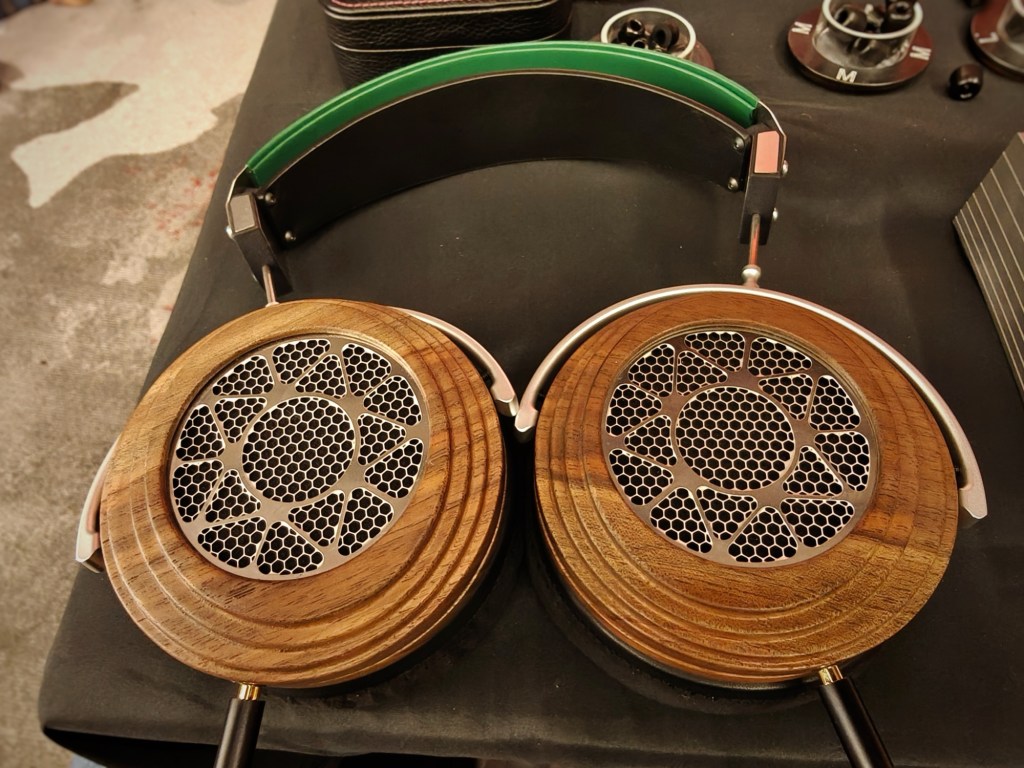
Spirit Torino Centauri 1706
Centauri 1706 – single planar , c. £2600 – tested at between V75 and V80 on Super High Gain
Spirit Torino is a brand I have a lot of time for – I’m a previous owner (and big fan) of their Twin Pulse Beryllium IEMs, and also their mid-priced Mistral models (both the semi open and closed backs). I even managed to snag one of the orignal Spirit Labs twin pulse designs (the dual driver Grado rebuilds that formed the basis for creating the Spirit Torino brand), so it’s fair to say I like their overall approach. They generally tune to isophonic preference curves – feel free to look that up, but the general end result is cans and in ears that have plenty of low end, and place a premium on sounding as true to life as possible – a real life cello has a significant low end element to its sound if you listen to it being played live, and Spirit Torino don’t shy way from that. Again, there were always a few people at the desk whenever I walked by, so I settled on listening ot the Centauri 1706 out of their range of cans I hadn’t heard previously.
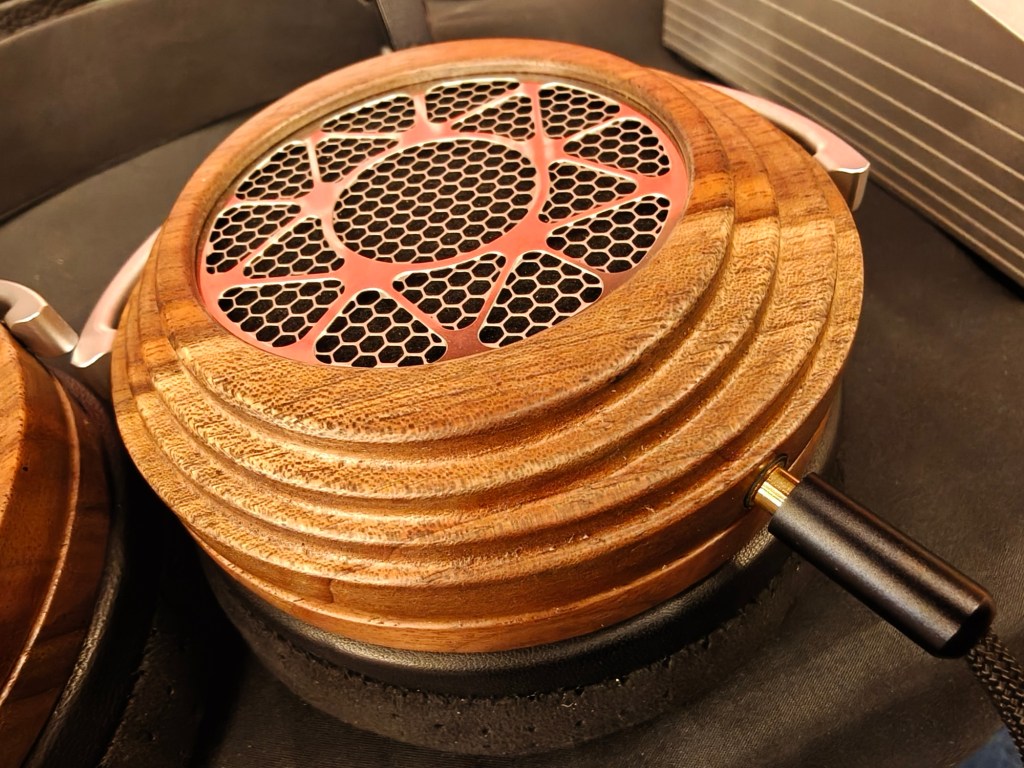
The Centauri 1706 is an updated edition of Spirit Torino’s debut planar driver headphone, with a beautiful open back walnut wood design, with a geometric pattern across the cups and headband that is based on their brand logo. For a planar driver it’s reasonably light but definitely still present on the head, and the suspension style headband on the Spirit Torino may look a bit like an engineer’s wet dream, but it actually wears really well on the head, as long as you don’t mid a pretty snug clamp. The pads are fitted with Dekoni Audio’s Ventilation Pad System (to allow for some configuration of the bass response) and the cabling is from boutique brand Portento.
Sonically, the Centauri gives a full on, pretty big XXX style sound. I thin you’d technically call it W-shaped, but it just feels balanced but large across the board to my ears. The manufacturer describes it as a powerful and solid bass, with a warm and detailed sound, and staging that is both frontal and deep. To my ears that’s pretty accurate.
Kicking off some demo tracks, “Heaven” by Emile Sande, the track comes through with good warmth in the sub bass, showing plenty of volume down low. There is a decent crispness on the snare drum that cuts through the track nicely, and Sande’s vocal sits well on top of the sound with no harshness. “Why So Serious?” has decent but not overwhelming volume in the sub bass, but it does show good tightness and control, highlighting the faint ticking details at around the 3:39 mark, which is pretty good for an open back in a noisy environment. I suspect that might have been more audible in a quiet room doing some at-home listening, but until headphone conventions manage to invent proper sci-fi “cones of silence” for testing open back headphones in a room full of chattering audiophiles, you’ll have to take my word for that.
Picking out “Palladio”, the foreground click is actually quite muted by the bass, which surpried me given the overall resolution in the other music I listened to, but the cello on this track sounds very rich and resonant. Overall, the weight of more midbass and lower midrange instruments and music is excellent on these cans, with tracks like “Drift Away” sounding very musical, with a bass guitar that is prominent but not overwhelming. The texture of stringed instruments like cello and bass guitars is excellent, with “Hello, It’s Me” by Sister Hazel showing very good texturing on the rich and velvety bassline that drives the track.
Similarly for “Bad Rain” by Slash, the growling bass guitar that underpins the music has plenty of fine detail and texture alongside the grunt, giving plenty of anima to the track. Playing something like “You’ve Lost That Lovin’ Feeling”, you really get a feel for the warmth of the bass, without the track getting suffocated by stuffiness. Elvis’ vocal on this track is really up front and velvety on the Centauri 1706, with the headphones letting the listener hear the very fine inflections in the movement of his mouth as he sings the famous track, digging out loads of fine detail and pushing it in front of the listener.
There is an overriding sense of listening to music in a live venue with a good sound system when you listen to your favourite tracks through this headphone – “Acid Eyes” by Paolo Nutini is a very relaxing listen, making you feel like you’re right there next to Nutini as he sings and strums his bass. Pushing the tempo up a bit is no issue either, with “Dubai Blues” by Chickenfoot coming through with loud and clear ghost notes on the drum, an up front and fat overdriven bass guitar and chunky electric guitar from Joe Satriani that seems to wrap around the head.
This is a headphone that you can easily lose yourself in the music with, despite the analytical capability. Putting on “Shadow Life” by Slash, I had to listen to it twice as I completely forgot to take notes the first time around, it felt so “live”. The presentation on this track feels a little slower and thicker than I would expect from a high end planar driver, but it doesn’t get congested, spitting out the breackneck riffing cleanly, just with a little more weightiness than I was expecting. Sticking with Slash, “Starlight” was another highlight on these cans, with the opening harmonic sounding crisp and crystalline and Myles Kennedy at his helium-fuelled best. The subtle vibrato on the guitar strings at the end of the intro is captured smoothly, but with no loss of resolution or clarity. There is an ease to the resolution that sounds unforced, the Centauri just presenting all of the information to the listener without unnatural emphasis.
Another Slash test track, another win – this time “C’est La Vie” comes through like a large wall of sound, capturing the energy of the track and giving another concert like experience. Another word that springs to mind when listening to the Centauri 1706 is cinematic – putting on “Millionaire” by Chris Stapleton, the chiming guitar is so euphonically sweet it could practically give you diabetes, but the vocal is still gruff and raw enough to raise the hairs on your neck. The best part is, both elements blend together perfectly, which is sometimes a difficult trick to pull off. Sticking with Stapleton, “Whiskey and You” has a rich and up front presentation, picking out lots of the room detail in the track. There is plenty of grit in the vocal rendition, but the Centauri steers clear of the rawness and sibilance in the chorus, making the voice sound rich rather than grating.
Tonally, the Centauri is pretty true to life to my ears. “Run” by Leona Lewis has a nice tone to the piano, with the orchestration lending a sweeping cinematic effect to the track, playing off nicely against Lews’ haunting and breathy vocals. The Centauri take some of the rasp and vinegar out of Paolo Nutini’s “Through The Echoes”, but leave it sounding very enjoyable nonetheless. Deeper voices like Matt Andersen play particularly well on these cans, with the Centauri making very pleasant listening of “Give Me Some Life”, filling the soundscape with warmth from the bass like a well run bath.
I ran out of time to run most of my usual treble test tracks apart from “Chia Mai” by Duel. Suffice to say, the violins and keys in this track both sound true to life and suitably ethereal, but still retain enough bite and more than enough resolution not to sound dull or lacking.
Overall, this is a very well built and engineered headphone, and it sits very well with my own sonic preferences. I have read some interesting reviews of the original Centauri, so I’m not sure whether the 1706 is a significant departure from that particular tuning or I just click with the sound better, but either way, this is a high end headphone that is worth auditioning if you are looking for something with plenty of weight and musicality across the board that doesn’t sacrifice detail for enjoyment. Surprise headphone hit of the show for me.
Ice Labs Spectrumica and Prismatica
Spectrumica – 1xDD 1x BCD 4xBA 2xEST – c. £1800, tested at V55 High Gain
I came across Ice Labs at a previous Canjam, and remember being very impressed with their 5xBA Prismatica model. Since then they have garnered a decent following with their cable manufacturing arm sporting plenty of superhero (and supervillain) names cables like the Ultron. They have also got a decent amount of hype going around their quadbrid flagship, an IEM called the Spectrumica. I hopped on to their table close to the end of the day, and took it for a spin.
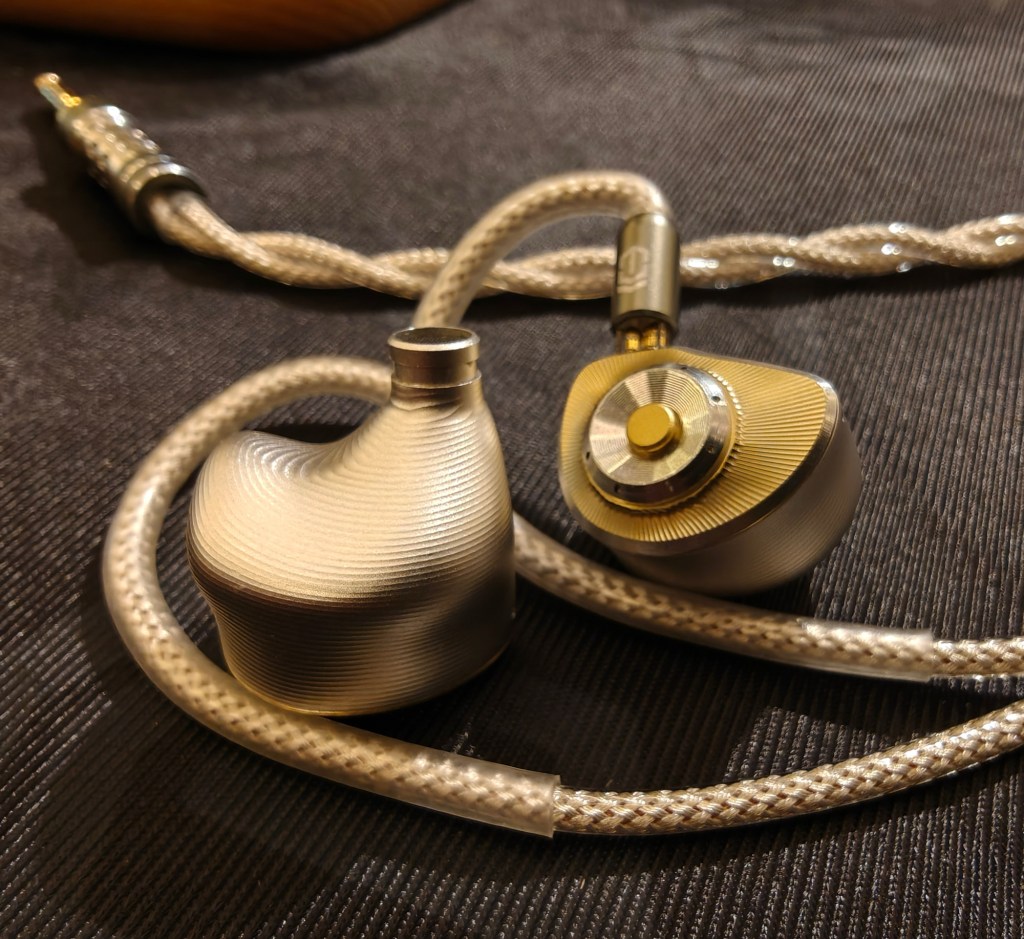
The Spectrumica is an interesting design, with a 1xDD / 4xBA / 2xEST / 1xBC driver split, and an all metal shell made out of aluminium with an interesting disc on the outside that looks like a Focal speaker cone. THe Spectrumica is tuned for musicality, with some interesting “P-Sync” phase alignment tech working inside the shells to ensure the bone conduction unit works in phase with the dynamic driver setup for better cohesion. It looks like a high end model, with a solid but still ergonomic fit and a nice heft when you hold the IEMs in your hand. The cable (a custom-shielded “Mica”, also from Ice Labs) is definitely after-market quality, and is apparently custom tuned for the Spectrumica, which should negate the need to immediately go shopping for a new cable if you do decide to pick these high end IEMs up.
In terms of overall tuning, the Spectrumica comes across as an XXX style of tuning to my ears, with some emphasis on either end but not overly bassy, with just a little dash of brightness in the treble. It has a nice but subtle push in the vocal ranges, bringing voices close to the forefront of the stage.
Diving into my usual test tracks, “Heaven” by Emile Sande has plenty of sub bass to kick off the intro, but not an overwhelming amount. Sub bass in general is present but not too emphasised, with the Spectrumica leaning more on the midbass in terms of quantity. There is warmth and heft to lower end instruments that lends a realistic tone to things like cello and upright bass, which always aids immersion for me. The warmth doesn’t come at the cost of clarity, with “Palladio” by Escala showcasing the sutble click in the intro clearly, but not overemphasing it in the listener’s ear.
Listening out for more midbass, “You’ve Lost That Lovin’ Feeling” by Elvis and the Royal Philharmonic showcases a nice level of physicality to the sound, with a clear and weighted bass guitar driving the track along. Similarly on “Drift Away” by Dobie Grey, the bass is hefty, packing a lot of weight in this mid-bass centric track. The BC driver helps to add a sense of physicality to the low end presentation, giving tracks like “Bad Rain” a very visceral growl to the snarling bass guitar and a good thud and slam to the kick drums. The bass leans more to wet than dry or powdery, but it does exhibit an excellent sense of control and “grip”. Listening to “Hello, It’s Me” by Sister Hazel really brings that element into focus, the Spectrumica playing back the track with a gloriously liquid rendition of the slinking bassline, but packing each note with plenty of reverb and detailing around the edge.
As mentioned, vocals are a little more forward stage-wise, which does bring a ice sense of intimacy to the presentation given the otherwise large staging, but can occasionally feel a little too close. On “Acid Eyes” by Paolo Nutini, the track is very musical and nicely bassy, with a lovely sense of emotion and rawness to the vocal delivery, but Mr Nutini feels like he’s singing directly into my forehead on some lines, so this could get a bit much for prolonged listening.
Listening to other guitar based tracks, the Spectrumica gives a crisp and generally crunchy or biting rendition of heavy rock guitar, again with a decent element of emotion. Listening to “Coming Home” by Sons Of Apollo, the track sounds pretty engaging and explosive, highlighting the excellent sonic placement of each note with the rolling drum fill that sweeps across the chorus, which starts way to the left of the stage and rolls perfectly right across the back of the listener’s head. The other track that stood out for me was “C’est La Vie” by Slash, with the Spectrumica giving the track a very organic and old school “retro” feel.
At this stage of the day I was running out of time, so I had to cut my listening short to let another head-fi’er have a listen before close, but the general impression the Spectrumica left was definitely pretty impressive. It leans pretty musical and nicely warm, but if you don’t mind a more engaging and “up front” sort of tuning, this is definitely a TOTL competitor.
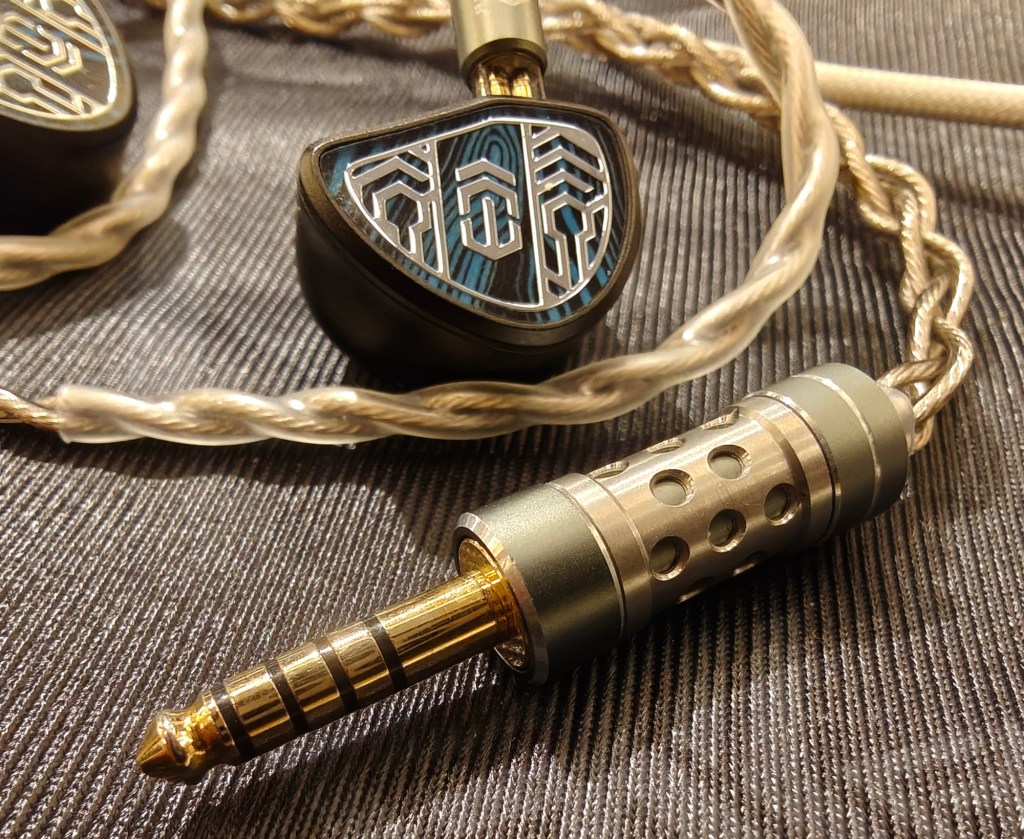
I did have time to take a few notes on the 5xBA Prismatica again before I left the table, to see how it compared to the new flagship. Going back to “Heaven”, the Prismatica had comparable or possiblyt weightier sub bass, which is impressive in an all-BA unit. I also noticed that Sande’s vocal cut through the sub bass fog a little more aggressively on the Prismatica, which was interesting. Detail and masking was top tier on the Prismatica, with the subtle ticking on “Why So Serious?” kickign in around 3:36 or 3:37, which is impressive.
The Prismatica isn’t as warm as the Spectrumica, but the payoff comes in a more overtly detailed presentation. That isn’t to say the Prismatica is more resolving than its flagship brethren, it just pushes more of the detail in the face of the listener with a more aggressive and sharper tone. There is an immediacy about the sound on the Prismatica, with a lot of the instrumentation and vocals being pushed way up front towards the listener – “Acid Eyes” is a good example, with Nutini eschewing the “singing into the listener’s forehead” approach of the Spectrumica and going all in, climbing inside the cranium and belting out his tune directly into the brain.
As a result, the Prismatica could be sharper or harsher than the Spectrumica. Listening to “Drift Away”, the opening guitar sounds crisp and the vocal is really textured, but there is a sense of potential harshness or sharpness in the upper mids that just isn’t there with the Spectrumica. In trade, the Prismatica showcases excellent speed, handling tracks like “World On Fire” or “Shadow Life” by Slash slightly crisper and more surgically than the Spectrumica in direct comparison. It does manage to stay smooth with most vocals though, skirting around the rawness of Chris Stapleton on “Whiskey And You” and exhiniting noteworth separation and placement on tracks like “Millionaire” by the same artist.
Overall, the Prismatica is just as impressive as I remembered it from the previous year, and if it doesn’t quite scale the heights in terms of overall refinement and holographic sonics than the Spectrumica does, it’s a pretty good call if your budget is on the lower end of the scale (relatively speaking). The Spectumica is a TOTL grade flagship, with all the attendant detail and clarity that comes with. It’s a different take on flagship tier sound, and while it definitely isn’t designed for those who prefer a more laid back tuning, it’s an impressive entry into the upper end of the market for Ice Labs.
Meze Audio 105 Silva
Open back dynamic driver headphone, tested at V80-85 on Super High Gain
Meze need no introduction to most audiophiles – the Romanian brand has established a large presence right across the audio landscape with their collection of mid and high end headphones and in-ears (alongside some pretty nice cables, too). As always, the team on the Meze table were engaging, froendly and just seemed genuinely happy to be there, which always gives off a good vibe.
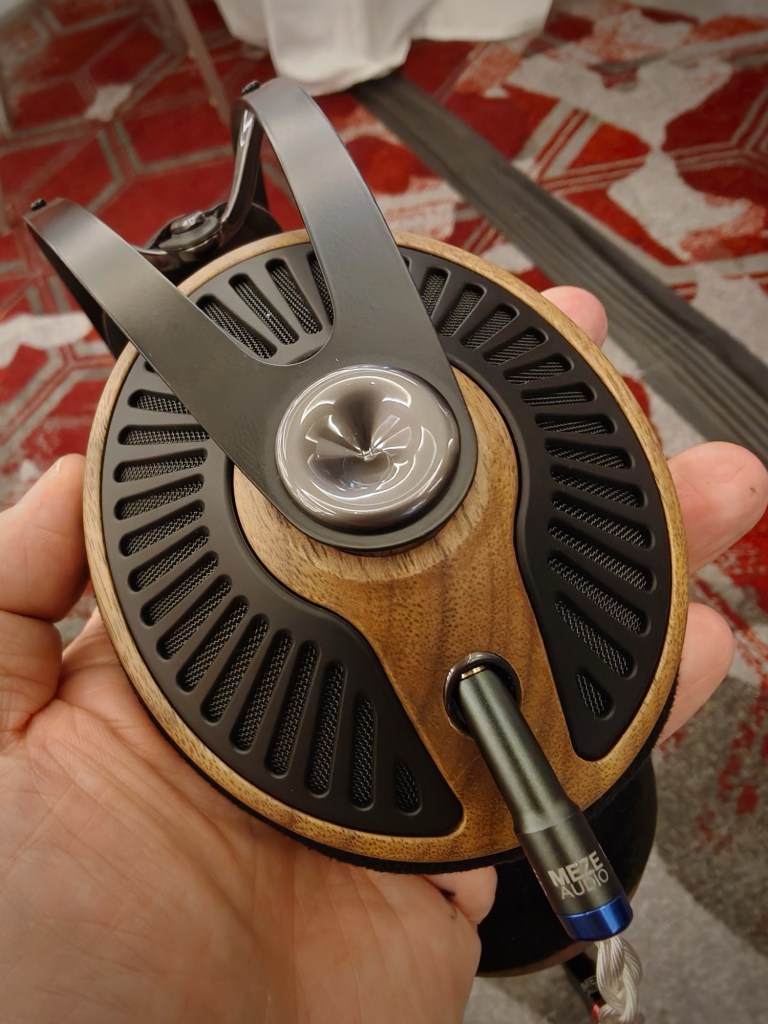
In terms of the gear they had on display, I was interested in listening to the 105 models – the Aer was always occupied when I went past, but I was fortunate to bag some time with their newest mid-range open back the 105 Silva. It follows the same design language as its big brother the 109 Pro, with a gorgeous wood and metal design. This time the open back element of the cups is achieved via a pattern of slots radiating out from the central fixture on the earcup – it is pretty open (so isolation is expectedly poor), but is another looker to add to Meze’s already prolific collection of “cans that look good“. The overall fit and finish is excellent, with the 105 Silva sitting snugly on the head and disappearing while in use. It’s fair to say that if any company has absolutely nailed headphone wearing comfort, it’s Meze. You might lose out on portability / being able to fold the earcups flat / other quality of life bits for transporting your cans, but when you put them on your head, it’s just perfect.
I only had a brief time to audition these, but the general impression was pretty impressive, especially for the price. The 105 Silva struck me as a slightly more fun tuning of the 109 Pro (which was already pretty musical), with a little more low end but retaining the sweetness and sparkle up top – it feels like a definite step up from the 99 Classic in terms of overall sonics, and just a shade less resolving and clear than the 109 Pro, although you would be hard pushed to notice that unless you listened to them back to back.
It shows good detail throughout – “Palladio” by Escala exhibits the click in the foreground of the intro pretty clearly, with a nice finely grained texture and weight to the cello. “Drift Away” has plenty of the signature bass guitar, but stays controlled enough not to trigger a frontal lobe headache, Bass is relatively plentiful, but not the most physical, despite the large dynamic driver in the earcup – the initial drum hits on “Bad Rain” are present, but don’t land with the physical slam that you can get on some in ears or headphones, with more of a diffuse or pillowy impact. There is plenty of texture and grit in the raucous bass guitar lick though, so this isn’t “soft” bass either. Tracks like “Hello, It’s Me” highlight this well, with the Silva giving a nice blend of liquidity and grit to the bassline, and cutting through sharply when the overdriven guitar kicks in. Guitar tone in general sounds nice and crunchy, with good energy throughout. It still has the tinge of warmth and sweetness that characterises the 99 Classic and 109 Pro, but has just enough bite to keep things interesting.
In terms of staging, the Silva actually feels more on the intimate side of things, despite its open back design. Listening to “Acid Eyes” by Paolo Nutini, it gives a very smooth and musical take on the track, enveloping the listener in the soundscape and bringing everything up close on the stage. There is still a good level of separation and technicality, but this is tuned more as an intimate studio recording room type of sound rather than a 5 rows back in the auditorium kind of affair.
Overall, the 105 Silva seem to tick all the boxes that the 109 Pro do, with added fun in the low end and just a shade less in terms of dimensionality and clarity in the sound. For me, this is the sweet spot for Meze’s mid range gear, as they could comfortably replace the 109 Pro as a daily driver headphone for a lot of listeners with no obvious dip in quality or compromise on technicality, but at just over half the cost. It’s great news for audiophiles on a budget, and just for lovers of that classic Meze house sound.
Viking Weave Cables Draupnir (and Symphonium collab demo)
Tested at V70-75 on Super High Gain (bass boost off), V110 (bass boost on)
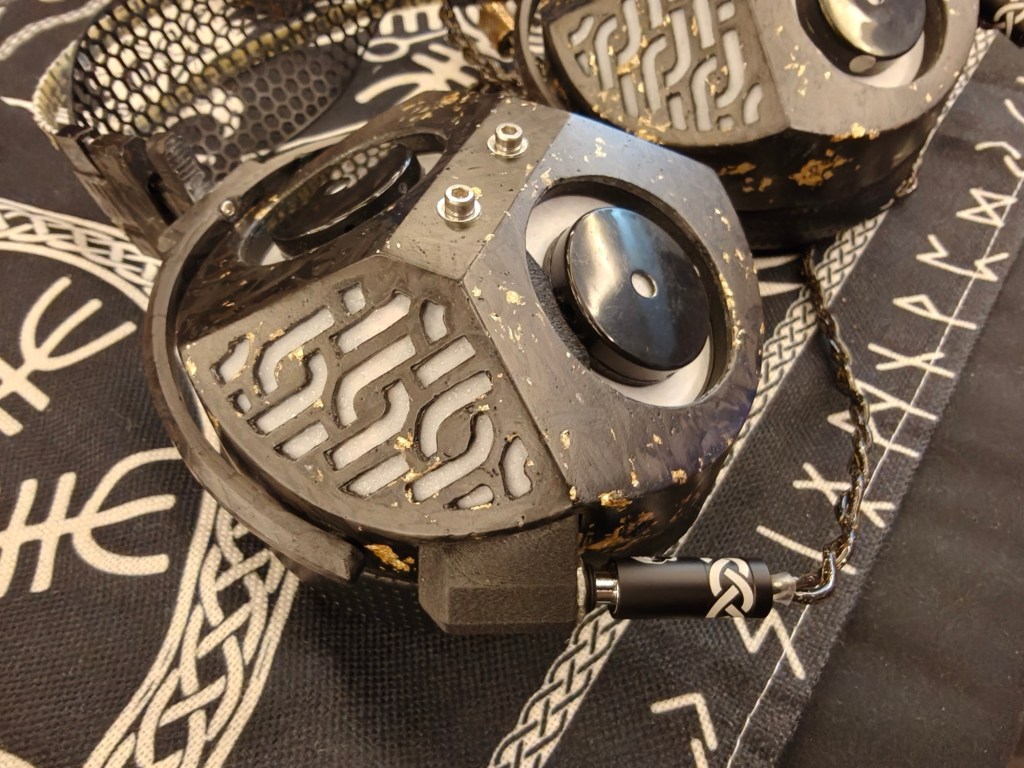
Viking Weave are primarily a cable manufacturer, springing up from a collaboration between a couple of Head-Fi enthusiasts and turning into a pretty successful boutique cable maker, with cables being included in various brands higher end offerings now. Testing cables at somewhere as noisy and time contrained as Canjam is probably like trying to eat a gallon of soup with a fork, however, so I refrained from trying any of the beautiful looking audio jewellery and moved straight on to their other line of products, their audio gear. They are developing both a headphone and an IEM, with the IEM being made in collaboration with Symphonium. The headphone is called Draupnir (I think I got that right!), and is a dual dynamic driver setup with a forged carbon frame and a truly unique industrial design aesthetic. I did listen to the initial prototype last year and was pretty impressed, but it’s fair to say that this year’s iteration has definitely moved up a level, both in terms of design and overall sonics. The team are still working on some final iterations of the housing, but it’s apparently getting pretty close to release now.
I’ll let the pictures speak for themselves in terms of the design, but in terms of wearing comfort, the headphone is light and snug fitting, so feels like it will e good for some pretty long listening sessions without discomfort. The forged carbon body should also make it pretty robust, so these are cans that shouldn’t need babying. One final point to note about the design is the bass tuning switch concealed inside the earcup – the original demo I tried last year had a cable based impedance adapter which pushed the bass levels way up (think Nightjar Duality or Fatfreq levels of up), but resident mad inventor Skedra has managed to fit the booster tech inside the headphone design itself now, offering two distinct signatures. One point to note: as it’s an impedance based boost, flipping the bass switch on does significantly increase the amount of power needed to drive the headphones, so if you’re a devout basshead, be prepared to use a punchy source to get the most out of these cans.
The impressions below are based mainly on the bass switch being off, unless stated otherwise – they were also taken in the noisiest part of the show, and given that the Draupnir has very low isolation due to the open back design and carbon shells, please take them with an extra pinch of salt.
Kicking off with “Heaven”, the Draupnir give s a nicely controlled level of sub bass, with a good level of hum. The whole track is handled pretty well, to be fair, Sande’s vocals and the other sonic elements all blending together nicely. Testing for deep sub bass, “Why So Serious?” has a decent rendition of the sub-bass thrumming that occurs after the 3 minute mark in this track, but it’s not the largest or rumbliest rendition – if you want that, you’ll have to engage the bass boost. Detailing in the track is OK, with the faint ticking coming in at the 3:46 mark, which is late compared to some of the in-ears I auditioned as the show. As mentioned above, the Draupnir are an open back with minimal isolation, and the show was pretty loud at that point, so would like to listen again in a quiet room at some point to see how accurate that was though.
There is a nice balance to the sub and mid bass, with tracks like “You’ve Lost That Lovin’ Feeling” coming through with a planted bass guitar and conveying a decent sense of richness to the King’s vocals. Masking isn’t a major issue either, with the subtle click in “Palladio” coming through nice and clearly against the richness of the cello. There is an enjoyment factor to the low end that isn’t particularly quantifiable, but definitely exists – I listened to “Drift Away” by Dobie Grey and definitely enjoyed the track as a whole, but couldn’t exactly explain why, just that the overall tuning was enjoyable. I fired up another one of my usual midrange testers for tone and euphony and managed to listen to the whole track without takin any notes, I was enjoying it so much, so I’m taking that as a good sign. One track I did take notes on was “Shadow Life” by Slash, with the Draupnir exhibiting a think chug to the electric guitar in the track, but interestingly, not a huge amount of bite or edge. These might be a can that emphasises tonal weight over crispness of note edges.
In terms of staging and technicality, I don’t think the Draupnir will be the last word in resolution at its potential price point of around $2000 / £2000 (that figure will likely change before production, so don’t quote me), but it does have excellent placement of instruments (imaging) on tracks like “Coming Home” by Sons Of Apollo, good speed on the intrumentation and a wide lateral spread on the stage. The staging feels a little more flat rather than holographic, so I didn’t hear a huge amount of depth, but it leaves a nicely intimate presentation to the listener as a result.
Overall, the tuning is prety well balanced, with a little push down low and up top but overall, a reasonably natural frequency response. However, it does have that little bass boost switch…
Turning that on (and cranking up the source volume), you get a sound that is a lot bassier. I didn’t write down the bass shelf it adds to the sound, but it has to be in the double figures for decibels as my guess. Putting “Heaven” back on, the track is now bathed in a sea of sub bass hum. Impressively, despite the extra dBs, the bass doesn’t encroach or bury the mids, which is a sign of good engineering. Similarly on “Why So Serious?”, the track now has much more sub bass heft, giving an almost physical vibration when the really low thrumming kicks in after the drop. Again, the fine detail comes in at roughly the same time, in spite of all the additional bass quantity.
The final track I had time to test out was “Acid Eyes” by Paolo Nutini – the ass boost makes the track feel warmer and smoother than it does with the switch off, but still doesn’t bury the mids or Nutini’s distinctive voice. I think if you have a source powerful enough to handle it, the Draupnir will be a visually stunning and sonically interesting addition to the high end headphone landscape.
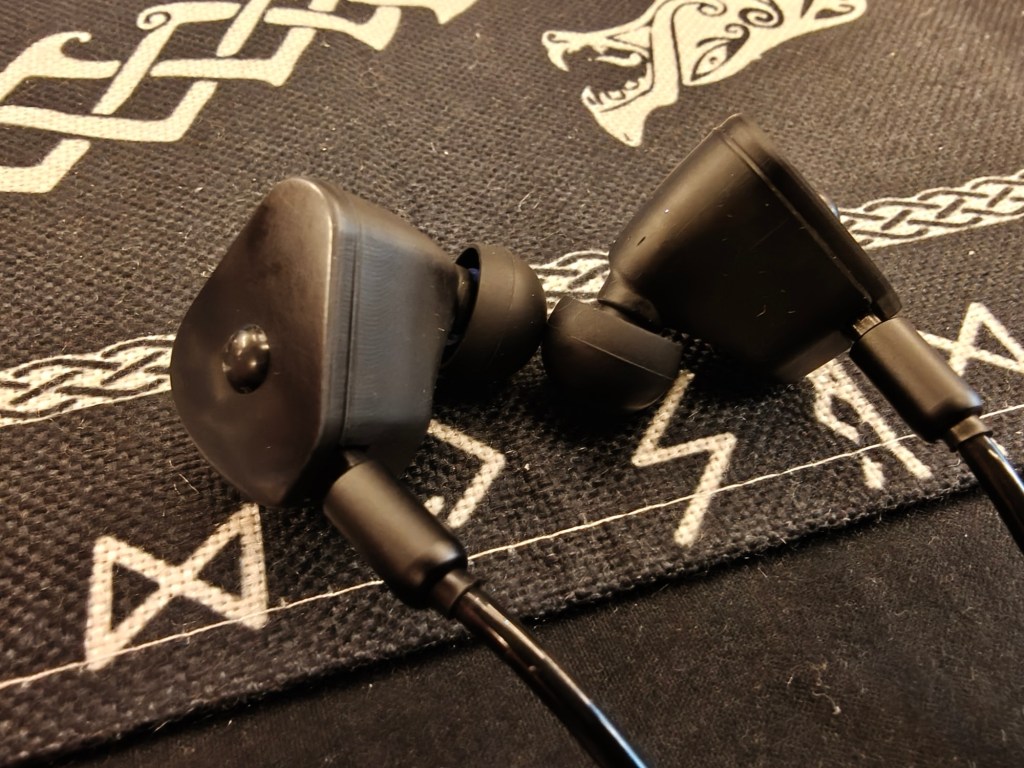
The other thing I was keen to hear was the upcoming collaboration model between Viking Weave and Symphonium. There were apparently three different tunings of this collab floating around Canjam, but sadly I only heard the one on the VW table. This was tested at V60 – 65 on Super High Gain, so again it’s a pretty thirsty piece of gear. I did ask what was inside, but either no one actually knows or it’s still in discussion, so I have no clue what driver tech was actually generating the very nice sound coming into my earholes.
I wrote notes on a few tracks, but as the shell was a demo shell (and not the production style full metal) and the tuning isn’t finalised, I’ll just stick to generalities. Overall, the as-yet-unnamed model sounds balanced, and very musical. There was deep sub bass on tracks like “Heaven”, a good sub drop on “Why So Serious?” and a soulful rendition of “Acid Eyes” that kept my attention for the full span of the track.
My overall impression is of a balanced, emotional and intimate sounding IEM, packing the expected very high resolution that Symphonium are known for and plenty of fine detail. There is a very nice blend of warmth and tonality in this particular tuning, and it definitely competed for me with other TOTL models I heard during the day, so definitely one to watch out for once they finalise the design and tuning and get it to market.
Other impressions
I did manage to snatch some impressions from other tables at the meet, but these are all a little shorter in nature so I’ve collected them all here as more of a set of knee jerk reactions than anything else:
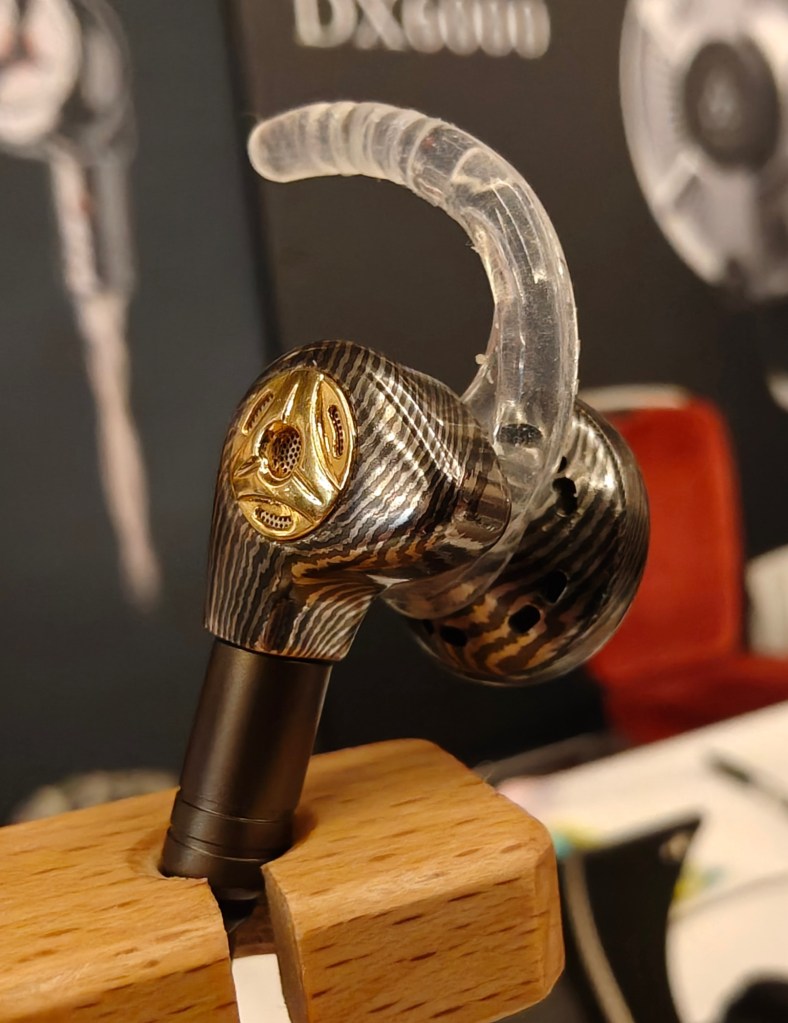
Pislo Totem ($1099 USD, flathead earbud – tested at V94)
I’m not an earbud person, but I thought I should try some of the quite frankly beautiful looking earbuds on the Pislo stand. The Totem was up first, and it’s fair to say, I’m still not an earbud person. It had plenty of detail on tracks like “Palladio”, but the sub bass was pretty minimal, and tracks I know well felt very textured and clear but just a bit too thin for my preferences.
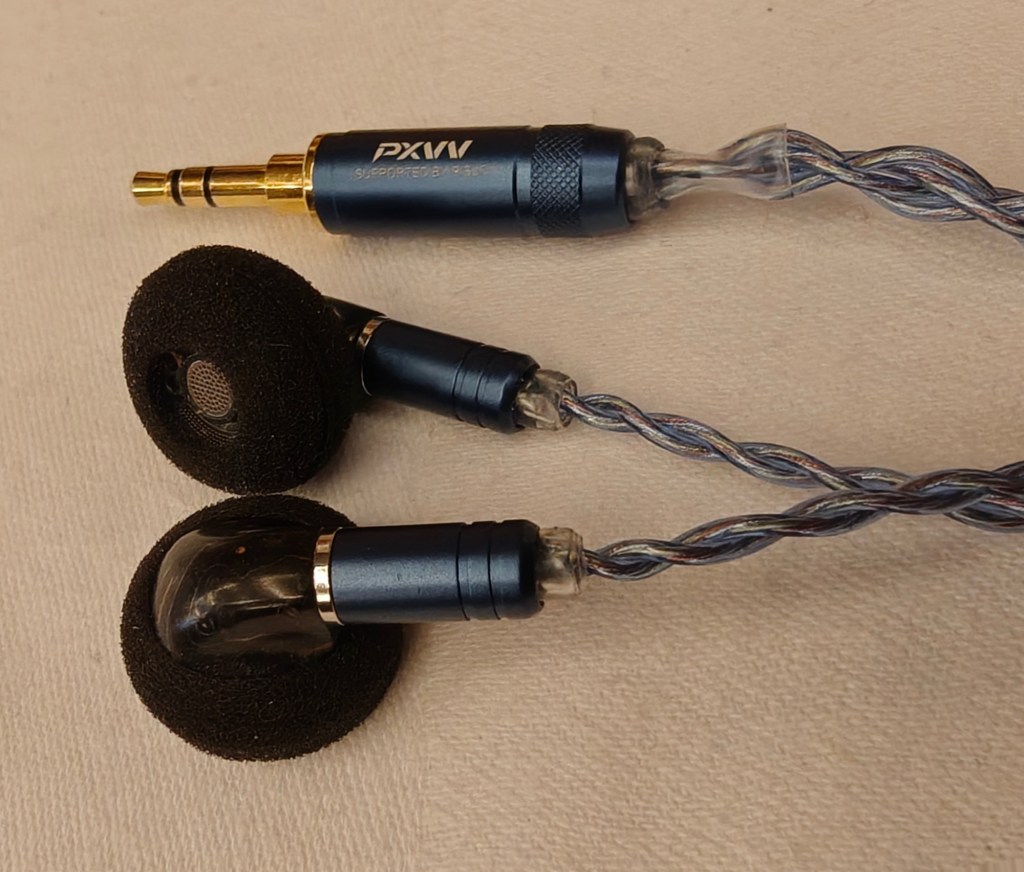
Pislo PXII (£499, flathead earbud – tested at V74)
Now this is much more like it. Another earbud, but one with a half decent low end. It paints a nice space around instruments, with good texture and detailing and a mild but audible sub bass on tracks like “Heaven”. There is a tradeoff though, as the extra energy in the mid and high frequencies make the earbud sound particularly zingy and cutting on this track, taking away some of the enjoyment factor. Sadly, this one had a passable enough low end but a little too much vinegar in the mids and treble for my personal preferences. Guess I’m still not an earbud guy!
Noble Audio Knight ($289, 1xDD 1xBA 1xPZT hybrid – tested at V60 on High Gain)
The Knight is Noble’s current entry level wired model, and has a nicely ergonomic and very aesthetically pleasing design. The small shells lend themselves to a nicely ergonomic fit – it’s not as small as the Van Gogh, even though it packs less drivers inside, but it’s definitely on the more slender side of the typical Noble design language.
The impression the Knight gave was of a good EDC type of in-ear. Bass is solid, planted and adds a nice warmth to tracks without flooding the stage, but leans more pillowy than slamming in terms of impact. THe Knight gives good warmth and weight to vocals and instrumentation, handling “Whiskey And You” by Chris Stapleton without too much issue. It’s not the most detailed or crisp rendition, but that’s to be expected at the price tag it’s going for, and it’s certainly more than adequate for everyday listening.
There is a little hint of masking in the bass, evident with the ticking coming in a little later on “Why So Serious?” (around the 3:48 mark), but it gives a nicely visceral rendition of “Bad Rain” by Slash. Again, it’s not the last word in detail, but that’s as much a product of where it’s positioned in the Noble line up and the price tag attached as anything else, as it’s definitely a capable IEM.
Long story short, if you like the classic Noble house sound and want a warm but not blunted sounding IEM to wear on your daily commute, this IEM might be worth a listen. Personally, if you have a few hundred extra in your available budget, the Van Gogh would be my recommendation here, but it is around twice the price.
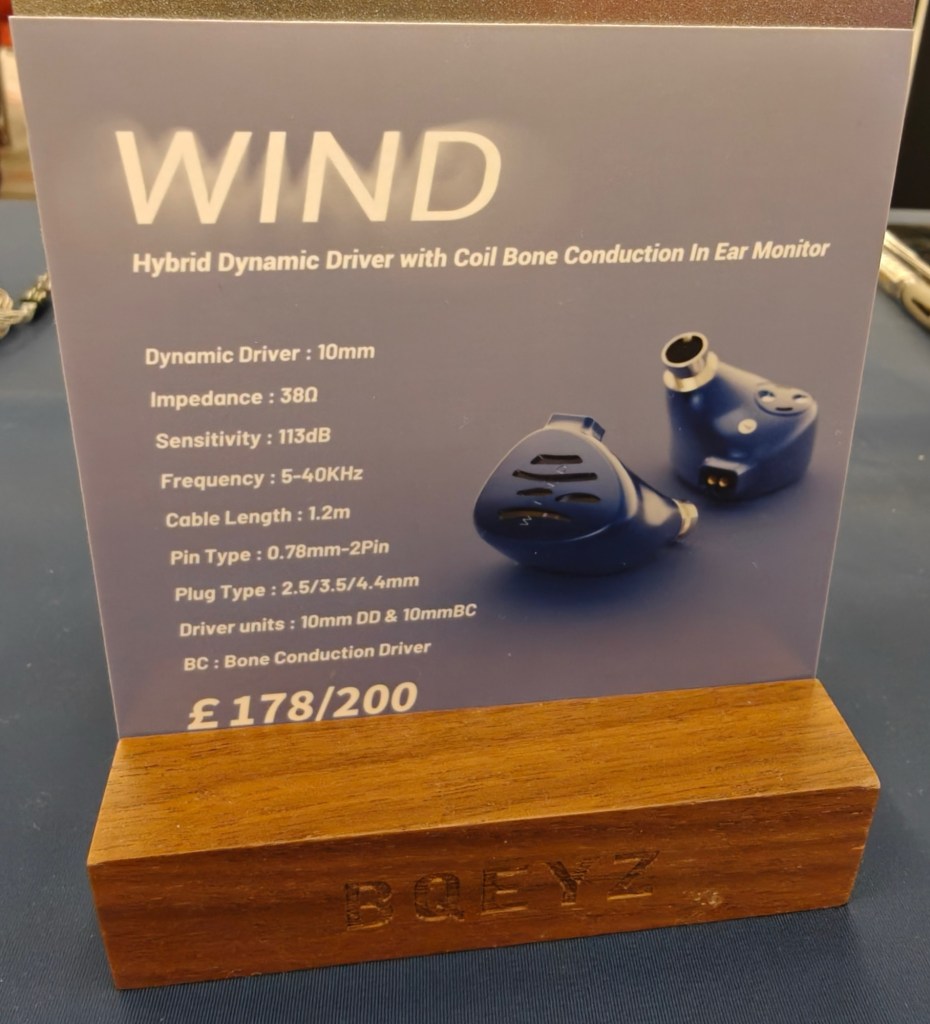
BQEYZ Wind (1xDD, 1xBC – tested at V60-65 on High Gain)
The Wind is a nice looking all metal model from Chinese brand BQEYZ, with a nice DD and bone conduction hybrid design where the BC covers more of the low end, as far as I’m aware. It definitely renders a decent amount of sub bass on tracks like “Heaven”, but the quantity isn’t overwhelming. Again, good rubmle and physicality is evident on “Why So Serious?”, but the detail in the ticking doesn’t appear until the 3:46 mark, so not the most resolving or detailed IEM I listened to at the show. There is a nice chestiness to male vocals, with Elvis sounding particularly pleasant on these in ears. Overall, an enjoyable budget-level IEM if you’re after a decently weighty tuning with that classic bone conduction holography and sense of realism, and don’t need the last word in detail.
Hidizs
There were lots of interesting IEMs and DAPs on the Hidizs stall, but I only had time to try out a few of them. The MP145 Pro is the new version of their 14.5mm planar in ear model. It had good texture and very good detail retrieval for the price (sub £200 I believe), with a tuning that is quite crisp and treble forward. Sadly, it leans just a little too bright for me, but trebleheads or people who want the most detail they can get for the least amount of money will probably love it. Bass is neutral to warmish, so it’s an interesting mix, but just too sharp to be a keeper for my tastes.
The MK12 Turris is their new 12mm dynamic driver model, which has just completed a successful Kickstarter campaign. That hits the sweet spot in the £150 price bracket for me, with good musicality, decent detail levels and great ergonomics, with a killer all metal shell. It’s musical, has decent physicality and weight and seems tuned pretty well – one to watch out for in the budget-fi section.
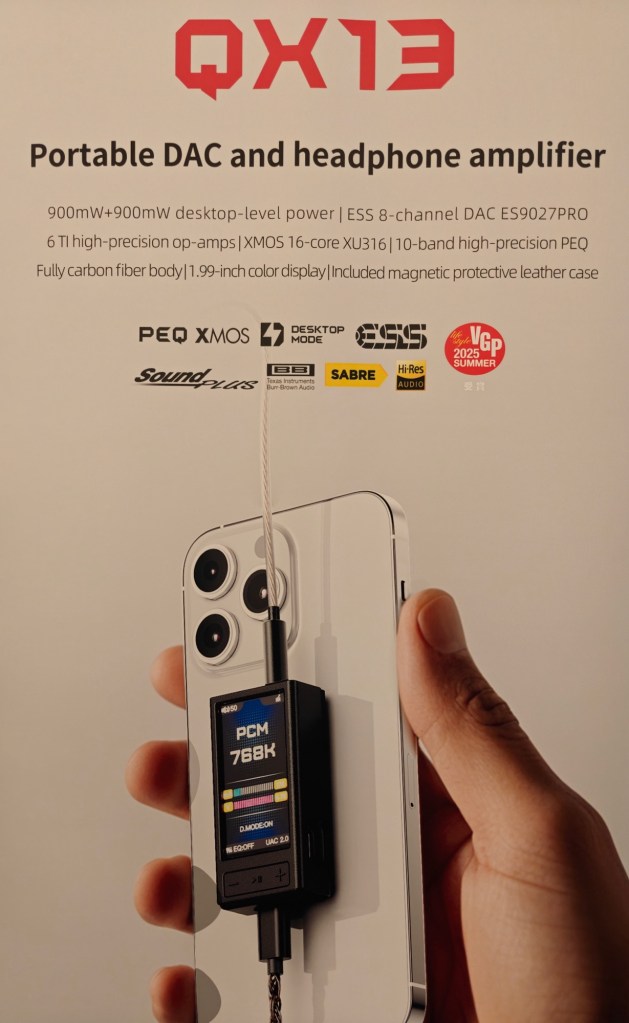
Fiio QX13 (Dongle DAC)
This was an interesting little dongle dac from Fiio. It’s very usable, being about the same size as a box of matches, and sonically gives some very nice sound quality and a decent amount of power output, driving my Pentaconn Scyne Alpha-01 easily through the 4.4mm balanced out. It also has a desktop grade ESS9027Pro DAC chip, and puts out a surprising 900mW of power nat full tilt, which is pretty much desktop grade (you need the additional battery power pack that can be clipped on to it for that, or to be running it off a PD power source). Even in “normal” mode it will output around 600mW balanced, so should provide all the power you will ever need for a portable setup.
It has a nice 1.9″ display, but the real kicker here is the magnetised case, which is designed to clip on to the back of Magsafe compatible phones of phone cases. I happen to own one (the Oneplus 13), so happily slipped the QX13 on to the back to run some tunes from the phone. It is a bit chnkier and not as elegant as the Nipo A100, so itf you’re lookign for slimline then that’s probably a more compelling design, but if you just want a dongle that runs heavy duty cans without breaking a sweat and can be clipped on to your phone when you’re out and about rather than dangling off a USB cable and damaging your charging socket, this could be a very interesting little piece of gear. The additional battery pack is a nice touch, allowing you to take the “desktop mode” fully portable, so I think this could be a decent seller for Fiio if they get the pricing right.
Final thoughts
This year’s Canjam was one of the most enjoyable to date. Plenty of great sounding gear, lots of trickle down tech and trickle down tuning from thr flagships of last year, and a welcome resurgence of bass in IEM and headphone tunings that really plays into my own personal preferences. Another fantastically well organised event, and another satisfied Canjam attendee here. Looking forward to next year!
 glassmonkey
 jackpot77
 TheOneInYellow
 trekasaurus
 Timothy Cose


 Audio Primate
Leave a comment