

Introduction
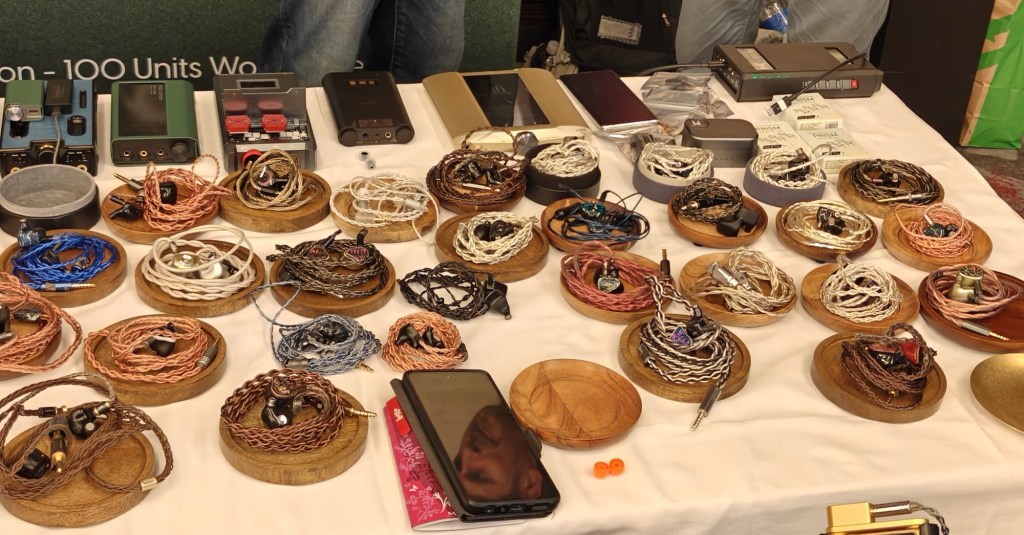
Living in Western Europe, being a head-fi hobbyist is a little like being a Ferrari enthusiast. Unless you have an unlimited budget and access to your own air transport or have suitably well-heeled friends, you can admire the beautiful technology from afar, but never actual get to test drive any of it. In the middle of the “buy it to try it” desert of the UK personal audio scene, one beacon sticks out every year – Canjam London. It’s the annual pilgrimage for scores of UK earphone and headphone aficionados, keen to hear the latest and greatest head gear and just spend time basking in good audio. I’ve been attending for more years than I care to remember now, and each year is always a mixture of good fun, good tunes and great gear. This year I was only able to make the Sunday session in Westminster, so have put together a few impressions of the gear I listened to on the day.
To start with, I’ve listed a handful of impressions of my favourite gear of the whole show (not by absolute performance / technical ability, purely by what really grabbed me from the outset). More impressions on the rest of the gear I listened will follow in due course. Please note that these are show impressions, taken at most over one or more 10 minute listening sessions with the gear in question using a pre-prepared playlist – take them with the requisite pinch of salt.
Source gear used
To retain some consistency, I used an Astell & Kern ACRO CA1000 as my source, loaded with my entire music library, including 40 or so regular “demo tracks” I like to use for comparing earphones and headphones. The CA1000 was chosen due to the fact it has the full suite of 2.5mm / 3.5mm / 4.4mm / 6.5mm jacks available, and its 15Vrms power output is usually enough to drive pretty much anything well outside of super hungry over ear gear like the Susvara. Where possible, I listened via 4.4mm balanced in either High or Super High gain modes.
Pentaconn / Sloflo
[Tested at Volume 50 on High Gain]
My first stop of the 2025 Canjam was to one of my last (and most favourite) stops of the 2024 edition: the Pentaconn table. For those who have been living under an audio rock, Pentaconn are the large Japanese brand behind the ubiquitous 4.4mm Pentaconn IEM connector (among other things). More recently, they have branched out into in-ear monitors, with the Scyne Alpha-01 being last year’s maiden entry into the field. Full disclosure – I liked the Scyne so much I ended up coming home with one last year, so I had high expectations for their sophomore offering.
Confusingly, it will be getting released under a sister brand they are setting up called Sloflo, and will initially be released and marketed mainly in Asia. They do have a UK distributor in Elise Audio, so I’m hopeful they will be picking up the Sloflo release when it launches in September.
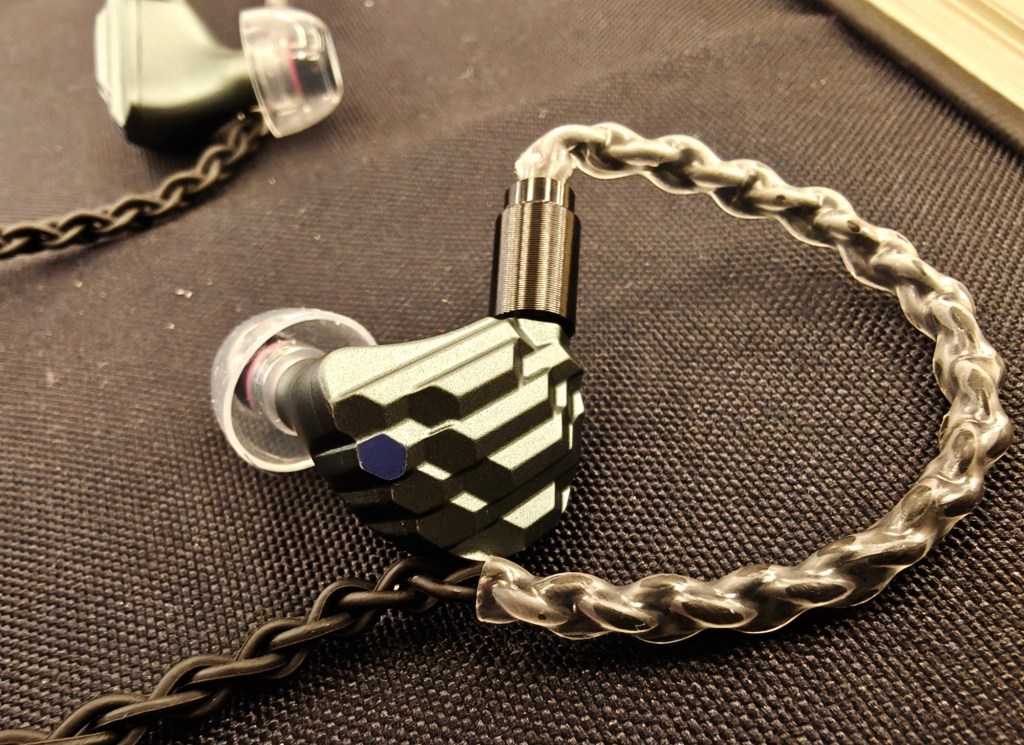
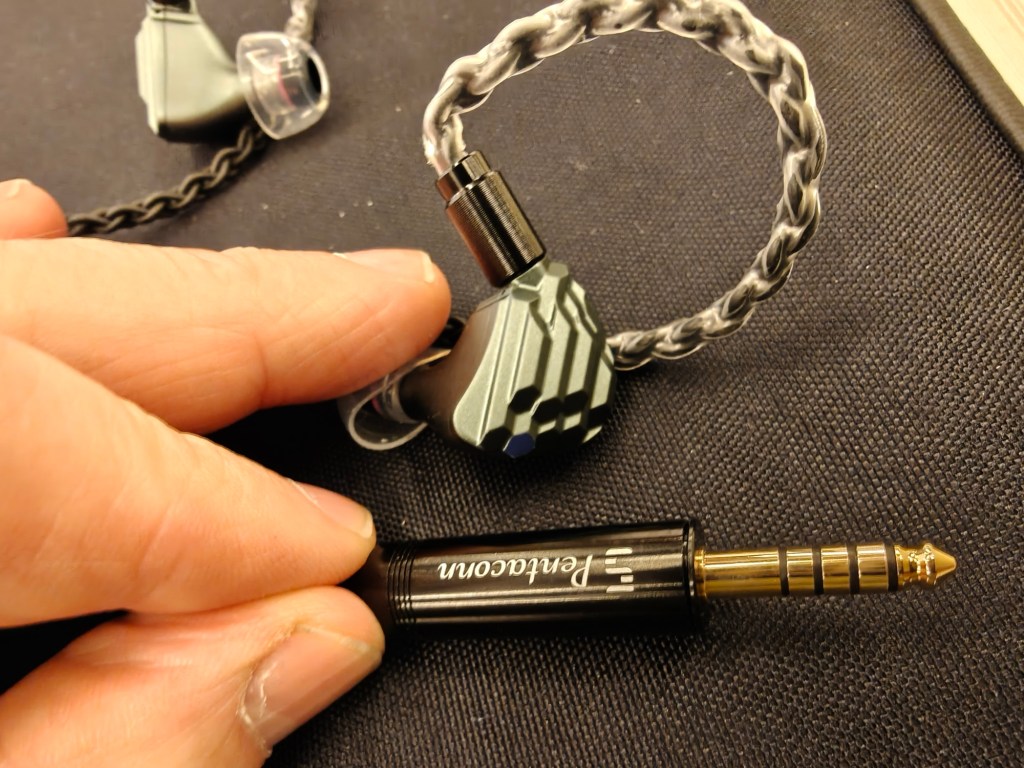
The IEM itself is a single DD IEM – they have done various elements of internal design around airflow, magnetic fields etc but unfortunately I wasn’t able to capture what exactly that was, so suffice to say it’s a single dynamic with a strong magnetic flux and a striking all metal shell design. Compared to its brother the Scyne, the Sloflo takes a more traditional pseudo-custom style design, with a very ergonomic inner shell that fits snugly in the ears. The outer shell is comprised of a geometric pattern of hexagons, which presumably serves some purpose internally, and certainly looks pretty cool externally too. It’s a very different design, reminiscent of some of the later Hidizs models like the MP145, and definitely makes the IEM stand out in the crowd. The shell is actually pretty light, and comes with the companies’ PentaconnEar connector and a 4.4mm cable as standard. They will be pitching the IEM at some point between 400 USD and 400 GBP from what I can gather, but that is obviously subject to change.
Sonically, this definitely doesn’t sound like a $400 IEM. While the Sloflo goes for a more “fun” tuning than the more neutral / reference slant on the Scyne, it is definitely not lacking in the technical aspect of music playback, with a nicely detailed and very tight attack and release. Diving into the bass, “Heaven” by Emily Sande kicks off with plenty of sub bass hum, with the snare drums cutting through nicely, and Sande’s vocals rendering without too much glare above it all. Sub bass in general is retry deep and generous in quantity and quality, with the bass drop after the 3 minute mark on “Why So Serious?” from The Dark Knight OST sounding deep and menacing. The Sloflo also does a good job rendering the fine ticking that kicks in from about 3:35 onwards on ultra resolving gear, making the sounds clearly audible over the background around the 3:39 mark, which is considerably better than some of the higher end IEMs I tried later on in the day. Similarly on “Palladio” by Escala, the click in the left foreground is clearly audible (if a little muted) around the six second mark, which is a good indicator that there is very little if any bass masking going on with the driver here.
The overall theme of the bass is one of control and weight, with the chunky bass guitar on “You’ve Lost That Lovin Feeling” by Elvis Presley and the Royal Philharmonic rendering with a nice roundness and heft, helping to wrap the King’s vocal in a layer of rich syrup without making it sound veiled or chesty. It’s a similar story for “Drift Away” by Dobie Grey, the track presenting with a big chunky midbass and a rich and velvety presentation to the vocal. The track avoids the “whung whung” sort of ice cream bass headache you can occasionally get with this particular song, the midbass showing enough restraint not to overwhelm the rest of the track or assault the ears.
Bass also has plenty of bite and growl, handling “Bad Rain” by Slash with some serious snarl and rasping textures to the bass guitar refrain. Again, the bass isn’t the most weighty, slopig a little downwards from the heavier sub bass underpin beneath but still being north of neutral. The presentation draws a nice line between liquid and dry, with enough slinkiness to handle tracks like “Hello, It’s Me” by Sister Hazel without making the bass guitar sound dehydrated or chalky, but not going full liquid on the roaming bassline either.
Listening to some midrange testers, the Sloflo handles electric guitar well. The notes from tracks like “World On Fire” and “Shadow Life” by Slash are just thick enough to give the song impetus, but not overly heavy or chunky. There’s definitely a decent amount of crunch and bite to the edge of notes, so again, the Sloflo seems to walk that Goldilocks zone of “just right” in terms of the tradeoff between note weight and note definition. The staccato riffing on Shadow Life in particular is very well handled, the dynamic driver showing excellent speed and control to keep a tight grip on proceedings.
Moving further up the midrange, the Sloflo does occasionally flirt with harshness (like on tracks like “Starlight” by Slash), but it doesn’t quite edge over the line to unpleasantness. It renders the harmonics in this track very enjoyably, injecting just enough energy and spikiness to keep the sound interesting. Singers like Chris Stapleton can sound a little chesty with the Sloflo, but it easily avoids the sibilance in his ballad “Whiskey And You”, presenting vocals with a nice richness to smooth out the rasp and grit the Sloflo also injects. It throws in the occasional splash of euphony with acoustic guitars, giving the midrange just a little hint of sweetness as well.
In terms of stage placement, the Sloflo pushes Stapleton’s roaring vocal right up against the front of my forehead, so this could get a little grating for listeners who prefer a mor laid back or distant sort of sonic presentatin. In fact, the Sloflo does a very good job of presenting a grand size of note in most tracks, bringing the listener in closer to the music and wrapping the oversized notes all around them.
Overall, the Sloflo presents a very big sonic picture, with plenty of note weight and good technicalities. The ergonomics of the shell and cable are also excellent, giving the impression of a more expensive unit than the likely sticker price indicates.
Definitely one of my highlights of the show, and a hugely enjoyable single DD experience. I think this IEM will make a decent splash when it launches later in the year, and will hopefully put the Pentaconn IEM design team firmly on the map. The only shame is that it wasn’t available to buy at the show!
Hercules Audio Noah (and Moses)
Tested at Vol 60 / High Gain (Noah) and V74 / High Gain (Moses)
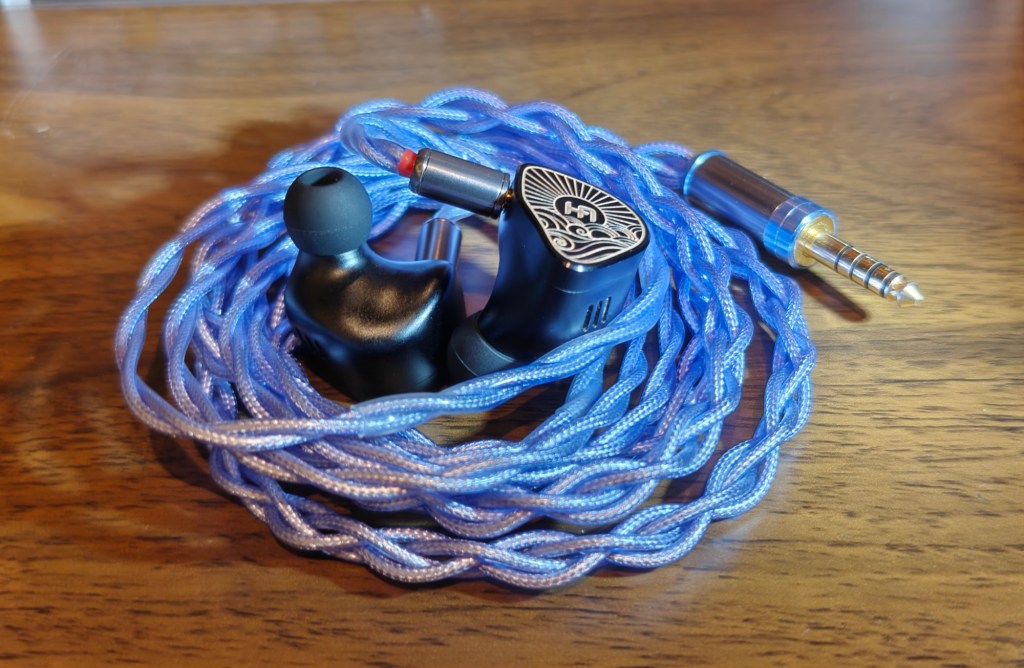
The Noah is the upcoming c. $400 follow up to the very well regarded Moses, the flagship tribrid from Hercules Audio currently retailing somewhere close to $4000. This reminds me of the approach taken by Elysian Acoustics with the Pilgrim, trickling down some of the tuning philosophy and design principles of the flagship into a much more affordable model. It even uses a similar driver layout to the Pilgrim, with the Noah sporting one solid silicon DD and three BAs in a three way crossover.
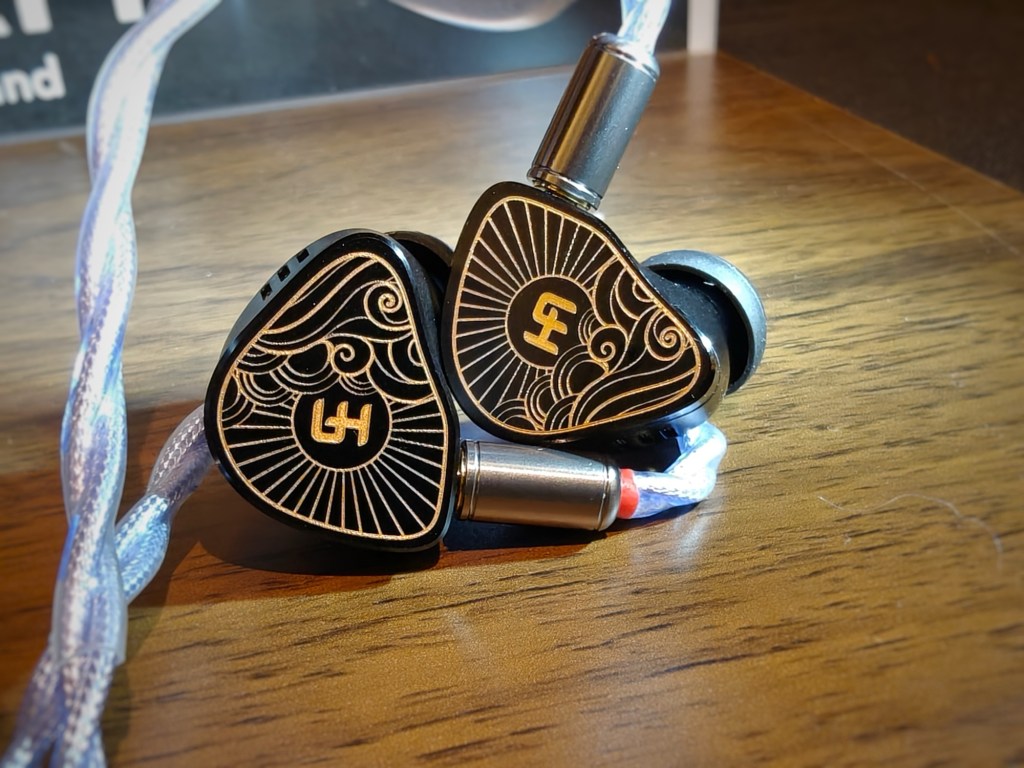
The Noah has a very nice all metal shell, with similar venting and a slightly less ornate but still fully metal faceplate. Cabling also looks suitably premium, so overall this looks like an interesting package.
Starting with the sub bass, “Heaven” by Emile Sande has a good quantity of hum in the intro, showing a nice crispness when the drums kick in. Sande’s vocals sound defined but not too sharp or vinegary, which they can on some gear with this track. There is again a good but not overwhelming sense of sub bass on “Why So Serious?”, with the Noah starting to reveal the fine detail of the ticking in the background around the 3:43 mark, which is slightly less than the Sloflo IEM in the first impression, but still good.
The tuning of the Noah is said to be modelled on the Moses, and as such it goes for a rich low end but it isn’t quite as mid-bass prominent, leaning the weight further down on to the lower end of the spectrum. As a result, the foreground click in “Palladio” by Escala is clear as day on the track, despite the cello sounding suitably rich and true to life in terms of timbre. Queueing up “Drift Away”, the bass guitar lines are nicely forward by well judged, giving the track its big bass feel without being headache inducing. Interestingly, on this track I hear a little upper midrange zest or spiciness in the instrumentation and vocal, so I suspect this may get a little tiring for some listeners if they are particularly sensitive to that sort of “pushed” upper midrange.
In terms of texture and clarity down low, the Noah does well. The growling bassline on “Bad Rain” by Slash has a nicely visceral sense of texture and fatness to it, sitting somewhere between a rasp and a roar. “Dubai Blues” by the rock supergroup Chickenfoot plays well through the Noah, the faint ghost notes on Chad Smith’s drum backing being mostly audible throughout the track, despite the chunky and raucous guitar going on overhead. This was the first test track on the Noah that really got my foot tapping, which is always a good sign for an IEM.
The Noah seems like a good fit for rock music with its up front XXX style of tuning – to my mind, it’s a sculpted W-shape tune, with clear pushes in a few different areas but an overall sense of balance. Tracks like “World On Fire” and “Shadow Life” by Slash sound fat and textured, with excellent tonality. There is good weight behind the driving riffs on both tracks, and the Noah has no issue keeping up with the choppy rhythyms and speed of both tunes, marking out each note pretty clearly in the listener’s ear. The first track highlights the staging capability of the Noah pretty well, putting the guitar at the very front left of the soundstage and giving it a biting tone that cuts through the mix but doesn’t overshadow the driving bass underneath.
Using another Slash test track to look for midrange harshness, “Starlight” is handled well, with a nice crispness to the opening pinch harmonics in the track, with a good lateral spread in terms of staging and good clarity, highlighting the subtle vibrato on the guitar notes in the opening section. Myles Kennedy’s vocal can be bothersome on this track, but the Noah handle the falsetto wails smoothly enough not to be bothersome in the ear without sanding down too much of the natural rawness, and not exhibiting any sibilance. One thing that did stand out on this track was the crispness of the hi-hats, cutting through the busy track nicely and showcasing a realistic sense of decay. Again, this is likely due to the push in the upper mids, but whatever it is, it works well for cymbals here. The overall feeling you get from this track is of a well put together wall of sound, with good separation and layering (especially for the price).
Sticking with harsh elements, there is some crispness to the snare drum hits on “C’est La Vie” by the same artist, but it’s also probably the best that track sounded on any of the IEMs I listened to that day, so the payoff for a little intensity is that toe tapping engagement factor that’s difficult to articulate in words but easy enough to understand once you hear it.
The Noah handles my other track for midrange rawness and discomfort well (“Whiskey And You” by Chris Stapleton). The singer’s coval sounds rich and suitably soaked in the mentioned beverage, keeping the raw and gritty edge to his singing but without grating on the ear. Again, this could potentially get a little intense for some however – this IEM is definitely not an “easy listen” kind of sound. Similarly with “Through The Echoes” by Paolo Nutini, this track is probably reaching the limits of my tolerance when it comes to rawness in the midrange, but the Noah still manages to make the song very listenable.
The midrange intensity doesnt’ come at the expense of warmth – the Noah is very good at presenting a Motown “wall of sound” sonic picture – occasionally the midbass can be a little too emphatic, but the engagement factor on something like “Everything Good Is Bad” by JJ Grey & Mofro is similarly emphatic, combining the warth and size of the bass with Grey’s gritty vocals to turn everything up to 11 in the ear. Tracks like “Ratio” by Massive Wagons probably lean a little too much into basshead territory on the Noah for most people, but in general, it’s a well judged and very fun tuning, with the warmth and weight coming to the fore on more relaxed tracks like “Give Me Some Light” by Matt Andersen. That track is so rich and chocolatey through the Noah you could probably pour it into a cup and serve it to people at bedtime, with Andersen’s rich baritone sounding positively engrossing.
It seems remiss not to make at least a little mention of the treble. It’s technically good, and in line with the rest of the tuning in being well judged and energetic, but not quite as emphasised as the bass or the high mids to my ears. “Go” by The Chemical Brothers sounds like a proper party track on these IEMs, with the swirly synth that populates the top of the sound rolling arouynd the soundstage and cutting through the hefty bass elements underneath. There is a delicacy to high violin and electronic instruments that is almost at odds with the excitability of the bass and midrange, but it accentuates it well. “Chia Mai” by classical pair Duel is rendered with an almost ethereal tonality, giving the high violin notes a realistic timbre and not overpowering the rest of the track.
In terms of other technicalities, the Noah is good for the asking price – I’d categorise it as leaning more towards musical over technical, but it definitely doesnt’ feel lacking in resolution or clarity. Stage dimensions are wide, especially on ultra-separated tracks like “Trouble” by Ray Lamontagne, which spreads the drums to the far left of the soundscape outside the listener’s ear and the other instrumentation outside of the right ear, with RLM’s unique vocal sitting squarely in the centre. The Noah manages to fill the space in between with the size of the instruments and voice, but without losing the inherent width that makes this recording unique. In fact, it’s an excellent rendition of this track to my ears, which seems to be a common theme with this IEM. Placement is similarly good on “Coming Home” by Sons Of Apollo, with Mike Partnoy’s drum fill intro playing right across the back of the listener’s head. Overall, it’s good to very good in the technical aspects, without sacrificing musicality, which is impressive in a $400 unit.
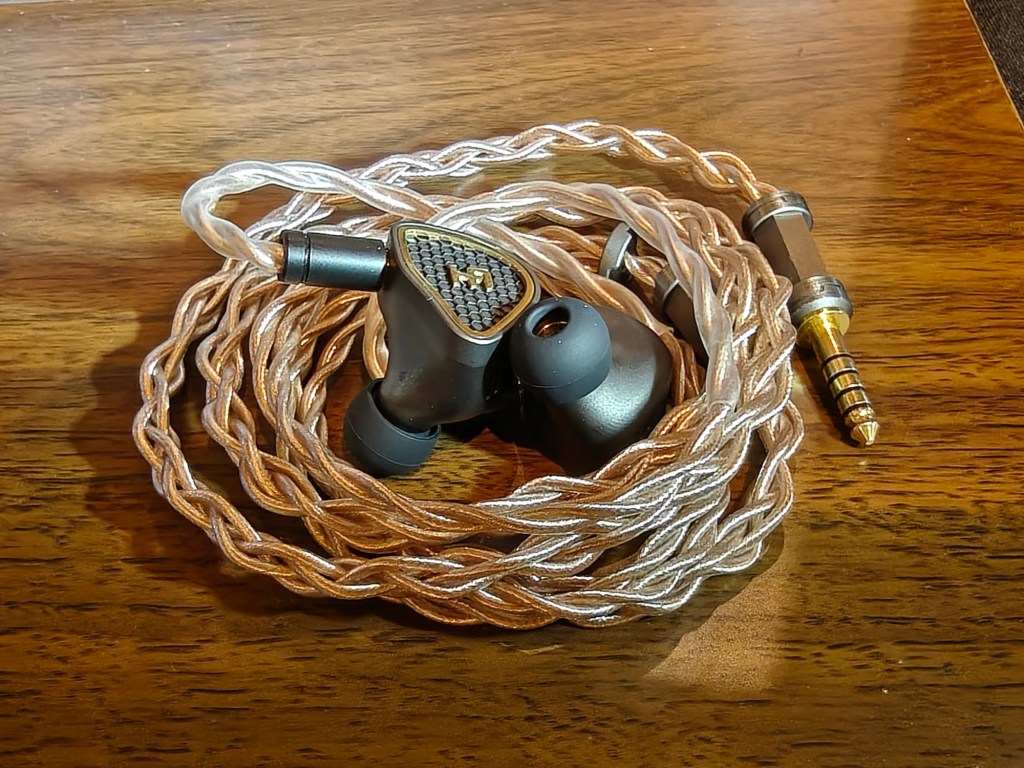
I couldn’t leave the booth without sampling the Moses, which it’s fair to say came out of the ether a little while ago to garner some pretty decent praise on Head-Fi. It’s been documented that the Noah’s whole tuning curve is based on the Moses, so in many ways, this is a father / son comparison, with both IEMs shooting for the same overall tuning, just using different components. The Moses uses a 1DD / 4BA / 4EST setup vs the 1DD / 3BA in use for the baby sibling. So, how does it fare?
Honestly, despite the increased driver count, the Moses actually fits my ears better, which was surprising. It’s also a similar size, in a similar but slightly more ornate all metal shell. Whereas the Noah is made from aluminium, the Moses is put together from titanium, but the aesthetics are very similar otherwise.
If I had to boil it down, the Moses comes across like a slightly clearer and more technical version of the Noah. It has slightly more bass intensity, but balances that against an absolutely beautiful tonality across the whole frequency range. There is slightly more detailing evident everywhere, which is easiest to identify when listening to “Why So Serious?”. Whereas the Noah starts evidencing the clicking around 3:43, the flagship kicks in four or five seconds earlier at around the 3:38 mark, showing the additional clarity and resolution in play. Apart from that, the general comments about tonality and approach are too similar to repeat – the Moses is “just” a better, more delicate and ultimately more refined take on the Noah. That’s not to belittle it in any way – the Moses is definitely operating at TOTL flagship level, and puts out an absolutely incredible sound, it is just pointing out that Hercules Audio have managed to boil down the essence of this flagship model and produce something that gets you a good deal of the way there with a fraction of the expense – outstanding engineering.
Fatfreq Quantum
Tested at between V70 and V80, High Gain
The Fatfreq table was one of the busier tables on the Sunday show, and I’m not that surprised. The team from the Singaporean brand were so,e of the friendliest and most accommodating people at the show, taking time to discuss the sort of sound each listener was looking for before suggesting one of the various IEMs from their lineup. They were also taking ear impressions at the show (which I availed myself of), which was a nice touch. The brand itself are pretty interesting, generating some pretty big interest for the huge bass they have managed to pack into some of their recent IEMs, so it’s definitely a house sound I identify with.
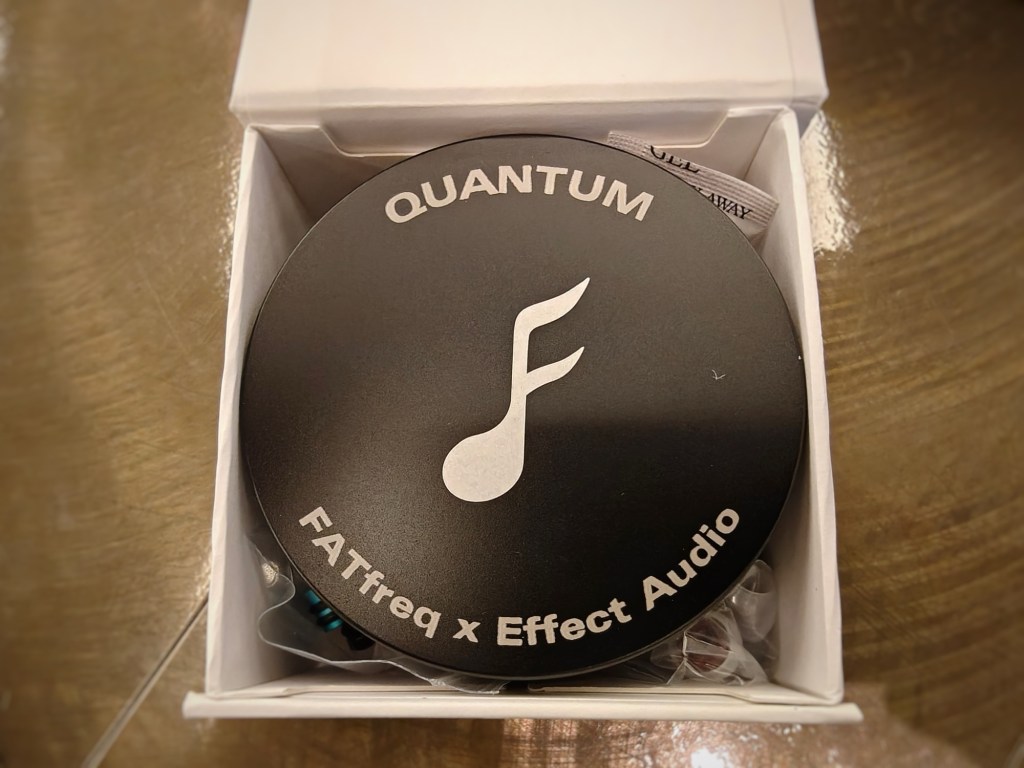
I listened to their higher end lineup at the 2024 Canjam, so after finally getting a seat, I was looking to hear one of their more recent models, the Quantum. This is a single planar driver model, designed in collaboration with cable manufacturer Effect Audio (it comes with the 8-wire Ares S II as the stock cable). It also packs in their NOAH tuning module system which powers their Basscannon tuning technology, alongside their proprietary ResoFlow acoustic tuning system. It looked more interesting to me than their other collaboration model (the Deuce), with a unique (and uniquely brutal) metal and ABS plastic design. It looks like the IEM equivalent of the Delorean from the Back To The Future films, and with the SuperStage module fitted, looks pretty unlike most other IEMs out there, which is pretty cool.
Slipping them into my ears, the fit was instantly snug and very comfortable. Despite the half-metal design, the Quantum are surprisingly ergonomic, which is always a nice surprise. The other thing I noticed immediately was how power hungry these IEMs are, taking a considerable chunk more gain from the CA1000 in High Gain mode to get to a reasonable listening volume. These aren’t IEMs for anaemic sources, if you want to get the best out of them.
Starting with the Superstage module fitted and running through the demo playlist, “Heaven” by Emile Sande kicks off with a good but not overwhelming level of sub-bass. The track is rich and rumbly where it needs to be, and is definitely pretty elevated but isn’t at “blow your brains out” level. The first thing that surprised me was the sweetness the Quantum imparts to Sande’s vocals on this track, smoothing out some of the harshness without losing the delicacy or detail. Sticking with sub-bass, “Why So Serious?” is handled well, with a heavy rumble as the famous sub bass kicks in. The Quantum does excellently in terms of not letting the elevated bass mask any of the detailing above, highlighting the ticking detail in the track around the 3:36 point, which is better than gear like the Hercules Moses managed (if only by a small margin). Similarly, the faint click in the left foreground on Escala’s “Palladio” is clearly audible, if a little subdued. It wins points on this track for the texture and grain of the cello, though, the Quantum painting the string instruments with an excellent and very un-planar timbre.
So, prominent sub-bass? Check. Moving up the frequency range, “Drift Away” by Dobie Gray is another well rendered track, with a prominent and meaty mid bass that manages to remain tasteful rather than headache inducing. The overall midbass presentation is large, but very well controlled in both speed and texture. Firing up “Bad Rain”, the snarling bass riff is grippy and voluminous, backed up with some pretty physical slam on the kick drums as the large planar driver moves the air into your ears. The Noah pressure relief system stops the Quantum from getting too physical, but given the sheer quantity of bass on display here, that’s probably a good thing.
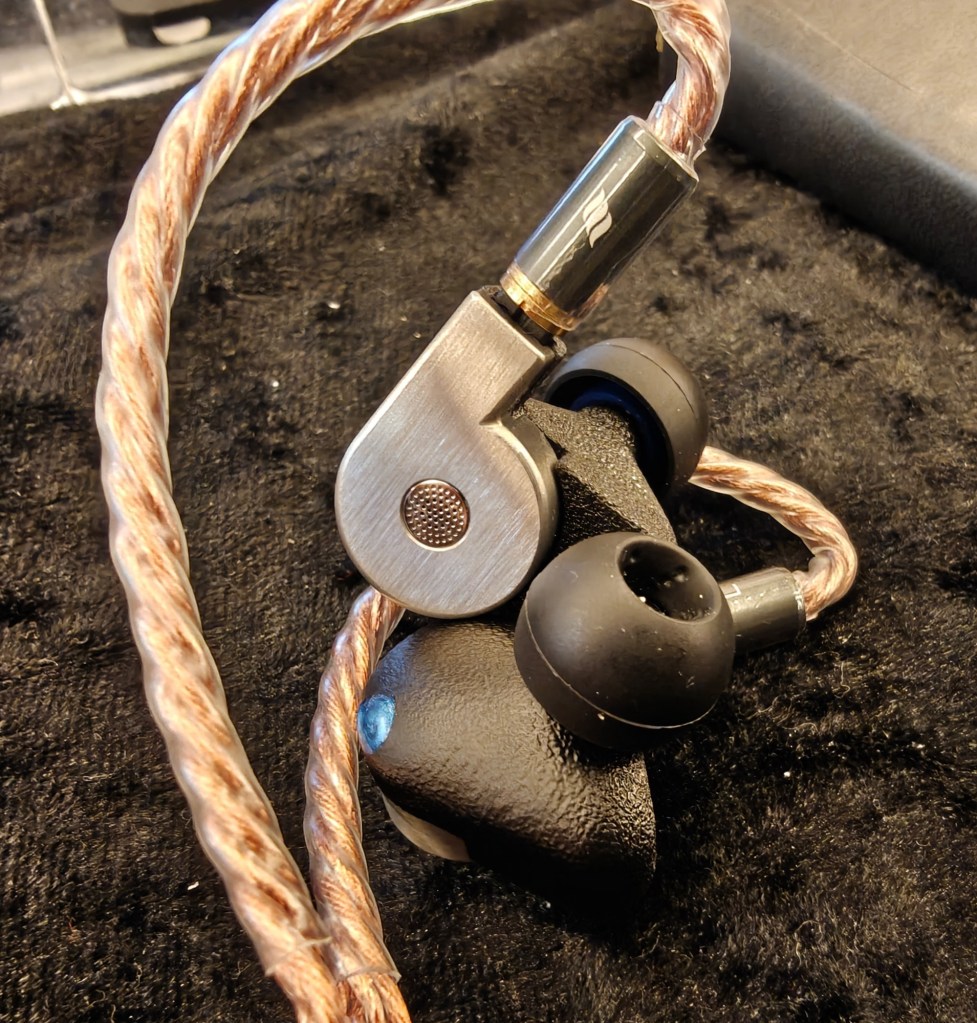
For fun, I switched over to the black “power” module, which is the bassiest of the three filters. You lose some of the excellent stage size and holography of the SuperStage, but in return, you get a decent amount more in the low end and a more intimate presentation, with a little uptick in isolation. Switching back to “Why So Serious?”, the sub bass is now very prominent, washing the whole track with some seriously physical rumble, but still managing to let the ticking come through clearly at the same time point. Whatever magic Fatfreq are doing with their Basscannon and Noah tech, it definitely works with this planar driver, giving the option between bassy but spacious and very bassy and more intimate.
Switching back to the SuperStage, the mids are very nicely present on this set. Listening to “Anastasia” by Slash, the classical guitar sounds excellent, with plenty of air around the notes and the subtle finger movements and vibration of the strings coming through clearly before the main electric riff kicks in. There is a good sense of “grunge” and distortion to the electric guitar, with a decent note weight that gives rock riffs a good amount of fatness. The other impression you get with the Quantum midrange is one of speed, with the planar driver doing excellently at keeping up with the most frenetic of tracks. It leans more neutral than forward or stylised, but it does have a hint of sweetness to the presentation which takes the harshness out of most tracks, but leaves all the detail behind.
Listening to tracks like “Whiskey And You” by Chris Stapleton and “Starlight” by Slash present plenty of rawness, but nothing bothersome to the eardrum. Everything seems to be dipped in a little honey on Stapleton’s voice, taking the rough edges and making them just smooth enough to sound pleasant without being blunted or cloying, and adding enough air around the singer to paint all the subtle room details in the track quite clearly in the ear. Similarly for “Starlight”, the pinch harmonics in the intro ping off in the ear with crispness but no pain, all dissonance without discomfort, capturing the subtle fretting of the guitar and the vibrato on the strings cleanly. This is a good track to highlight the separation capabilites of the Quantum, with the planar driver neatly pulling all the constituent elements apart so they can be tracked with ease by the listener, without destroying the core of the music in doing so.
The Quantum is a good vocal performer, capturing plenty of the emotion in a track while retaining a high level of technicality (probably a fair bit higher than its pricetag). “Coco” by Foy Vance is a laid back joy of a track on the Quantum, with the subtle palm muted intro picking up clearly in the ear and the acoustic guitar sounding sweet and euphonic. It’s also a good track to pick out the staging on the Quantum, which to be frank is pretty enormous for a sub-$1k in ear. The soundstage on these IEMs is just flat out huge, presenting a sonic image that extends outside the head in all directions and has room to accommodate the big note size the 14.2mm planar driver kicks out. Listening to “Trouble” by Ray LaMontagne, the track sounds like it’s being played out in two small booths either side of my head, not inside my ears. There is never much in terms of front-to-back staging on this recording, but the extreme panning of the drums (left) and bass (right) is executed brilliantly by the Quantum, keeping LaMontagne’s crooning dead centre and filling up the space in the track to make it pretty cohesive and just downright enjoyable to listen to.
If I had to categorise this IEM, it would be bass-boosted neutral, with a significant bass shelf in play even on the SuperStage module, but one that leaves the mids and highs plenty of room to breathe. The staging is vast, so the vocals never feel recessed or pushed away from the listener, and there is plenty of fine detail and clarity in the upper end to throw around along with that classic planar speed. Add in a smoothness in the upper frequencies due to the ResoFlow tech inside, and you get a fast, bassy and large sounding IEM that doesn’t skimp on the midrange or the technicality. I ran out of time to listen to any more tracks due to the queue of people waiting to audition something, but I didn’t want to finish my journey with the Quantum there, so it’s one of two IEMs I was so impressed with I ended up coming home from Canjam with for my collection. Further impressions and a full review will follow soon, but for now it’s safe to say these IEMs pretty much nail my personal tuning curve, and would be an easy recommendation for anyone looking for something in the sub-$1k bracket at the moment.
Noble Audio Van Gogh
Tested at V60, High Gain
Noble Audio is always a good table to visit at any Canjam event. The Moulton family were as always very welcoming, happy to chat about the various models and designs they brought with them and just generally being nice people. Fortunately, the also have a very nice range of IEMs (and a pretty good headphone too). I initially went to the table looking to try the Agis II, after being so impressed with the Spartacus model in a previous show. That model was in pretty heavy rotation, so I settled down to listen to some of their entry and mid-priced models, and stumbled across another one of my finds of the show: the Van Gogh.
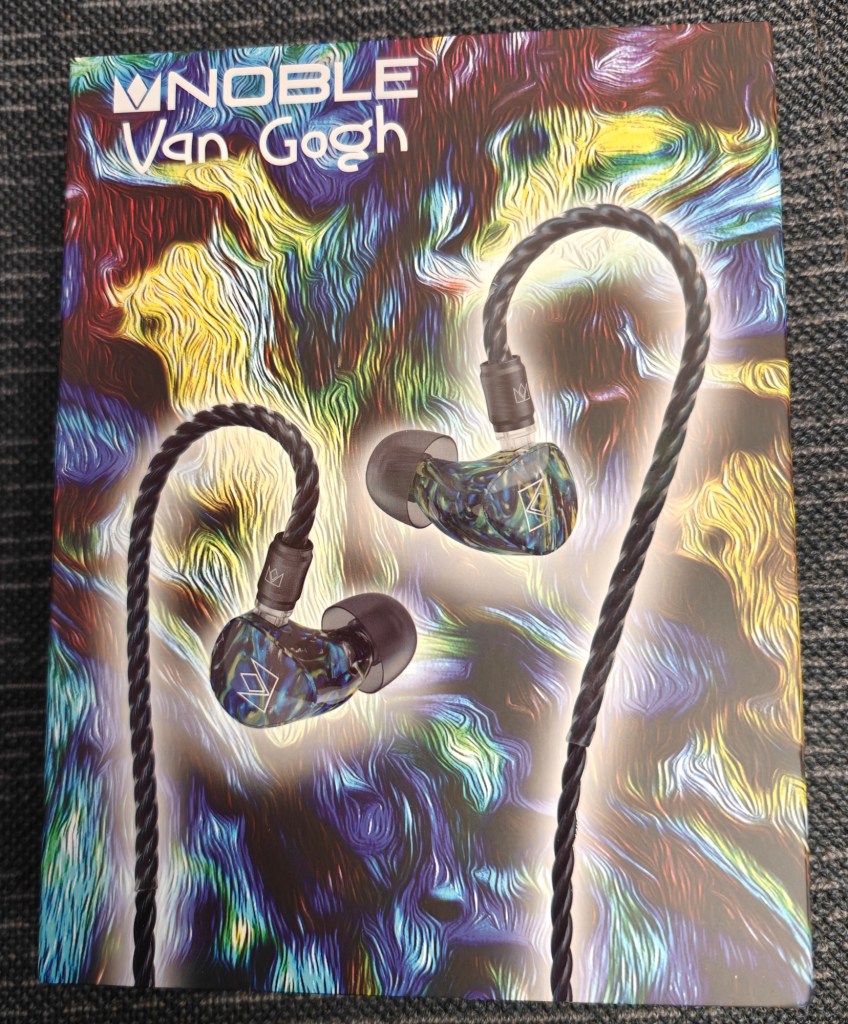
It’s an unusual name for an IEM, but the Van Gogh is aptly named, taking design influence from Van Gogh’s Starry Night, with each shell being uniquely hand crafted in a similar way to the way they produce their Prestige models. It’s a stunning looking IEM, with the usual high quality Noble finish and some nice touches like the Noble logo that is now cut out of the actual IEM nozzle itself, and a very nice Noble branded 4.4mm cable in a matching colourway. The other thing to note about the IEM is its size, or more pertinently, the lack of it. Despite being a 1xDD 3xBA hybrid, the Van Gogh is positively tiny, slipping into the ear almost unnoticed. In a sea of IEMs that seem to be scaling in size at the same rate as mobile phone handsets, it’s good to see such a compact and ergonomic design – this one will definitely be a winner for those audiophiles with less real estate available in their ear canals.
The first thing that surprised me once I slipped the Van Gogh in for a listen was the sheer volume of bass coming out of these tiny IEMs. This IEM definitely leans to the basshead side with the right eartips fitted, with the 8mm Mg-Al DD woofer kicking out a large amount of low end. It’s a U shaped / XxX sort of tuning, but the midrange doesn’t feel recessed or lacking at all, it just sits behind the vast quantity of low end and the sparkly upper treble.
Kicking off the tracks with Emile Sande, the Van Gogh gives a passable impression of a late night dance club, with lots of sub end rumble and a nicely balanced vocal carving through the track. This is fun bass, with more emphasis on sub over midbass but plenty of dB across the whole range. It stays pretty tight and controlled, so it’s not wooly or overbearing, and does a good job of avoiding bleed into the midrange above. It’s definitely north of neutral, but it’s important to get a good seal with these IEMs, as given the deep fit, any leakage seems to compromise the low end and staging quite significantly. Fortunately for me the stock silicone tips do a good job, but they also play pretty well with Eletech Baroque and JVC Spiral Dots in that regard too, from some very brief experimentation.
Checking for depth, “Why So Serious?” again hits hard, and definitely climbs down pretty low. Despite contending with some serious rumble, the ticking in the track again becomes faintly audible around the 3:38 mark, which is pretty impressive for a bass heavy set. There is a definite sense of physicality with this IEM in the low end, pushing some serious air. It almost reminds me of a BCD style presentation, where you can feel the ultra lows as much as hear them. This physicality adds a nice sense of gravitas to low stringed instruments like cello, but still allows fine detail like the foreground click at the 6 second mark in “Palladio” by Escala to come through clearly in the ear.
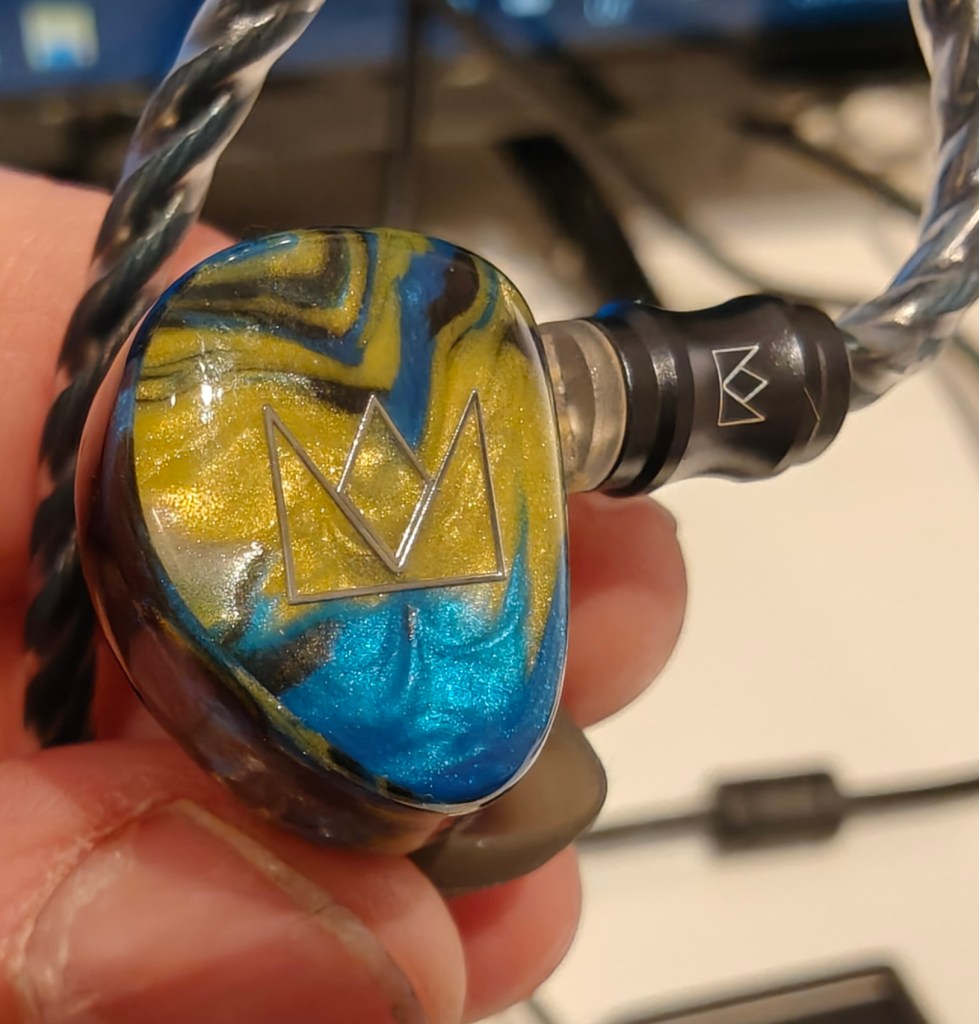
Continuing the hunt for physicality, “Bad Rain” by Slash is up next. There is a nice visceral growl to the bass guitar riff – it has good texture and graininess, competing well with the fat and grungy guitar and giving a pretty potent physical slam to the kick drum intro. This is one of the biggest sounding renditions of this track I heard at Canjam, and while some of the other IEMs may have painted a little more detail around the bass riff itself, the Van Gogh is far from lacking in clarity, and definitely gains plenty from the sheer weight and fatness of the sound. Again, I keep coming back to one thought: “How does a sound this large come out of something so tiny?”.
There is decent control in the bass, with the dual-magnet DD doing a good job of reining in the extra decibels and not getting too loose or wet. On the mid-bass heavy track “Drift Away” by Dobie Grey, the Van Gogh shows a surprising amount of control while still leaning fully into the bassiness of the track. On this track the vocals do sit a little behind the bass, but still feel neutrally placed. The signature works suprisingly well with more acoustic or laid back fare, the extra weight in the low end adding good warmth and density to otherwise sparse arrangements like “Whiskey And You”. The Sonion BAs in the Van Gigh midrange do a very nice job of retaining the rawness in this track, not overly smoothing out Chris Stapleton’s gravel-throated delivery, but staying on the right side of the sibilance / unpleasantness border. As with most of my other favourite models today, it definitely flirts close to the line, but this shouldn’t be a major concern unless you are particularly sensitive to sibilance.
Listening to the Van Gogh, I actually found it quite hard to take notes on my impressions – not because of any particular distractions, and more because it is very good at just sucking the listener into the music. Popping “Acid Eyes” by Paolo Nutini on, I was drawn into the very musical and compelling presentation of the track, so all I can remember is that it sounded really good, but not exactly why. This is a pretty common theme with this IEM – objectively the Van Gogh is a well tuned and pretty coloured in-ear, but subjectively, it is just wonderfully musical. If you’re after studio-grade flatness of reproduction or surgical analysis of your music, these won’t be for you, but if you like slapping in a pair of tiny in-ear woofers and just leaning in to your music, you’re definitely in the right place.
Regarding technicality, the Van Gogh is a bit of a chameleon, sounding unashamedly musical and raucous on some tracks, but pulling out plenty of fine detail on other tracks where you wouldn’t expect it. “Dubai Blues” by Chickenfoot is a good example of this, with the faint ghost notes that pepper the track from RHCP drummer Chad Smith cutting through the mix with surprising definition and detail. “Starlight” by Slash is a similar story, with the Van Gogh handling the opening harmonics surprisingly well, showing good technical capability while not diluting the overall feel of the track. The hi-hats cut in crisply on this one, with the bass providing a good foundation for an overall large sonic image. The stage it paints here it pretty enveloping, with the bass large and prominent in the left foreground and the opening guitar occupying a mirror position in the upper right of the soundscape. When the full band kicks in, the listener is enveloped in the sound, placing the listener in the front row of the stage rather than a few rows back. I usually use this as another test track for stridency in the vocal ranges, but te added warmth and weight from the low end ensure that this isn’t an issue, with Myles Kennedy sounding suitably helium fuelled but not grating.
One of the last test tracks I had a chance to listen to was “Millionaire” by Chris Stapleton. The Noble hybrid gives a nice open sound to the guitar, again going big with the note size, and giving a euphonic sweetness to the acoustic guitar, while also retaining surprisingly good separation between the notes and instrumentation. This ong pretty much encapsulates what the Van Gogh excels in, which is presenting a warm, inviting soundscape with emotive vocals and good technical chops to back it up. Stapleton’s vocal on this track sounds particularly rich and smoky, playing off nicely against the vocal from his wife that fill up the chorus.
My overall impression of this IEM is of a tuning that is U shaped but not lacking, detailed but not overly technical and definitely very bass-capable. It’s far bigger sounding than it has any right to be, but it balances out that extra weight and low end quantity with good placement and layering, allowing surprising elements of tracks you know well to peak out from the music occasionally and remind you that this is a pretty capable performer. It is the definition of a surprise package, and one that will really let you enjoy the music. Like the Fatfreq model, this was an IEM I really didn’t want to stop listening to, so was another in-ear I ended up leaving the show with. Further impressions and a full review will follow in due course, and I’m genuinely looking forward to reviewing both of these IEMs (the Quantum and the Van Gogh).
Final thoughts (and observations on tuning this year)
I listened to a lot more IEMs than the four mentioned above, but these were the units that really grabbed my attention this year, and also happened to be the ones that really got my toes tapping or my face grinning while I was listening. Surprisingly, all of them were in the sub-£1k price bracket (in fact, all of them are significantly less than £1k). Not that surprisingly, all of them are pretty bass-capable. For an unabashed bass enthusiast like myself, it’s nice to see a new wave of tuning hitting the market that embraces the fact that music is meant to be felt as well as heard, and good audio needs low end quantity (as long as it’s of good quality) just as much as it needs high end fidelity. All of these IEMs are tuned with plenty of musicality, but all of them are also technically capable enough to make you forget you aren’t listening to an absolute flagship for 95% of your listening. This year’s Canjam seemed to be full of a lot of gear with soul – don’t get me wrong, the flagship IEMs on display were all ultra-impressive, but the fact that you can get access to in-ears this good at these sort of prices now is just mind blowing to me. More impressions to follow soon!
 glassmonkey
 jackpot77
 TheOneInYellow
 trekasaurus
 Timothy Cose


 Audio Primate
Leave a comment