


Acknowledgement
The Liric 2 was purchased direct from Meze’s UK distributor SCV Distribution, with a review discount being very kindly provided in exchange for me writing this review. No editorial input was sought or received from SCV or Meze, so the words below (however poorly informed or misguided) are 100% my own.
Rating

Technical specs
Driver Type: Rinaro Isodynamic Hybrid Array® MZ4
Size: 92 mm x 63 mm
Driver Weight: 71 g
Casing: Fiberglass reinforced polymer
Impedance: 61 Ω
Sensitivity: 100 dB SPL/mW at 1 kHz
Maximum SPL: >130 dB
Diaphragm Weight: 0.08 g
Total Harmonic Distortion (THD): <0.15%
Weight: 427 g (15.1 oz)
Frequency Limit: 4 Hz to 92,000 Hz
Input Connector: Dual 3.5 mm TS Jack

Introduction
If you have spent any time in audiophile circles over the last 7 or 8 years, you will have come across the name Meze Audio. The Romanian manufacturer first hit the audio consciousness properly with their best known headphone model, the 99 Pro. These were a delightfully tuned closed back that sat firmly between entry level and mid-if in terms of price, and offered a killer fun but resolving tuning and all metal and wood build that really put the brand on the map.
Since then, Meze have branched out into IEMs with offerings like the Rai Solo, Rai Penta and Advar (among others), and moved into the TOTL headphone space with their sumptuous line of Empyrean and Elite cans for the high end open back market, and the Liric series for the closed back listener. The Empyrean was my home headphone of choice for a good few years up until very recently, being a fantastic blend of top quality engineering, ridiculous comfort and a warm and emotional tuning that sucks you into the music like little else I’ve heard or owned. Sadly, the expansion of my little family unit has meant that open back cans are no longer the best choice for relaxing with audio, so I was curious to find out if the Liric series could offer some of the elements of the Empyrean I enjoyed so much with just a little more blocking of the outside world. To that end, I reached out to Matt at SCV, and after a very pleasant back and forth, agreed to buy a set of the closed flagship Liric 2 for review, and hopefully to replace the Empyrean in my at-home listening rig.
Did they scratch that Empyrean-shaped itch? Read on to find out.
Unboxing
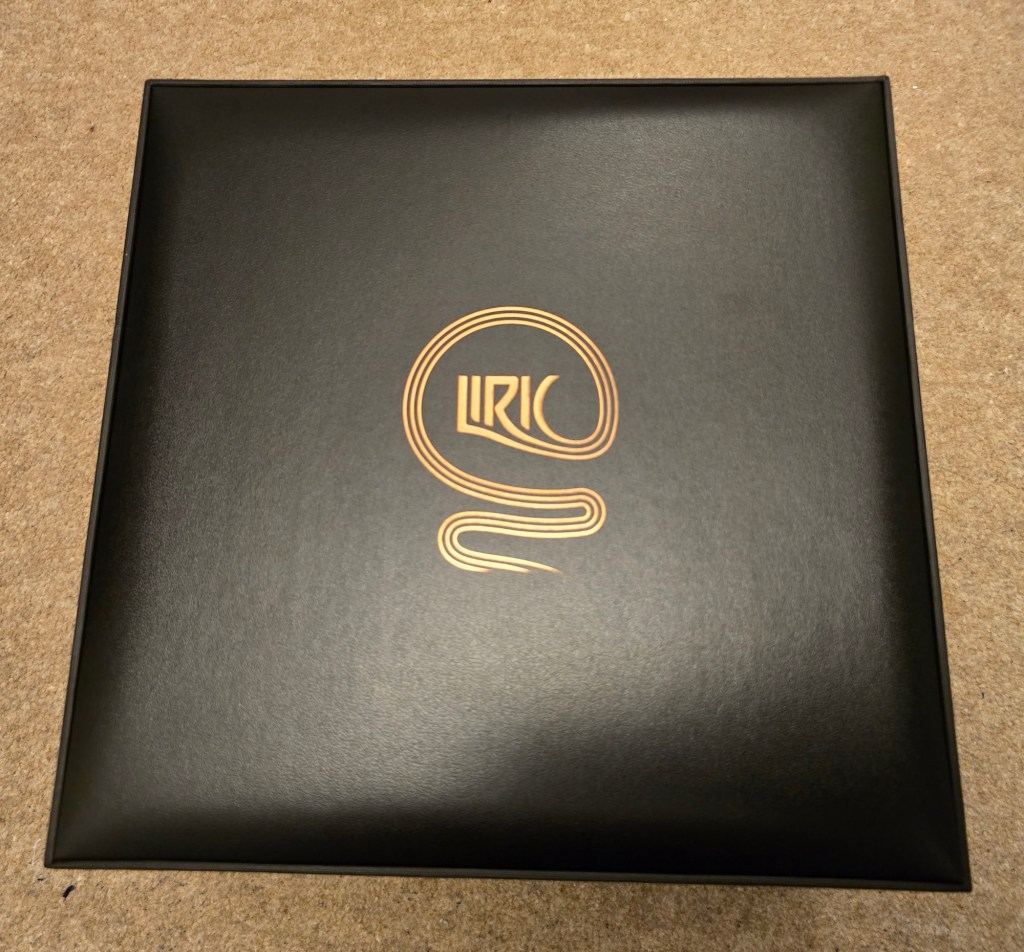
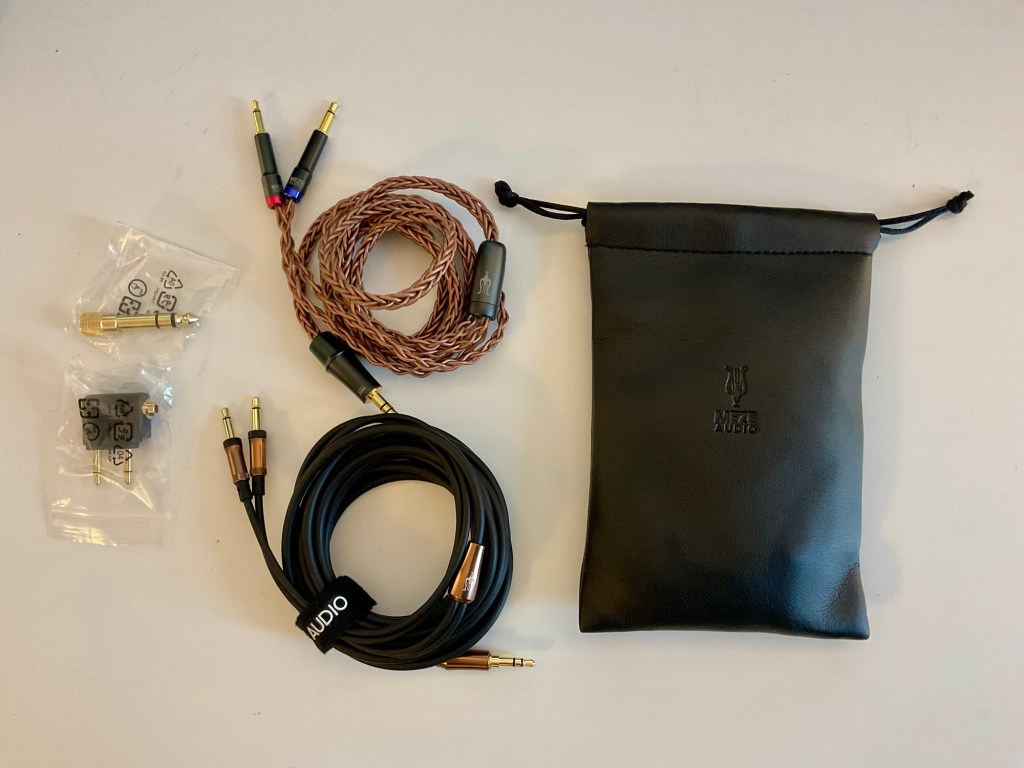
The Liric 2 comes in a pretty large and quite impressive box, with a nicely illustrated outer carboard sleeve depicting a misty woodland scene. Opening it up reveals a solid back box with the Liric logo (a stylised version of the driver design) on what I assume is a faux-leather inlay in the lid. The lid is hinged, so popping it open reveals a nicely branded Meze headphone case containing the actual goodies. The actual loadout is as displayed below – the only thing not mentioned is the nice card-stock brochure Meze put in underneath the case, which takes you through the technology and design of the Liric 2.
Overall, a very classy unboxing, befitting the serious pricetag attached to this model.

Build and ergonomics
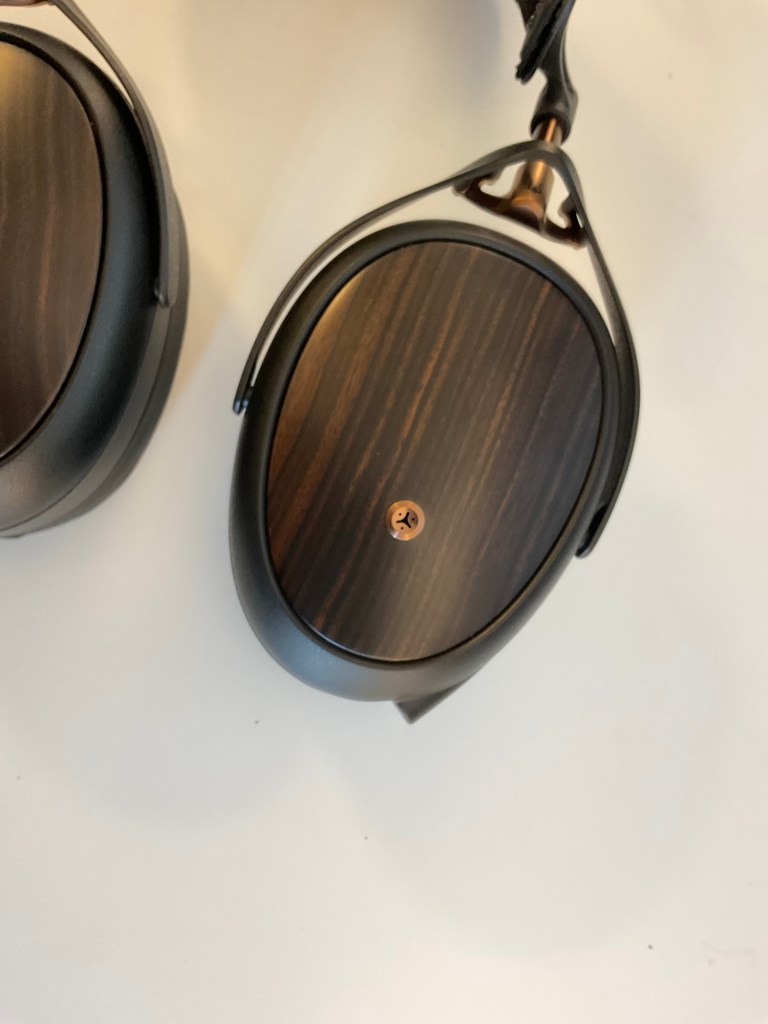
The Liric 2 are an unusual looking headphone – let’s get that clear from the start. They follow the established design shape of their predecessor, with large ovoid metal cups that hug the shape of the ears, a thickly padded headband (in a more traditional style rather than the suspension headbands of the 109 Pro or Empyrean ranges) and the friction stopped adjustment rods attached to each cup. The thing that makes these cans stand out from the crowd is the use of wood for the actual back of each earcup. The surface of each earcup is a solid oval of Macassar ebony wood, inlaid into the metal frame of the earcup and adorned with a single airflow vent in the bottom of each face. The wood is slightly recessed compared to the edges of the frame, giving a similar sort of impression that a mobile phone screen does when you have the phone in a thick protective case.
It’s a very striking design, and it does look pretty good, but it does play with my brain a little bit. I can’t decide whether the Liric 2 would have looked classier with the OG model’s leatherette style faceplate, or with something more like the open mesh metalwork on the 109 Pro or the new Poet open back, which shares the same cup geometry. If you love the ZMF sort of look but want your cans to be mainly metal, this would be a good halfway house, I guess.
In terms of ergonomics, the Liric 2 fits very comfortably on my oversized head with the earcups at maximum extension, so only people with craniums larger than the average cow are likely to have problems getting a decent fit with these cans. There is a little knack to getting a nice solid fit, as due to the decent clamping force and the rotation available via the sliding bars on each side, if you don’t place the cups flat on your ears and the headband suitably vertical when you put the headphone on, it has a tendency of rolling the cups right off your ears again, turning your nice $2k headphone system into a mobile PA setup instead. It didn’t take long to get used to this particular quirk and get a consistently good fit, but I thought it was worth mentioning as these are literally the first pair of headphones I’ve ever had which tried to reverse themselves on my ears as soon as I let go of them.
Weight and comfort wise, for a closed back planar, the Liric 2 are extremely comfortable. They don’t quite reach the same level of pillow-like wearing comfort as the Empyrean, but they sit snugly on the head for extended listening sessions with no pressure around the ears or across the top of the head, and distribute the weight very evenly. The clamp force is just right, keeping a nice seal around the ear without making the wearer feel like their head is a very fancy vice. The pads are thick enough to feel luxurious without going overboard – the actual ear opening is on the smaller side, so for those with larger ears, you are likely to feel the Liric 2 pads touch the outer parts of your ear. It isn’t something that has bothered me in my various 3 and 4 hour listening sessions with these cans, so unless you have spectacularly large or sensitive ears, it’s unlikely to cause a major issue.
The only other callout to make in this section is around the cable. The Liric 2 uses a similar connector to the 109 Pro (3.5mm), but unlike the 109 Pro, the connectors are housed in a barrel that protrudes just slightly from the bottom of the cup frames at a 30 degree angle rather than being fully recessed into the cups. This helps route the heavier Liric 2 stock cable (a very nice thick braided copper affair) away from the shoulders and chest to hand more naturally, and give just enough separation to avoid any irritating snagging or microphonics as you move your head around when wearing the cans. It’s not exactly a unique design, but little touches like this to help with actual day to day usability always go a long way in my book, so kudos to Meze for the design choice here.
Technology
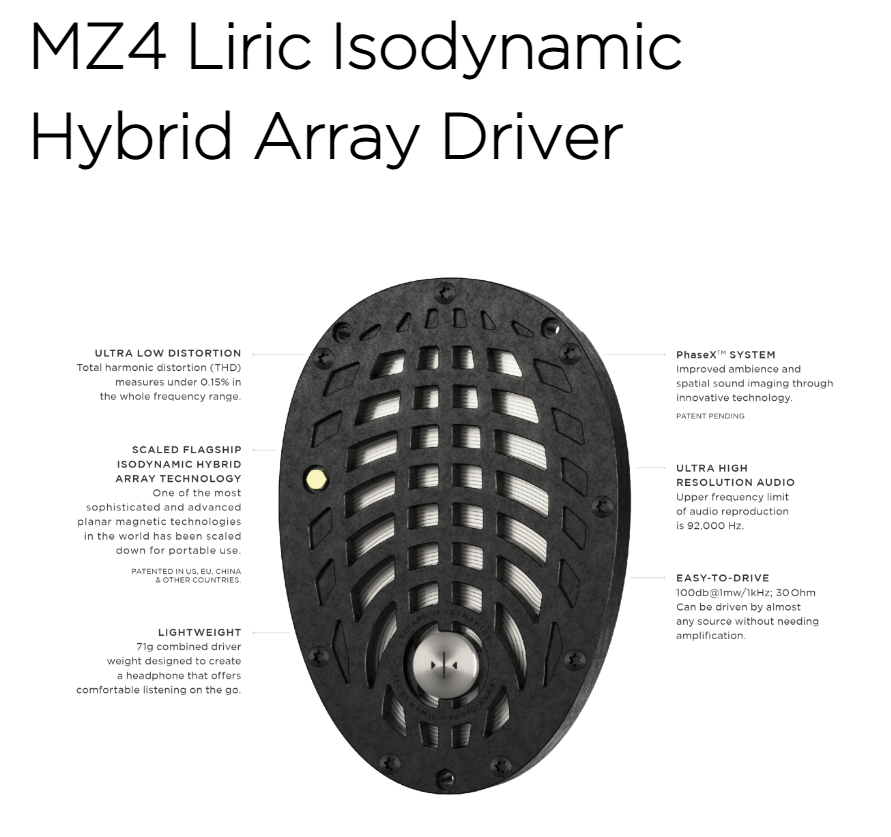
The Liric 2 is a planar headphone, based around a scaled down version of the MZ4 isodynamic hybrid array driver from Rinaro used in their open back flagship headphones. The driver uses an unusal voice coil design, with both switchback and spiral shaped elements. Rinaro state this allows sound to be targeted with more accuracy around the natural form of the ear, improving imaging and localisation by decreasing the impact of short wave time delays caused by diffused field reflections. In essence, the switchback at the top of the driver produces richer bass notes, and the spiral element of the driver targets more of the id and high frequencies, and is positioned directly over the ear canal to reduce any phase shifts. Rinaro have also added their proprietary Phase-X system to the driver design, which is targeted to improve ambience and spatial sound imaging.
Not content with the frankly impressive sounding technical elements Rinaro are bringing to this headphone, Meze have added a few of their own design tweaks to the mix. The first is their Quarter Wavelength Resonator Mask (QWRM for short), which includes technology licensed from Dan Clark Audio. This is basically a metal “mask” that sits over the driver and covers selected openings in the driver frame, which has the effect of attenuating high-frequency peaks above 7 kHz to smooth out the Liric 2’s treble response and reducing listening fatigue over long listening sessions. As this metal mask is effectively screwed on to the driver frame it’s not possible to hear what the Liric 2 sounds like without its 7 kHz damping in effect so it’s not obvious how much of an effect it is having on the overall tuning, but it certainly adds a nice steampunk element to the visual design of the driver.
The other Meze proprietary tech included in this particular headphone is their Pressure Equalisation System (referred to as PES). This takes the shape of a small metal disc on each faceplate with a nice craved opening design, which works to optimise the earcup chamber pressure in each ear and facilitate better control of the airflow around the driver. Meze also claim that this allows for a better bass to low midrange transition in the frequency response in terms of smoothness. Again, short of plugging up the vent holes it’s not easy to identify what the tech is actually doing to the sound, but it’s definitely fair to say that despite pushing a decent amount of air, the Liric 2 is a very non-fatiguing listen for extended listening sessions, so we can assume that Meze’s audio designers are on the money again with this particular element of the design.
Initial impressions
When I first slapped the Liric 2 on my head and pressed play on my system, I must admit I was initially a little taken back with the sound signature, and possibly even a little underwhelmed. Given the closed back nature of the Liric 2, I was expecting something akin to the Empyrean, with pronounced bass and warmth. What the Liric 2 actually serves up is a sound that is musical, but leans more towards their later models like the Elite, with a more neutral and natural sort of sound signature. It definitely isn’t anaemic or lacking in low end, it just prioritises a more balanced weight between each frequency range.
Sub bass is present when required, but never voluminous, serving to anchor the notes being played with a little heft and substance but never dominating. Overall, bass is reasonably “planar flat”, with good sub extension and a gentle mid-bass “thumb” in the tuning a little further up the frequency charts at around the 150Hz marker (please note this is just a guess, not a measurement), helping to add a bit of body and warmth to the music. Detail levels are good throughout the low end, so there is no lack of speed or capability with the retooled MZ4 Rinaro isodynamic drivers in use. Texture is also a relative highlight, with the Liric 2 imparting a decent sense of grit and grain to plucked bass, and a suitably physical feel to low bass instruments in general. This isn’t a headphone tuned for the most ardent of bassheads, but as long as you aren’t going in expecting your earlobes to be massaged by the music, the Liric 2 provides a nice solid foundation to most styles of audio.
Mids are rich are nicely weighted, borrowing some of that delicious Empyrean creaminess that Meze are known for, but definitely leaning a little more towards the neutral than the richly euphoric Empy. Vocals are (as always) a highlight, with the Liric 2 digging out plenty of emotion and nuance with both make and female vocalists. That classic Meze sweetness is in evidence here on tracks like “Dimming Of The Day” by Alison Krauss (from her Union Station collaboration album). The subtle inflections of her voice are rendered accurately without sacrificing the breathy emotion, the Liric 2 adding a layer of shine and gloss to really make the track sing in the ear. Guitar and other string instruments have an ice sense of bite, with a decent if not overwhelming sense of weight.
Moving up further, the treble is reasonably relaxed in the lower reaches, adding adequate sparkle and shine without overemphasis. As you scale further up, the quantity increases, giving a little more bite and sizzle to things like hi-hats. It isn’t an overly bright headphone overall, but there is definitely a little extra spice up top that balances out the subtle bass lift quite nicely and provides for a good sense of air and space in an otherwise faintly V shaped presentation.
Overall, the Liric 2 has a nicely balanced presentation that probably hovers around a shallow-V style of tuning, with a sculpted bass and similarly boosted treble end to flank the rich and emotive midrange. This headphone is cleaner sounding and less rich and dark than the Empyrean, but it definitely treads some of the same ground stylistically to my ears.

Bass
As mentioned above, these aren’t the most sub-bass prominent closed back headphones you will ever come across, but what is there is of good texture and detail. Kicking off the more in depth analysis with “Heaven” by Emeli Sandé, the familiar sub rumble that kicks off the track has substance and thrum, but doesn’t massage your lower jaw or wobble your teeth when it kicks in like it can on some of my basshead sets. Putting “Why So Serious?” from The Dark Knight OST through its paces, the song is full of tension and bags of detail with some superlative layering and placement, but the thrumming heartbeat that kicks in at the 3:26 mark is subtle and textured rather than heavy and ominous. It’s all there, just not necessarily front and centre of the soundscape. In terms of resolution, the Liric 2 does show its chops here though, with the subtle ticking that appears around the 3:44 mark being clearly apparent – this can be masked behind the rumble on less resolving gear, but is clearly audible very early on through the Meze drivers.
The Liric 2 definitely isn’t missing sub bass, or suffering from any sort of serious roll off into the basement frequencies, it just isn’t hugely boosted in these areas either, Rising up into the mid bass, the emphasis gets a little more noticeable, with instruments like bass guitar getting a subtle but noticeable push in volume. “You’ve Lost That Lovin’ Feelin’” from the posthumous collaboration album between Elvis and The Royal Philharmoic Orchestra has a nice presence and liquidity to the bass guitar that underpins the track, pouring plenty of smooth mellow bass in between the rawness of Elvis’ vocals in the middle of the track.
Similarly for “Hello, It’s Me” but Sister Hazel, the mellifluous bass guitar line that walks all over the intro to the track is deeply textured and resonating, but still smooth and slinky at the same time. You can hear the fret noise and almost feel the space around the strings as they vibrate, but the L2 doesn’t lose the smoothness and body that keep the track sliding along, avoiding the chalkiness or dryness in the low end that can sometimes come out on this track on more analytical monitors or headphones.
Putting on “Drift Away” by Dobie Gray, the funky bass guitar hits suitably heavy in the mix, filling the lower half of the sound but not encroaching on the jangling guitar or Gray’s smooth as butter vocal stylings above. Again, there is plenty of liquidity, but at the same time a nice sense of texture and realism as the notes are fretted, giving this track the perfect Goldilocks level of bass emphasis for my tastes. On proper basshead gear (of which I own plenty), this track can turn into an ice cream headache of mid bass thump, so the Liric 2 judges it pretty well in terms of where to draw the line here.
Listening more for texture and physical impact, “Bad Rain” by Slash is up next. The kick drum intro is punchy and actually slams quite hard in the eardrum, which is always a good start. The growling bass guitar that comes in at the 24 second mark feels guttural and raw, capturing the punk rock energy of this track nicely. The bass guitar hits deep, not as emphasised as it can be on some gear but packing in plenty of texture and not smoothing over the rough edges of the notes in the ear. You can hear the strings resonating (a common theme on my test tracks with decent playback gear), and the Liric 2 does an excellent job of keeping this track raw and aggressive in the ear without losing the weight of the bass guitar.
Looking at other instrumentation, texture on cellos and double bass is excellent with the L2, the headphones doing a sterling job of rendering “Palladio” by Escala with plenty of depth and grit in the strings. Interestingly, the subtle foreground click that is audible in the left channel at the 4 second mark is barely perceptible on the Liric, sitting just above the bass but blending into the background noise. This click is far more audible on some of my gear – I’ve yet to identify where exactly it sits in the frequency range, but given the resolving power of the drivers in this particular can, this is definitely more of a tuning choice that masking or poor technical capability.
Overall, the Liric 2 is a little north of neutral in terms of bass quantity (centring mainly around that raise into the mid bass), with decent but not overflowing sub bass presence. It has excellent detail and texture throughout, and while it doesn’t slam as hard as a proper basshead headphone, the planar drivers move enough air to give a nice sense of punch to proceedings where required. This is a headphone that will bring a decent amount of bass when called upon by the mix, but not add much in the way of its own colouring to more bass-absent music. For my own preferences, I’d probably call this perfect if it had 2-3db more presence across the low end, but the fact I enjoy it without needing that “extra” is testament to the quality and tuning on offer here. Very nicely done.
Mids
The transition to the midrange is also nicely done, with no bleed from the lower end. The midrange does carry a little of the warmth and substance from the mid bass, but without adding any cloudiness or muddiness to the presentation of voices or instruments. There is plenty of definition and bite in the sound, the Liric 2 treading the line somewhere between the gooey richness of the Empyrean and the sweeter and crisper touch of the 109 Pro. This is a headphone that plays very nicely with guitar and vocal based music choices, as you would expect from the brand heritage.
Starting with some Americana (ironically from Canadian artist Matt Andersen), “Give Me Some Light” from his “Halfway Home By Morning” sounds rich and voluptuous, his gravelly tones sounding powerful and velvety in the ear. The various layers of Hammond Organ, brass instruments and acoustic electric guitar slot in around the vocal, allowing the Liric 2 to highlight the rich tone of Andersen’s voice right in the centre of the stage without being drowned by the rest of the instrumentation. It brings just enough chestiness out of the vocal to sound realistic, without making the singer sound stuffy or blunted, playing the track with enough warmth to sound inviting.
Sticking with midrange tone, the live album “Live At The Memo” from Welsh tyros Cardinal Black gives a fantastic representation of guitar maestro Chris Buck’s signature soulfulness, capturing both the cleanliness of his playing and the tone he’s known for. There’s a reason he was voted Best Blues Guitarist in the world by Guitarist magazine not that long ago, and the Liric capture the liquidity and feel of his playing brilliantly. Similarly for gravel voiced troubadour Tom Hollister, the vocals sound both rich and raw, giving that “in the room” vibe that you get with any good live album.
Looking for more edge, old favourite “Starlight” by Slash provides plenty of insight into the MZ4 driver. The opening pinch harmonics sound raw but rich, the deliberate dissonance ringing in the ear but with enough smoothness around the edges not to be irritating. There is definitely a peak in play here, but it’s reserved enough to pass the test of this track. The subtle vibrato on the guitar around the 34 second mark in the track is beautifully rendered, the space around the instruments allowing the faint details to register in the ear without any real effort. Myles Kennedy’s falsetto wail is also handled well by the Liric 2, the Rinaro driver dealing with his unique voice without veering into harshness or sibilance. In that respect, the Liric 2 definitely reminds me of the Empyrean, and also some of the richer JH Audio in-ear monitors I have listened to like the Jolene.
My other test track for rawness or sibilance in vocals is “Whiskey And You” by Chris Stapleton, and the Liric 2 handles the sparse country arrangement easily. The raspiness in Stapleton’s vocal that start becoming apparent in the chorus (around the 1:47 mark) and repeats throughout the rest of the song still sounds gritty and raw, but with just enough weight to soften the rough edges of the delivery and not grate on the eardrums like it can on thinner sounding headphones or in ears. The other elements of this track are also rendered beautifully, with the single guitar reverberating in the ear, the simple sound of fingers on frets and Stapleton’s bourbon soaked delivery filling the ears of the listener with a rich, euphonic tone and plenty of fine grained detailing.
Going back to some more rock tunes, “Shadow Life” and “World On Fire” by Slash are some of my go to tracks to see how a driver handles crunchier music. The Liric 2 does well with the staccato riffing on the first track, managing to give plenty of space and tightness around the descending riff that kicks in around the 40 second mark. There is a reasonable amount of body and richness to the guitar, but I’d probably describe it more as muscular rather than dense, with plenty of control and definition. Moving on to “World On Fire”, the frantic riffing that kicks the track off is again crisp and taut, keeping the pace high and the attack super sharp between each note, the whole track bouncing along without blurring or smudging together any of the notes. Similarly on “Holy Wars” by Megadeth, the guitar tone sounds analogue and decently thick, but ultra crunchy where it comes to retaining the frantic pace of Dave Mustaine’s fretwork, keeping everything clearly separated from the equally frenetic double kick drum blasts going on underneath. This isn’t a driver that will congest or smudge under pressure, keeping everything nicely taut and clean on the stage.
In terms of tone and timbre of midrange instrumentation and voices, the Liric 2 is reasonably true to life, presenting an even handed and musical take on most of my music collection. The piano and cello arrangement on “Since You Were Mine” by Shinedown duo Smith and Myers from their side project sounds rich and realistic, the piano echoing into the corners of the imaginary stage and sounding ultra lifelike with just a hint of extra warmth. Brent Smith’s voice sounds powerful and raw on this track, the L2 capturing the subtle inflections and breath patterns of his delivery without drowning the listener in detail or audio plankton. If you prefer a colder or more clinical presentation, the Liric 2 will probably sound a little too rich or romantic for you, but if you prefer a tonally accurate presentation that sounds like actual music when you listen to it live, and captures the trademark richness in the voice of some of Meze’s most famous models then the Liric 2 will tick all the boxes you need here.

Treble
Moving up to the top registers, the Liric feels nicely balanced, with a smooth transition from the upper mids into a quite relaxed lower treble presentation. There is a lift in emphasis as you climb a little further up to cut through some of the warmth, but while it is a little boosted, this isn’t a particularly sharp or pointy treble presentation, erring more towards natural and clean rather than crystalline or crunchy. It carries more weight than something like the Empyrean, but definitely won’t make a treble-head salivate. Overall, it feels quite spacious and clear, giving just enough air to the presentation to avoid stuffiness from the warmth in the rest of the tuning.
Listening to some violin and electronica, “Chi Mai” by the classical fusion due Duel sounds suitably enveloping. The violin strokes have just enough edge to cut through the pulsing low notes underneath, and the swirling synthesiser floats around the top of the soundscape with plenty of fine detail apparent. The high notes of the violin definitely take centre stage, pushing the synth further into the background and wringing out plenty of vibrato and refrain as the main melody plays out in the ear. Staying electronic, “Go” by The Chemical Brothers kicks off with a crisp hi-hat rhythm, and the Liric places it nicely in the upper right area of the stage. It isn’t as crisp or prominent as I’ve heard it on some of my more v-shaped gear, but it still cuts through with enough presence to keep the track moving. Similarly for the swirling synth that rolls from left to right around the 1:17 mark, it isn’t as bold as it could be, but it carries enough weight to envelop the listener as it moves around the rest of the instruments.
Listening to another favourite for hi-hat work and spatial placement, “Crazy Joey” by Joe Satriani renders the complex hi-hat and cymbal work that is prominent throughout with aplomb. Each cymbal strike is clearly articulated, with the Liric 2 striking a good balance between speed and decay, each cymbal hit ringing out just long enough with a softly metallic tsssk sort of sound, sounding realistic without dragging into the next note. Realism is the word that comes to mind here, with the Liric 2 pushing bags of resolution into the track but still keeping the drum work sounding like it would if you were in the room next to the drummer.
Overall, the treble is well judged, and definitely doesn’t lack anything in clarity or resolution with other headphones in its price class, providing a highly resolving and capable tuning that adds just enough high end to balance out the warmer and rich tones sitting underneath a little. There isn’t any obvious stridency or jagged edges to handle, and it plays nicely with pretty much anything I throw at it in terms of trying to find some harshness or grit up top, so the resolution doesn’t come at the cost of forgiving less well recorded music either. It sits pretty nicely in my preference sweet spots, giving a nicely weighted and glossy sort of sheen to the upper end of my favourite tracks. As long as you aren’t looking for something ultra-clinical or super-resolving, and you don’t mind a bit of warmth in lieu of a smidgen of sparkle, this style of tuning should work well for most listeners.

Soundstage, separation and layering
The Liric 2 presents the music in a fairly average-sized stage – it’s not particularly claustrophobic for a closed back headphone, but it won’t trouble the HD800s of the world in terms of its width or depth. Where is does excel is in the placement and imaging of the sounds on the stage. The Liric has a good sense of air, and despite the modest stage size, instruments and vocals never seem crowded or jammed together. Each strand of the music has its own specific place on the stage, with plenty of imaginary “air” around it to allow the listener to follow each line clearly.
As a result, the Liric 2 is pretty holographic in terms of the presentation, extending music just slightly outside the ears on all three axes, giving a good send of depth and a nicely immersive feel to whatever is playing. Similarly, the layering and separation is top notch, the detail and speed of the MZ4 driver and accompanying technical embellishments allowing the listener to easily track different strands of the music at will, without pulling the listener out of the musicality or enjoyment of listening. It’s a fine balance, and Meze have done well here.

Power requirements
The Liric 2 is fairly reasonable for a flagship planar magnetic headphone, with an impedance of 61 Ohms and a sensitivity rating of 100dB. That translates in the real world into a headphone that doesn’t need a huge amount of power to get loud, which is always a good start. Trying the Liric with the Astell & Kern SE180 (SEM4), the SE180 is able to crank the Liric up to ear bleeding volume in high gain, driving the low end with authority and a nicely analogue sort of tone. Trying it on some of my other DAPs, the Sony ZX300 fares less well, even though it’s the volume-unlimited version. It can still get the Liric to pretty loud levels, but it just lacks a little of the control and authority of the more expensive A&K device.
Surprisingly, the little pocket rocket M1S from Shanling handles the Liric pretty easily through its balanced out – it definitely gives up something in refinement and grip over the more expensive options I have in my collection, but knowing that something that fits easily in the palm of your hand can easily drive a £2k pair of cans is pretty impressive.
The Liric 2 is pretty responsive to additional resolution and power, scaling nicely as it moves through the ranks of audio gear to squeeze more out of the eminently capable Rinaro drivers. Playing it through my desktop setup (a very modest SMSL HO100 paired with one of my DAPs or the SMSL DO100), the bass is grippy and very textured, with a notable feel of control and weight. I haven’t tried the Liric 2 with any more desktop gear, but I’m guessing it won’t be a bottleneck for any higher end gear.
My favourite pairing is the Astell & Kern ACRO CA1000 for this headphone, though – running in super high gain mode at about 50% on the volume pot, it brings the weight of the bass and mids out really nicely, and keeps tight control on the upper frequencies, bringing out the best this can has to offer (to my ears, anyway). The CA1000’s more analogue tone works really nicely with the mid and treble tuning of the Liric 2, leaving the listener with a sound that is organic and enveloping while still retaining a high level of technicality.
Long story short – you don’t need to invest in a nuclear power plant to run these headphones, but feeding them clean power (and plenty of it) from a decent DAC chip is definitely recommended if you want to hear what they can really do.

Comparisons
Meze 109 Pro – 50mm dynamic driver, c. £750
The 109 Pro are another recent success story from Meze, placed between the ultra-flagship Empyrean models and the 99 Classics in terms of both price and capability. The 109s follow the form factor and design language of the 99 classics (hence the numbering), but come in an open back format and cost a little over twice as much, so come in significantly cheaper than the Liric 2. So, this comparison doesn’t make too much sense from a financial standpoint, but from a tuning and capability point of view, the two models actually share a lot in common, so this might give you a better idea of the differences between the middle children in the Meze pricing tree.
In terms of unboxing, both are actually fairly premium, with the Liric 2 being just a bit more ostentatious, but being honest, if opening a flashy cardboard box is your thing, both models will happily tick that off for you. Accessories wise, they both come with a very similar case, with the Liric 2 adding the 4.4mm upgrade cable over the two similar (and lower grade) single ended cables packed with the 109 Pro. The upgraded cable on the Liric 2 and the nicer box are really the only two things that set these unboxings apart here, in real terms.
Moving on to comfort, the slightly wider and more comfortable ear pads of the 109 Pro and the more snug and automatic fit of the elasticated suspension headband and metal banding make this a win for the 109 Pro. Both headphones are comfortable, but the 109 Pros can just be plopped on to the head with zero effort and will stay there quite comfortably for hours with zero discomfort whatsoever. Ergonomically they don’t fold flat, but neither do the Liric really with the slightly angle of the cup stems, so unless the “golden arch” design leaves you cold, the 109s are the winner here.
Plugging them both in to my headphone source of choice, the 109 Pros are definitely easier to drive, with the Liric 2 taking about 20 clicks more to drive to the same output level in Super High gain mode on the Acro CA1000.
Regarding staging, I was quite surprised to note there is not much in it between the two models. The 109 Pro is slightly closer in terms of staging, with a bigger sonic picture, but very similar sonic dimensions in terms of how far outside of the head they push the music. Detail wise, it’s again closer than you would imagine, but the Liric 2 pulls slightly ahead on tracks like “Pinball Wizard” from The Who’s recent orchestral collaboration live album, showcasing more overall resolution and a deeper “insight” into the music (terrible term, but it’s the best way I can think of to describe it) – the Liric 2 just presents slightly more detail across the board, with a little more separation and air between the notes and layers.
In terms of tuning, the 109 Pro has slightly more mid bass, with a hint more warmth but less overall power to the sound. The Liric 2 feels deeper and denser, with the 109 Pro being a little more brash and up front with the sonics, lacking some of the weight of the Liric 2 when the dynamics of a track change. It’s a less three dimensional sound overall from the open backed model, with the Liric 2 showing better layering and being more sonically distinct.
Mids are similar, both leaning just to the euphoric side of neutral, with a natural warmth and timbre that sounds just… right. The treble on the Liric 2 is a little spicier, where the 109 Pro leans a little more ethereal and sparkly compared to the more incisive nature of the Liric. They a really are tuned fairly similarly to my ears, with the Liric 2 coming very close on the stage size but compacting the notes slightly to produce a heftier feel to the sound.
Imaging also has more depth on the Liric, with the 109 Pro feeling more enveloping but lacking that front to back spread on certain tracks – its only something you notice in a direct A/B, and not something I would say the 109 pro is lacking in when listened in isolation – it just happens to be something the closed back flagship excels at, so when you are splitting hairs to this extent on the sound signature, it becomes a little easier to focus in on.
They are two very different headphones for different use cases, so it feels churlish to pick a winner here – the Liric 2 is the obvious “flagship” in terms of overall capability and technicality, and almost matches its open backed sibling for stage size and openness. The 109 Pro counters with a similar overall tuning, sounding flatter and less detailed in comparison but saving a significant chunk of change in the process. If you’re after that “balanced” style of the Meze house sound, unless you really need isolation, either can would be a fantastic choice to sit down and enjoy your music collection with.
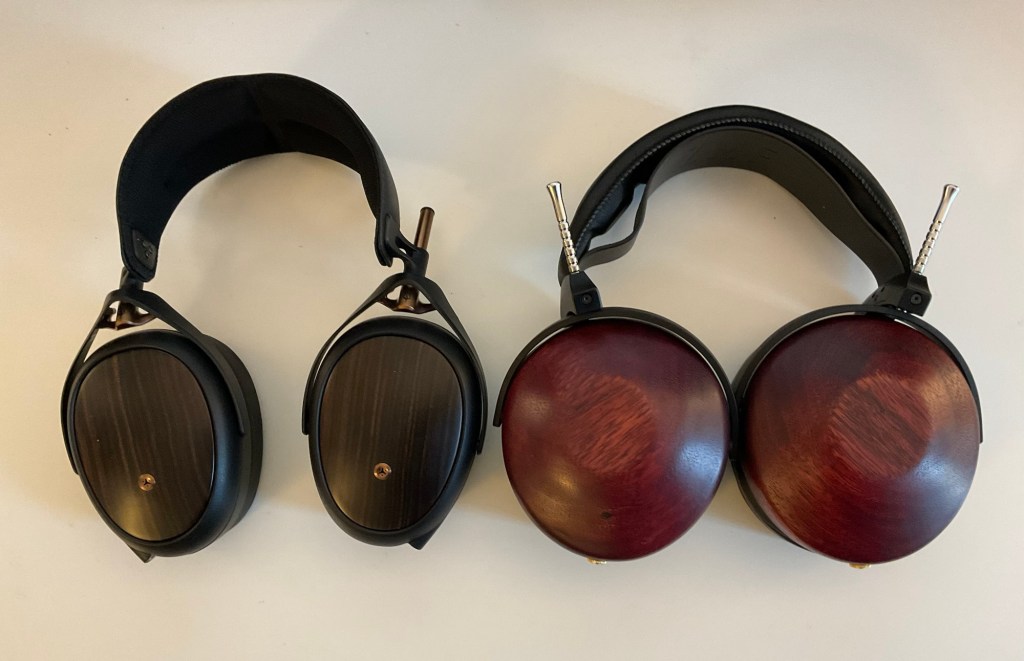
ZMF Bokeh Closed (Rubied Limba) – LCP dynamic driver, c. £1000
The Bokeh is one of the “budget” headphones in the current ZMF lineup, sitting around the £1k mark in the UK at time of writing. It contains some of the trickle down tech from the higher end models like ZMF’s proprietary Atrium damping system, but is designed to be their most affordable “semi portable” design.
In terms of design, the Bokeh follows the classic ZMF approach of full wood cups (in rubied limba wood for my unit), a metal headband and gimbal system and a leather headband with pilot strap, and uses the same 3.5mm cable connector as the Liric 2. Both headphones are definitely on the artisan end of the scale, with the ZMF giving off a more “hand crafted” vibe in comparison to the more elegant and industrially refined Meze design. Comfort wise, both headphones are supremely comfortable on the head, with the Bokeh sporting the bigger footprint both in terms of overall wearing (the classic ZMF Cyberman silhouette) and also the size of the earpads. The Bokeh has significantly more spacious earpads compared to the snug ear huggers on the Liric 2, so if you have particularly large ears, you may wish to bear this in mind.
Tuning wise (in its stock wood / pad configuration), the Bokeh and Liric 2 tread similar ground, both leaning towards a musical tune with a slight mid bass lift and nicely balanced mids, with clear but not overcooked treble. The Bokeh has marginally more bass oomph on first listen, with a comparatively warmer and more forward overall presentation. The Liric is the cooler of the two, pulling the instruments and vocals a step or two further back on the stage in comparison to the ZMF’s gorgeously up front presentation. Bass feels a little drier on the Liric 2, compared to the wetter and physically more impactful hits coming from the Bokeh’s LCP driver.
The Liric 2 feels a little more textured and sharper in presentation, and has slightly better depth to the staging, countered by the slightly wider and larger sonic image presented by the Bokeh. Voices sound fantastic on both sets of headphones, with the Bokeh giving a slightly more rounded analogue tone to male and female vocals, compared to the leaner and more gritty textures of the Liric 2. In reality, these are small differences, but the additional warmth and tonal weight of the Bokeh (that famous ZMF house sound in action) works to fill up some of the air on the stage here, compared to the clearer and more laser-focused imaging and placement of the Meze flagship.
Technically there isn’t a huge difference between the two headphones – the Liric 2 is objectively the “better” performer to my ears in terms of clarity and resolution, but the difference isn’t large, and neither headphone is the most detailed in its price bracket, so if you are after a resolution monster of a closed back can then you probably aren’t looking at these two models in their respective price brackets anyway.
It will come down to what you are looking for – if you are after a crisper sound in a more slimline package, the Liric 2 will be a sensible choice. If you are looking to maximise tonal weight and timbre and like the idea of a more heritage style of design, the Bokeh has plenty going for it. The Bokeh does also have the usual tweakers paradise range of tuning options available on ZMF headphones, with different damping mesh and pad options available to subtly alter the sonic profile, along with differing choices of wood for the cups. Both are headphones it’s easy to lose youself in for hours (which I annoyingly did while trying to write this comparison), so in their respective price brackets, these both stand out as an excellent choice for a more musical and emotional sort of listening experience.

Noble Fokus Apollo – 1x 40mm DD 1 x 15mm planar c. £600
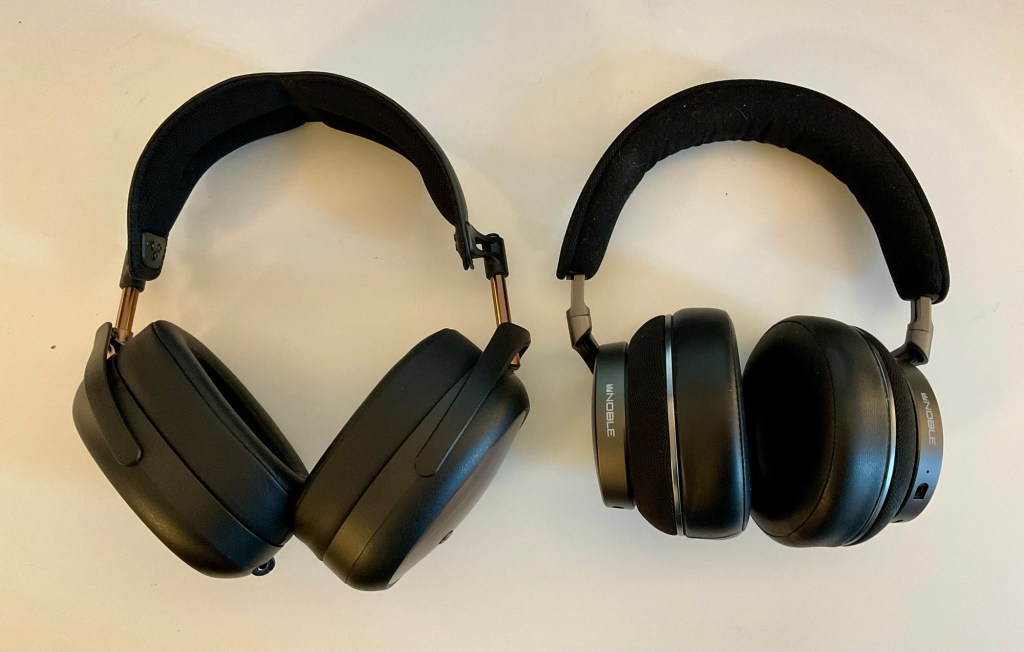
This isn’t an obvious comparison, given the fairly large price differential, but I thought it would be interesting as the Noble does sport an unusual 15mm planar tweeter, and is aimed fairly squarely at the audiophile crowd, despite being a wireless set of cans. I initially tried to keep things at least vaguely aligned by running the Apollo wired off my source of choice (ACRO CA1000), but there really isn’t any appreciable benefit to running these cans wired given the quality of the LDAC bluetooth, plus it allows the use of the more neutral ANC tuning on the Noble cans.
The Apollo sports a classic wireless headphone design, sitting a little larger on the head than brands like Sony or Bose but going for a similar sort of design aesthetic to the B&W PX series, with a mixture of metal, plastic and fabric in the build. They are a very nice looking wireless headphone, but don’t compare to the Liric in terms of overall build and the quality of materials or design (as you’d expect, given they are just over 1/3 of the price). Similarly for the carry case and accessories, the Apollo has a very respectable and good quality loadout, just falling a little short of the high end quality of the Meze accompaniments. One area where the Apollo takes an obvious lead will be in connectivity accessories, sporting 3.5mm and USB cables as standard along with a bespoke 3.5mm to 4.4mm balanced converter, airline and 6.3mm adapters and a boom mic, covering all the potential use cases for a more “portable” can well.
Jumping straight to the sound, the Liric 2 and Fokus Apollo are actually not too dissimilar in overall tuning. The Apollo is definitely bassier, with more of a pronounced V to the presentation in comparison to the more gently sculpted Meze, but both cans are tuned to be more musical and involving than a strictly neutral presentation. Both brands are well known for their treatment of vocals in their tunings, and it’s fair to say neither can disappoints here.
Digging down lower, bass on tracks like “Missing On TV” by Massive Wagons is a little pillowier but more physically slamming on the Apollo than the Liric 2, the Apollo moving a little more air and tilting the bass just a shade warmer (through a mid bass emphasis). With the ANC off, the Apollo gets even bassier, so if you are looking for a maximum bass type of can, the Noble tuning is probably going to be the one that grabs your attention straight off the bat.
Overall, the Apollo is a more raw and visceral headphone, with a notably flatter staging. Both headphones are a lot wider and more spacious than you would expect from closed back designs, but the Liric takes the lead in terms of positioning along the Z-axis, giving instrument placement a little more depth forward or back on the stage. Along with the slightly more restrained bass, this gives the Liric a slightly more refined and resolving impression on first listen.
The Apollo just lags a little behind in overall clarity, presenting notes with a slightly more ragged and raucous edge. In the mids and treble, the Apollo’s 15mm planar driver actually pulls a significant amount of detail out for the pricetag, trading blows pretty well with its more expensive competitor. It just loses out in that last 5% across the board for clarity, resolution and layering, which is a pretty good analogue for the difference between a £600 headphone and a £2000 headphone sonically. Factoring in the better comfort, more luxurious build and accessories into the equation you can appreciate the price differential, but the Apollo is a seriously overperforming contender in its current price bracket, so shouldn’t be discounted just because it’s a wireless model.
The use cases for the two headphones are obviously radically different, but it was a fun comparison nonetheless.
Final thoughts
The Liric 2 is an interesting entry by Meze. It is definitely flagship-grade in build and design, sporting that distinctive Meze “class” and quality, with a compelling package and beautiful aesthetics. Sonically, it probably inhabits the same sort of area that the Empyrean did/still does for the company: something that performs at a TOTL level sonically, without being the absolute best at anything specifically. There will be closed back headphones that outresolve the Liric 2, or place instruments and voices more surgically, or provide more bass/treble/midrange emotion, but there will be very few that manage to get so much of this as right as the Liric 2 at the same time. It’s a fantastically built all rounder of a headphone, providing a musical slant on a neutral sort of sound, fixing a lot of the issues that people noted about its predecessor and standing out in its own distinct niche in Meze’s impressive product line.
If you don’t need to have bleeding edge technicality or a specifically flavoured tuning and are just looking for a headphone that just sounds right sonically and technically, and definitely looks the part visually and ergonomically, the Liric 2 is definitely worth considering if you’re in the market for a headphone in this price bracket. It’s replaced the Empyrean (my all time favourite over-ear) as my “at home” listening choice, which is about as good a recommendation as I can give for a headphone.
 glassmonkey
 jackpot77
 TheOneInYellow
 trekasaurus
 Timothy Cose


 Audio Primate
Leave a comment