

Introduction and acknowledgement
I love finding new brands, and while Pentaconn definitely isn’t a new name on the audiophile circuit, wandering past their stand at the recent Canjam London event and discovering they are now making their own in-ears in house was definitely a surprise. My curiosity piqued, I stopped to listen to their wares, and ended up being so impressed I left the show with a pair to listen to and eventually review (which is the reason you’re reading this today).
If you’ve been living under an audio rock for the last few years, Pentaconn are a division of the Nippon DICS corporation, which manufactures everything from USB cables to E-bike components, as well as their audio connector division which gave rise to the now-ubiquitous Pentaconn 4.4mm balanced connector. This is a first move by the company into producing their own in-ears, and rather than partnering with a more established provider, Pentaconn have designed and manufactured all the components in the IEM chain including the ear tips, launching to market with a 100% “in house” product. This is both hugely brave and pretty intriguing – according to the very nice sales team on duty at Canjam, this IEM is intended to be the first in a series of in ear products from Pentaconn, as they look to build out their range of in ears and launch properly into the IEM world.
This IEM was acquired at Canjam with my own money for a small show discount – all the opinions stated below (however misguided) are 100% my own, and no feedback was sought or given from the manufacturer. Please take all opinions expressed with the requisite pinch of salt, and read the “About Me” section at the bottom of the review to understand my usual sonic preferences.
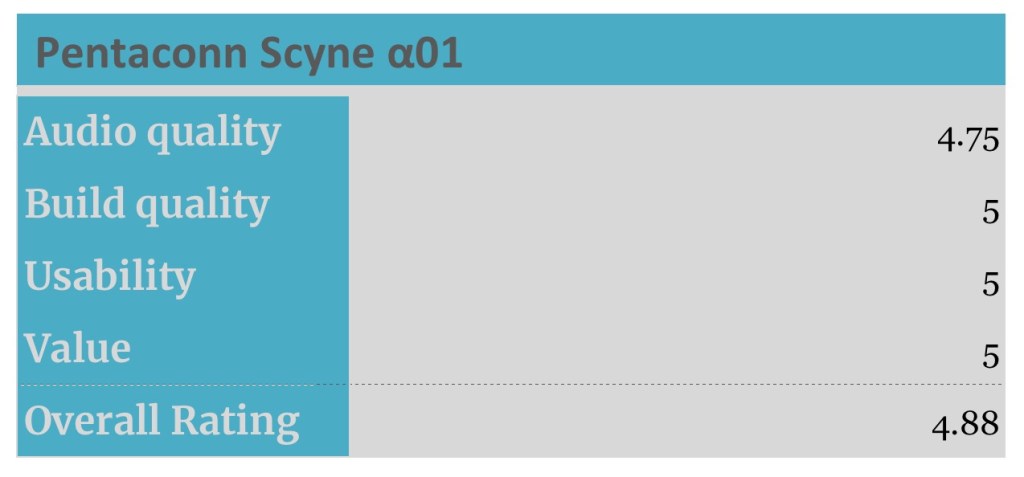
Rating
Tech Specs

Unboxing
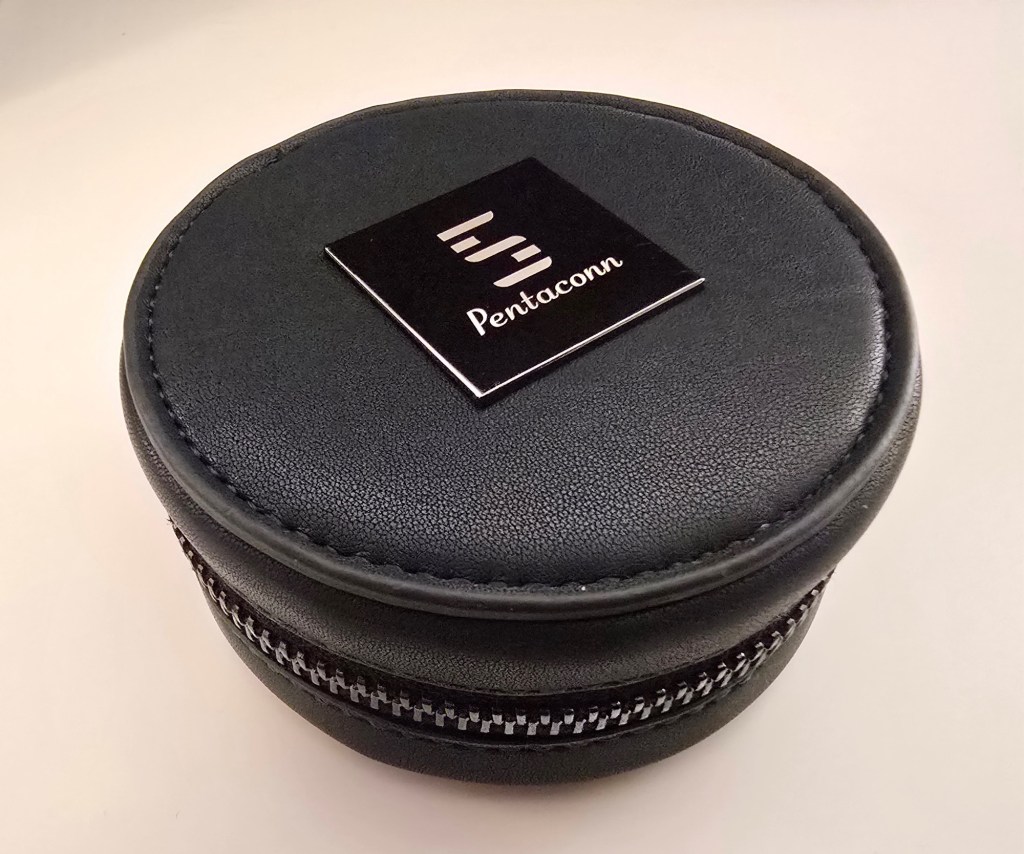
The Scyne comes in a fairly small square cardboard box, it’s a white cover slip and some simple gold writing on the front, with a large sticker with the tech specs covering the back. It all screams Japanese minimalism, and that carries on as you pod the lid of the main box open. You are presented with the two platinum-plated in-ears sitting in a foam surround – pulling that layer out, you get a little safety card insert, two stickers (one Scyne sticker in silver colour and the Pentaconn logo in gold) and a nice cleaning cloth with the Scyne logo on it. Moving those out of the way, you get to a very high-end looking leather puck case in a dark and very soft-feeling leather type material, adorned with a metal Pentaconn logo plate.
Popping that open, you see the included 4.4mm silver-plated copper cable and a small bag of silicone tips). Removing that, you get to the last layer of the unboxing, which is a small plastic hard case containing 4 pairs of Pentaconn’s own-brand Coreir tips, ranging in size from SS to L. Given that two pairs of these metal-cored tips come in at just shy of $50 online, adding in a hypothetical $100 in specialist tips to the package is a nice touch.
The unboxing and accessories are classy and well thought out, not burying the purchaser in a sea of mid-range junk and just providing some very nicely presented and luxurious gear to accompany the IEM. It’s a nice approach.

Driver design and technology
This IEM is Pentaconn’s maiden in ear product, and looks and feels like it’s taking some fairly sizeable influence from the Acoustune school of industrial design, despite all the components involved being designed and manufactured by Pentaconn.
The Scyne is a single dynamic driver design, made up of a Liquid Crystal Polymer dome / Liquid Silicone surround combination, combining the best properties of both to minimise resonance and distortion on the 10.2mm diaphragm. This is all driven by a N55 neodymium magnet pushing out 1.4 Tesla of magnetic flux, again with the aim or producing the lowest distortion and fastest response possible.
Pentaconn tweak the sound further with some clever acoustic chambering toward the front and back of the driver. Up front, the internal shape of the IEM shell in front of the driver is designed to suppress peaks and dips in the high range caused by standing waves, aiming to add some expansion and clarity to the sound. Behind the driver, the Scyne uses a double chamber structure to optimize internal air pressure and the damping of the diaphragm. This is combined with an acoustic module called ETL to absorb and radiate reflected waves inside the chamber, which they claim reduces the effect on the diaphragm of these waves and produces a clear sound with little distortion and a natural sense of presence.
Pentaconn claim that between both front and back chamber designs, this maximises the available resolution and control of the driver, and it certainly does seem to be one of the more impressive single DD designs I’ve heard in practice.

Build and ergonomics
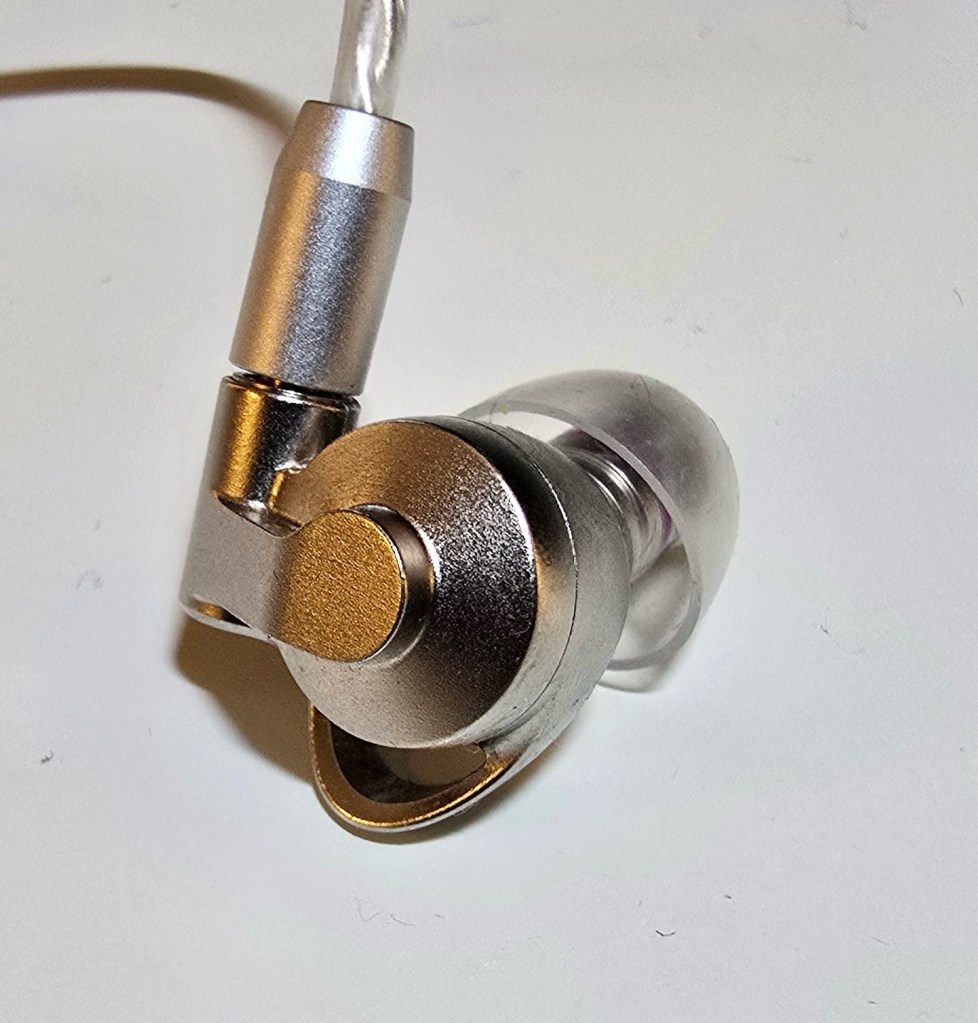
The Scyne is an all metal construction, with the shell mainly made from brass with a matte platinum coating. It is small in the hand (and ear), with a solid and weighty feel that leaves the impression of a small piece of jewellery rather than an IEM. The shell is a two piece design, but the tolerances are very fine, so much so that while you can see the seam running around the outer edge, you struggle to feel it with your fingers.
The shape of the IEM is a classic barrel shaped housing, with an angled nozzle that points in to the ear canal and the connectors being housed in an additional slim barrel structure that sits across the top of the circular design (think the DK3001 or Zen from the IEM manufacturer Dunu). There is an additional “wing” on the back end of each shell that helps lock the IEM shell into the ear nice and snugly – if I’m honest, the IEM is pretty small and very snug fitting in my ears anyway (especially with their Coreir tips), so it doesn’t need the extra assistance, but it’s an interesting looking design piece.
As an all-Pentaconn design, the connectors are their proprietary Pentaconn Ear design, which hasn’t quite reached the same sort of proliferation as the more common MMCX and 2-pin cable connections. I actually really like this connection, as it attaches and detaches easily but is pretty secure and sturdy feeling in use, but if you are an avid fan of cable rolling or accessorising your IEMs with after market cables, you might want to bear that in mind. Given the excellent aesthetics and reasonable quality of the included silver-plated copper cable (6N OFC) then I would suggest that adding an aftermarket cable isn’t a necessity anyway. The cable matches very nicely to the Scyne in terms of looks, with a 4 core design contained in a very smooth flexible insulation. It isn’t braided, so it isn’t immediately striking from an aesthetics point of view, but it’s thick enough to feel premium while still being light and the right angled 4.4mm Pentaconn connector looks well built and sturdy.
Initial impressions on sound
On speaking to the very helpful Pentaconn sales team and Canjam London recently, they pointed out that the tuning for this debut model is aimed for a “reference” sort of sound, so when I popped them in my ears I was expecting something quite neutral and sterile. What the Scyne Alpha-01 actually delivers is a very musical but natural sounding in ear, with some gorgeous deep bass (down to 10kHz) and excellent detailing and clarity for the price, with a nicely enveloping soundstage.
The actual tuning is pretty even handed – the 1.4 Tesla DD gives plenty of body to the bass, but keeps it nicely proportionate to the slightly intimate vocals and midrange and the softly sparkling treble. Midrange instruments have decent body and crunch to things like electric guitar, there is a nice sense of weight across the board and the larger than average note size gives the Scyne a very musical and addictive presentation.
Playing around with different sources, the more it becomes apparent that the resolving power of these IEMs is actually a lot higher than the very well balanced tuning lets on. These are a very transparent set of in ears, so source matching will definitely play a part in getting the best sound out of these IEMs for most people.
On my favoured sources, there is a hint of zip and bite up top on certain tracks, but generally this is an IEM that will stick closely to how a track is mastered and your source is presenting it, without imparting much in the way of additional colouration. It’s more of a subtle Xxx sort of tuning rather than W-shaped, but given the way the IEM brings each different element of the tuning into the mix. I guess you could say this feels like transparent done right. It is definitely done well enough not to be the bottleneck in most audio chains.

Bass
Firing up “Heaven” by Emile Sande, the sub bass is present but not overwhelming. There is a nice sense of vibration, but this definitely isn’t tooth-rattling levels of sub bass output. Going for another well-used sub bass classic, “Why So Serious?” From The Dark Knight sounds track sounds suitably atmospheric, with the Scyne actually doing a fantastic job of eking out some really fine and practically inaudible foreground detail in the opening 20 seconds or so. When the lower bass elements kick in, the track kicks up a gear, the Scyne capturing the power and atmosphere nicely, painting the escalating bass guitar riff around the 3 minute mark with plenty of inner detail, keeping each one and the surrounding sounds impeccably separate.
Similarly, the sub bass element that kicks in at the 3:27 mark sounds deep and powerful – again, not as voluminous as it does on some of my proper basshead gear, but still hitting plenty hard enough to satisfy most listeners. The Scyne is also very good with the fine detail again, with the tell-tale clicking in the upper right soundscape kicking in a few seconds earlier at 3:39 than I normally hear it with most of my gear, highlighting the bass control and blackness of the background nicely. There is certainly no hint of bass masking or bleed on this IEM, with the subtle foreground click at the 20s mark of “Palladio” by Escala coming through crystal clear.
Listening to some more demo tunes, “Disc Wars” by Daft Punk sounds deep and impactful, with plenty of thrumming sub bass in the lower part of the soundscape. “Get Lucky” by the same band is crisp and punchy, with a nice roundness to the bottom of the liquid bassline. Switching to some guitar based music, “Hello It’s Me” by Sister Hazel has plenty of texture to the fat and growly bass guitar and a nice punch to the electric when it cuts in across the top, with Ken Block’s distinctive baritone vocal sounding smooth but gravelly at the same time. It’s a rendition that emphasises the rasp and resonance of the bass guitar strings over the chocolatey smoothness of the bass line itself, but the level of clarity the Scyne’s driver imparts is downright impressive.
Overall, in the mid-bass the Scyne has a nice but not overcooked presence, without much of a “thumb” or emphasis, keeping things pretty even. It isn’t bass shy or anaemic, so there is definitely plenty of low end there if it’s in the track you are listening to, but this isn’t the sort of in-ear that will generate bass quantity when the recording engineer didn’t mix it into the track you are listening to.
Texture and detail are both pretty impressive for the price bracket. Playing “Mista Bone” by 90s rockers Great White, the taut bass line that drives the song (and doubles under the main guitar riff in the chorus) is gripped tightly, sounding powerful and distinct and giving the song a good sense of muscularity. The decay here is on the quicker side, the 10.2mm DD keeping everything tightly controlled in the low end and giving the bass guitar a tighter and more textured feel without much bloom or wetness.
I’ve had the pleasure of hearing a few LCP type dynamic drivers in sub-$1k in ears recently, and I have to say I have been impressed by all of them – the level of performance (and components) trickling down from what was previously flagship grade dynamic driver IEMs into the more mainstream audiophile designs is great news for the more budget-conscious listener.

Mids
Moving up to the midrange, the Scyne is fairly natural sounding in both body and tonality. They have a little hint of sweetness, but I wouldn’t say the mids lean particularly warm or juicy, but they aren’t overly lean or cold either. The sound sits in that Goldilocks zone of just thick enough to sound fun without losing any clarity in the warmth. In terms of stage position, the mids hold a reasonable position in centre stage, again not overly intimate but definitely not recessed of laid back. They definitely aren’t the most forgiving either, and can be a little harsh or strident with poorly recorded music. This is more of a function of the transparency of the tuning rather than a specific tuning choice, to my ears – these are just pretty truthful IEMs, so if you feed them hot garbage, they won’t play nicely with it.
Starting with some Chris Stapleton, “Millionaire” kicks off with a chiming acoustic guitar, and the Scyne renders this beatifully, sounding rich and vibrant and cutting through nicely against Stapleton’s sandpapered roar. The overall sonic image and note size of the guitar and vocals is pretty big, making the whole track sound big and emotional.
The acoustic guitar on “Whiskey And You” by the same artist is handled with the same delicacy, sounding true to life and very satisfying. Stapleton’s voice in this track is painted with all its rasp and crackling, skirting harshness on some words as it emphasises the edge of each note. The problematic chorus sounds very raw, but still listenable – on this track, the Scyne tuning reminds me of some of the old-school Final Audio tunings, doubling down on the rawness and emotion at the cost of a little smoothness and silkiness in the ear.
Similarly for “Starlight” by Slash, raw is the order of the day. The dissonan guitar intro is sharp and cutting, highlighting the harmonic squeal of the guitar and pinging sharply in the ear. The Scyne picks up well on the subtle guitar vibrato and phrasing of the main song, and handles Myles Kennedy’s helium-fuelled falsetto nicely, keeping it sharp but not unpleasant, with no hint of sibilance.
Electric guitar sounds crunchy and impactful, the tightness and resolve of the Scyne’s dynamic driver giving a certain density to the notes that stop it from being too light or brittle. This is definitely a good in-ear for harder rock and metal tunes, with plenty of chug and bite to overdriven guitar. “Shadow Life” from Slash fairly rips along, the Scyne giving a nicely organic overtone to the staccato riffing while keeping everything very crisp and pristine. Similarly for “World On Fire” by the same artist, the speed of the opening riff is no issue for the Scyne, with no hint of mushiness or blurring as the track kicks into gear.
The final guitar tester is “Holy Wars” by Megadeth, which the Scyne renders with a nice weight without losing the speed of the drums or the iconic main riff. This isn’t the fattest or most analogue sounding dynamic driver you will ever hear, but it treads the boundary well between the more clinical speed and resolution of a high end balanced armature set against the more typical note weight and warmth of a slower DD type setup.
Tonally, the Scyne is quite true to source, with a realistic timbre. Piano sounds lifelike, and brass instruments also sound pretty close to the real thing. The sparse recording of “Since You Were Mine” by Smith & Myers sounds fantastic, with the reverb trails of the individual piano notes echoing off into the background and the warmth of the main piano refrain contrasting well against the raspier vocal. Naturally harsh or metallic instrumentation will sound pretty similar through the Scyne, so again this isn’t an IEM that will smooth out or romanticise the music you feed it, it will just play back what is there. That’s probably why the Pentaconn reps describe this as a more “studio” IEM, as it is more likely to hold a mirror up to the recording rather than apply its own flavour to things.
Treble
As mentioned previously, this is an IEM with a little zip and zing to the top end. It isn’t super bright or hot, but there is a definite crispness and bite to the upper octaves. It’s probably the least weighty of the frequency ranges, the Scyne not blunting the edges of the notes at all and letting the treble cut through the sonic information underneath. The treble isn’t overly forward or sparkly, but it holds its ground well against the mid range, not feeling claustrophobic or lacking in extension. A dark IEM this definitely is not.
Cymbals are very crisp and defined, capturing the attention and sounding very clear and tonally true. Listening to “Crazy Joey” by guitar maestro Joe Satriani, the repeating hi-hat motif that almost echoes the main guitar melody in the opening minutes sounds big and ultra-clear. Each note is clearly articulated, with great speed and definition for a dynamic driver. Decay is also beautifully rendered on this track, the cymbal hits giving just enough of a crispy tssssk sound before disappearing from the eardrum. It’s a similar story for “Go” by The Chemical Brothers, the driving cymbal work contrasting sharply against the beefy mid-bass synth line underneath.
This track has plenty of swirling electronica going on in the chorus, including layered keyboard sounds in the left and right channels, which cause no issue for the Pentaconn IEM. Similarly on “Chi Mai” by the violin duo Duel, there is a crispness to the synth work and a beautiful tone to the high violins that gives the track a real sense of height and airiness. Each element is cleanly delineated, packing in the upper frequency information to round out the top end of the track nicely – on less capable IEMs, it can sound a little “boxed in” in terms of the staging, but the Scyne seems to take the metaphorical roof off the sound and lets the treble notes breathe a little more easily.
I always find treble the hardest element of the sound to write about when compiling a review, but suffice to say for this IEM, it is definitely a strength. For those who want a sparklier top end (like the original Campfire Audio Andromeda) then this will probably be a little too serious, and for those who like a gentle and smooth top end for their music will probably find this a little too taut and crispy, but if you are looking for a balanced sound with a very distinctive cutting edge that doesn’t end up sounding sharp, there is a lot to recommend in the tuning of this in ear.

Soundstage, separation and layering
After a decent chunk of time in the audiophile “hobby” now (and a whole lot longer as a music fan), it’s getting rarer to find some IEM or headphone gear that really makes me sit up and take notice. The Scyne has definitely managed that, coming out of nowhere to demand almost all of my non-review listening time since Canjam London. It has that unmistakable dynamism and weight that you only get from a good dynamic driver, allied to some top-tier technicalities that compete well with most higher end in-ears outside of the summit-fi stuff and most importantly, a sense of musical enjoyment. The fit and design are spot on, allowing the IEM to disappear out of the equation and just leave the listener enjoying their music.
The Scyne presents sound in a pretty spherical stage, not extending too far outside the confines of your imaginary “head stage” but presenting a big sonic image, putting the listener right in the middle of the music and close to the front of the stage. Height is also very good for this price range, giving the Scyne a fairly holographic stage where instruments are placed in very specific horizontal and vertical positions, with a good sense of front-to-back depth as well.
Imaging is definitely a strength, the cleanliness of the sonic background allowing the Scyne’s dynamic driver to place each instrument or vocal in a very specific location on the stage, giving the listener a good sense of where each instrument is coming from. Despite the large note size and relatively more intimate presentation, the Scyne still manages to keep each different music strand pretty separate – it isn’t as clinical as some multi-armature flagship in ears, but it’s a more than capable performer in the sub-$1k price bracket. As mentioned, the decent rendition of height on the stage helps with the layering of sounds, allowing the listener to zoom in on each specific strand without too much effort.
Overall, the Scyne performs at a pretty high level here, but despite the more neutral sort of tuning, the technical prowess doesn’t make the Scyne sound too clinical or sterile, achieving a good balance between laying all the different elements of a track out for the listener to hear without dissecting the enjoyment at the same time.
Power requirements and synergy
The Scyne isn’t a particularly power-hungry IEM, with an impedance of 16 Ohms and a sensitivity of 110dB. In practice, you should be able to drive it from pretty much anything. I only tested it on my balanced sources given that the stock cable comes in 4.4mm termination only, but I never really had to crank the volume or gain on anything to get to a sufficiently loud output volume, with a volume setting of 60/150 from my A&K SE180 in high gain giving plenty of volume and control.
That being said, the driver inside is definitely something that appreciates a good quality and well driven source – it will scale up nicely in both control and detail with higher end gear, remaining pretty transparent in terms of reflecting the quality of the rest of your playback chain.
Out of my usual sources, the Lotoo PAW6000 was less well matched than I expected, bringing a shade too much neutrality and brightness to the overall tuning. The A&K SE180 (Amp 4) and A&K ACRO CA1000 both fared a lot better, the slightly warmer and smoother sheen possessed by both DAPs giving the Scyne a very organic and smoothly detailed tone. The Scyne was digging out fine background details on the ACRO CA1000 that weren’t apparent on the Lotoo or more entry level gear like the Shanling M1S, so this is definitely an IEM that will shine a light on your sources rather than bottlenecking them.
Mentioning the Shanling, the M1S was actually another decent pairing, with the more muscular and bass-heavy Shanling “house sound” giving the Scyne a good sense of energy and a little extra oomph and bite at the expense of some resolution. I suspect this is an IEM that should play very well with Shanling and Sony DAPs that possess a more muscular low end (although I don’t have any other models on hand to test that theory, sadly).

Tip choice
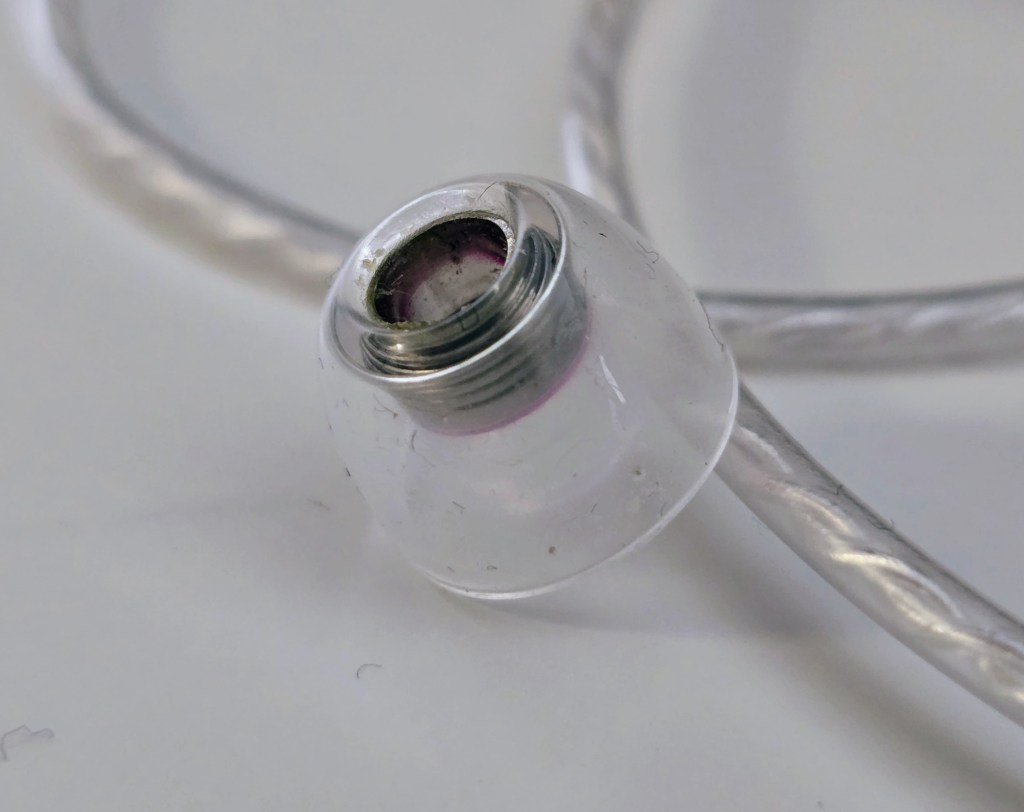
The Scyne is a small and well fitting in-ear, so doesn’t rely too heavily on the tip to make a good seal in the inner ear. It also comes as standard with four pairs of Pentaconn’s own-brand Coreir tips, which have a similar external consistency and some of the stickiness of the popular AZLA Xelastec tips but bolstered with a solid metal core that keeps the sound tube rigid. I tried a few of my other “go to” tips like Dunu Sound and Stage, Tri Clarion and JVC Spiral Dots but the best synergy was unsurprisingly with the Coreir tips.
The AL (aluminium) type tips included do accentuate the treble extension and clarity in the tuning, so if you are looking to add a little more warmth and body or tame the high end a little, swapping to Coreir copper tips (sadly not included as standard) will give the tuning a little nudge sonically without losing any of the special sauce that Pentaconn have baked in to this in ear. The copper tips were actually my preferred tip in the end, sacrificing just a hint of the technical capability of this IEM for a subtle bit more warmth, but if I didn’t have access to a set I would be more than happy using the supplied AL – Pentaconn have done a great job of matching all elements of their IEM chain here.

Comparisons
Elysian Acoustics Pilgrim – (1xDD 3xBA hybrid, c. $399)
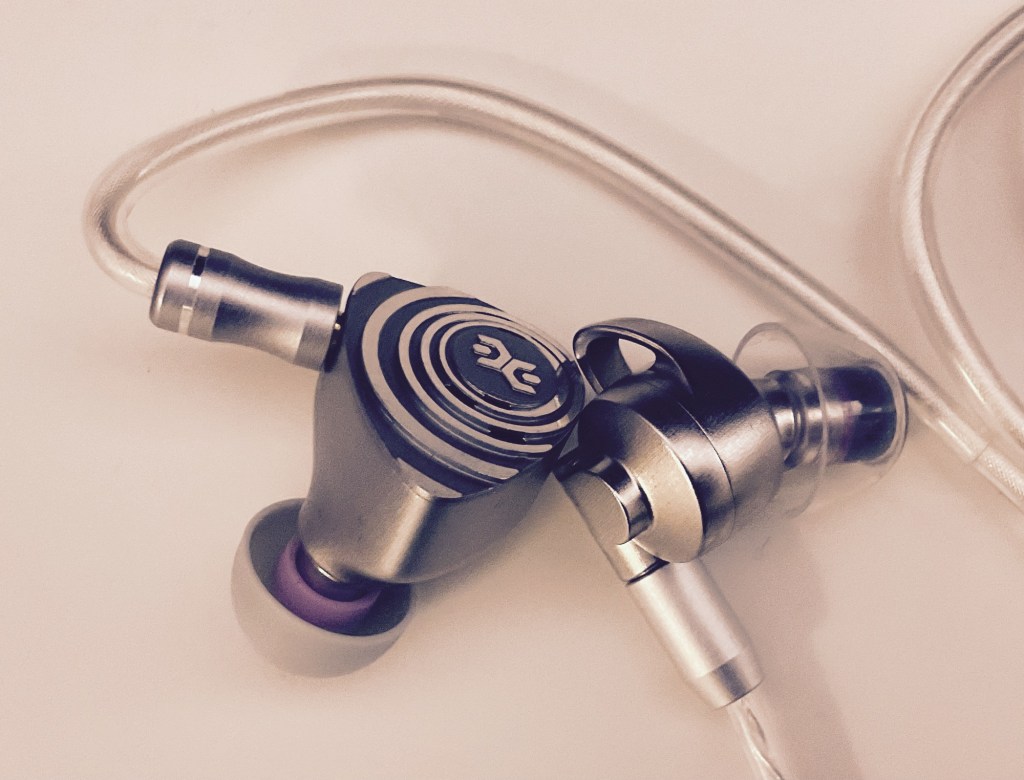
The Pilgrim is the latest model from Elysian Acoustic Labs, which has already garnered plenty of attention in the sub-$500 in early market. There is a collaboration model called the Pilgrim Noir which sits at a similar price to the Scyne, but sadly I don’t have access to that for this review, but given the reported closeness in performance between the OG and Noir Pilgrim models and the all metal design of both in ears, I thought this would still be a useful comparison.
Starting with the unboxing and loadout of both in-ears, the Scyne and Pilgrim are remarkably similar, sporting smallish boxes with a very classy presentation and premium accessories, even providing similar quality leather-style puck cases and very similar silver-looking after market style cables. Even the IEM design is similarly striking, with the Pilgrim going for an all-metal IEM shell with some striking concentric circle patterns on the outer shell and a larger but still ergonomic fit. The Pilgrim is definitely the better looking and more “intricate looking” design out of the two IEMs, but the Scyne design is still pretty nice and definitely eye-catching in comparison.
Sound wise, both IEMs are actually quite similar, with the Scyne carrying a similarly deep sub bass but a good slug more mid bass presence than the Pilgrim. The Pilgrim tends to skew more to the sub bass in terms of quantity, with a comparatively leaner mid bass as it transitions up into the midrange.
Bass is pretty equal in terms of detail and resolution as well, with the Pilgrim’s DD driver sporting a similar LCP construction and similarly high technical performance. Both models excel here in terms of tightness and clarity from their respective dynamic drivers. If I had to split hairs, I’d day the Scyne has a bit more slam and visceral impact than the Pilgrim, and the Pilgrim has a little more roundness and weight to the ultra-lows.
In the midrange, both IEMs are equally good with tracks like “Mother Maria”, the Scyne pushing sounds a little more forward on the stage than the Pilgrim. The Scyne stage size is a little larger in terms of width and depth than the Pilgrim, with a slightly bigger note size. It puts the listener a little closer to the stage, with a bigger sound, so if you prefer intimate IEMs, this one might tick a few boxes on that front. Detail-wise, it’s again pretty even, with the Pilgrim resolving equally well as its pricier competitor but presenting a slightly thinner note, giving a little more air and separation between each instrument as a trade off.
Treble on the Scyne leans a little crisper and more bright in tone than the Pilgrim, which is a little more musical and slightly more soft and sparkly in tone, balanced with a significant push in the brilliance region that defines the overall sound of the Pilgrim. In comparison, the Scyne is more even as it climbs up the frequency range, lacking the push in the brilliance region that defines the Pilgrim’s upper end, but carrying a similar or slightly enhanced crunch and sparkle.
Ergonomically, the Scyne is a much smaller shell given it’s a single DD design, and it fits a lot deeper into the ear canal with the Coreir tips than the more traditional pseudo-custom design of the Pilgrim. Both IEMs are comfortable for me, but if you have small ears, the Scyne would probably give you less issues for long listening periods.
Overall, both IEMs are relative newcomers in the current landscape, and both are seriously impressive in their own right. The Pilgrim wins easily on pure value for money and has the slight edge in musicality and warmth of tone, but if you prefer that genuine DD slam and visceral impact across the board, and are looking for something with slightly better technical capabilities but a more forward and “larger” sound, I could see the Scyne coming out as a better recommendation.
Soundz Custom Flame – (8xBA, c. $999)
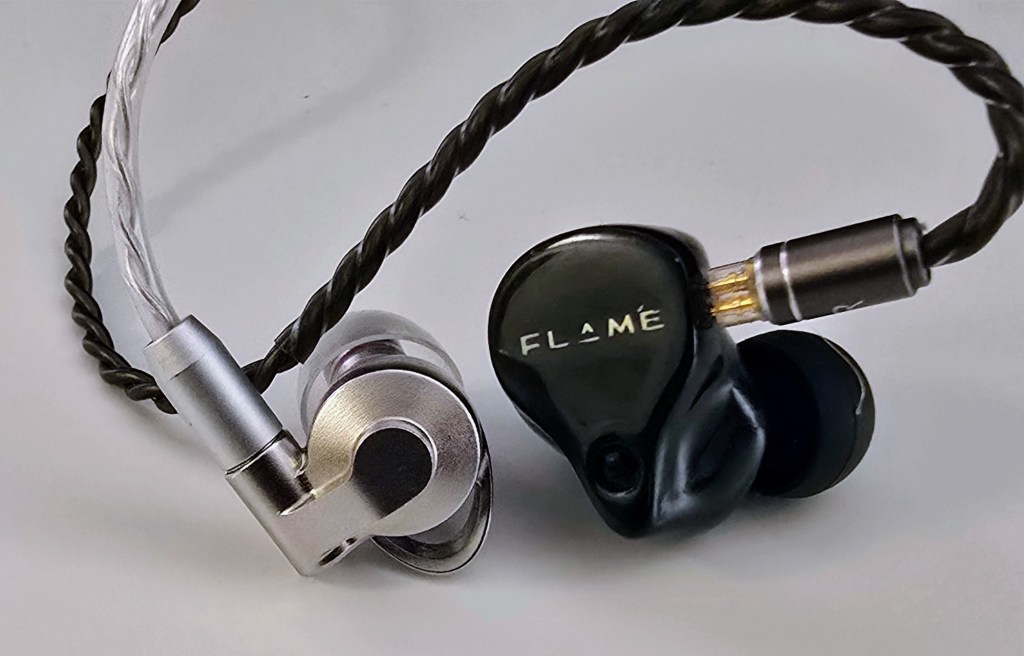
The Flame is another model that sonically mugged me at a Canjam, this time at Canjam 2023. It is Soundz Custom’s second most expensive in-ear, sitting just under the flagship 10-driver Avant in their current lineup. It is an all-BA design with an interesting “loudness switch” on the all-acrylic IEM body that adds slightly more emphasis and a few dB of quantity to the bass region of the sound.
In terms of build quality, the Flame is an acrylic pseudo-custom design (as befits a model from a manufacturer who started up producing CIEMs for the live music industry in Greece and across Europe), so the comfort is a little different. The Flame has a much larger body than the Scyne, but due to the excellent pseudo-custom contouring of the IEM body, it is another IEM that can sit easily in the ears for hours at a time once you find the right tips.
Accessory wise, the package at the time I got the Flame consisted of a decent (and vaguely similar) SPC IEM cable, a bombproof solid metal puck case with some decent aftermarket tips, a guitar plectrum and a cleaning brush. Simple but effective and elegant, but it doesn’t quite feel as luxurious or “high end” as the Pentaconn case and tip/cable loadout. I believe the current Flame package now comes with an aftermarket cable from Satin Audio, so the brand are definitely leaning more into their audiophile audience (and what they are looking for in an IEM package) as they grow.
Sonically, the Flame are one of the more detailed in-ears I’ve heard that doesn’t cost north of $2k, with the team in Greece using the latest generation of Sonion armatures to craft a sound that is musical but technical at the same time. The Flame with the bass switch enabled is surprisingly bassier and just as impactful than the Scyne, which is impressive given the all-BA design. It basically comes across as a warmer and thicker take on a similar sound, leaning more on the mid-bass which provides a thicker sound in the upper bass and lower midrange area. This trades off with the Flame sounding slightly less airy than the Scyne, but the technical prowess of the design still slightly out-resolves the Pentaconn model, sprinkling slightly more micro-detail into he corners of the sound.
Where the Scyne differs from the Flame is in the cleanliness and airiness of the midrange, with the Scyne sounding a little cooler and a little leaner than the fat and funky (in comparison) Soundz model with the bass switch engaged. The Flame sounds more stylised, with a slightly sharper mid range that leans more towards stridency (but doesn’t actually get there), and gives things slightly more “edge”. If you slip the bass switch to the off position, the Flame edges slightly closer to the Scyne with a little extra breathing room and air injected around the mids, but still keeping that dose of extra warmth and weight across the middle of the sound.
Treble is fairly evenly matched between the two, with the Flame probably being the slightly hotter of the pair.
In terms of overall technicality, it’s an interesting contrast, as while the Flame technically packs more resolution and clarity into the individual notes, the more densely packed sonic presentation leave the sound not being quite as spacious and clean-sounding as the Scyne. The Scyne definitely sounds like the more “reference” of the two in-ears, it’s the Flame heading more into flavoured sound but with a better technical capability underpinning it all. The Scyne wins in terms of pure physicality, but it’s actually pretty impressive just how much slam and punch Soundz are extracting from the next-gen Sonion bass drivers, so the line between dynamic driver physicality versus armature-based accuracy is definitely blurring these days.
I genuinely can’t pick a favourite out of these two in-ears, as they both wowed me at a Canjam event, and between then take the lion’s share of my in-ear listening when I’m not reviewing something. If you are looking for a richer take on a traditional BA sort of in-ear in the vein of the classic JH Audio models, the Flame is a solid recommendation. If you prefer the solidity of a DD based in-ear and are looking for something airier, a little more taut sonically and more neutral overall, the Scyne will probably tick more of your boxes – you basically can’t go far wrong with either IEM.
Final thoughts
It’s not the bassiest or most slamming of DDs if you are looking for pure grunt, and it isn’t the most technical DD in ear you can find in the sub-$1k market (although I don’t think it would be far off). It also probably packs a treble that’s more spicy than safe, which may alienate a few treble-phobic listeners, but overall, this is a very well thought through sound signature that gives you bags of sonic information while also putting a grin on your face, all wrapped in a very small and well engineered platinum plated package. For a debut in-ear, this is a fantastic achievement, and marks the veteran accessory manufacturer out as s serious contender in the crowded IEM market.
 glassmonkey
 jackpot77
 TheOneInYellow
 trekasaurus
 Timothy Cose


 Audio Primate
Leave a comment