
Introduction and acknowledgements
Elysian Acoustic Labs are a Malaysian audio brand currently making waves in the in-ear monitor space. They started life as a one-man operation back in 2015, when founder and mechanical engineer Lee Quan Min decided out of frustration with the sound of the available IEM options on the market that he would modify an old Ultimate Ears Triple-Fi.10 to see if he could tweak the sound more to his liking.
That lead to a lucrative sideline in reshelling IEMs for local audiophiles and eventually into making his very first entirely self-designed and built models under the Elysian brand. Elysian initially gained traction in the Japanese market, with Lee winning the prestigious Fujiyama Avic x Foster Alliance Program IEM making competition in 2019 and implementing the in-house DiVe pass technology that Elysian now use with their high end DD-based designs.
The company currently have three “own brand” models on the market (the flagship 7-driver tribrid Annihilator 2023, the all-BA Diva 2023 and the entry level DD/BA hybrid model Pilgrim). Elysian also have a couple of collaborative efforts with boutique cable maker Effect Audio to their name (the GAEA and Pilgrim Noir). It is refreshing to see a manufacturer with models in both the TOTL $3k pricing brackets and also something in the entry level sub $500 pricing band, bringing the unique Elysian “house sound” to a wider market.
I purchased this model for review directly from Elysian’s US distributor MusicTeck at a small discount. Big props as always to Andrew and his team for the excellent service and the opportunity to write a review on these very interesting in-ears. As always, all opinions written below (however misguided) are 100% my own, with no input sought or given from Elysian or MusicTeck.
Unboxing
This is always the section of a review that is most contentious – at the end of the day, you are buying an audiophile in-ear based on what you want it to sound like, not the packaging it comes in. That said, there is always something reassuring when you get a well thought out and appealing unboxing experience – companies who care enough about the initial impression are usually pretty reliable with the actual end product, in my opinion.
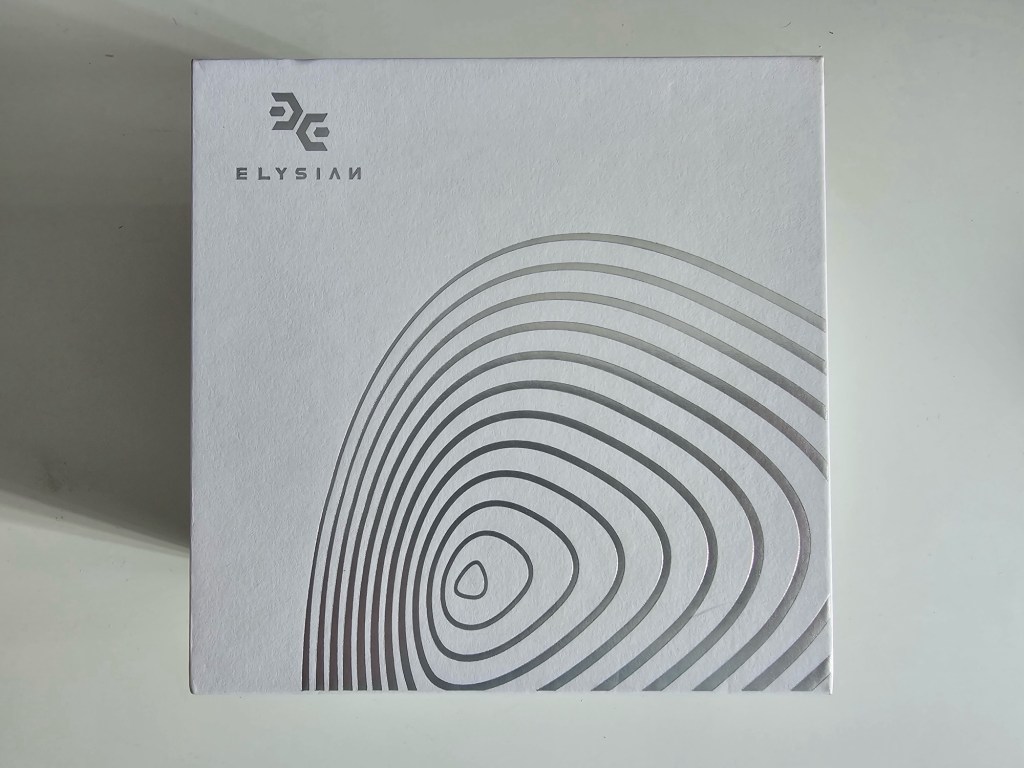
In this regard, the Pilgrim does very well for its price bracket. The IEM comes in a small cuboid box, with the Elysian logo in classy silver on the front, along with a stylised geometric approximation of the actual IEM shell design. The word “Pilrim” is embossed in silver on one of the sides, but apart from that and a sticker confirming model details and cable choice, it’s a pretty clean initial design, which looks classy.
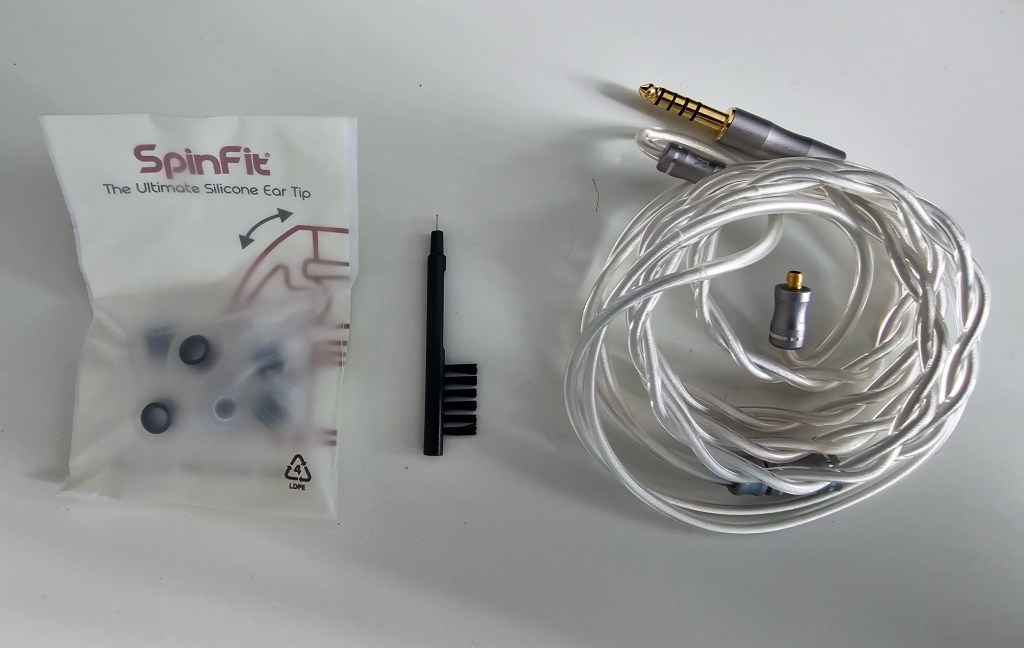
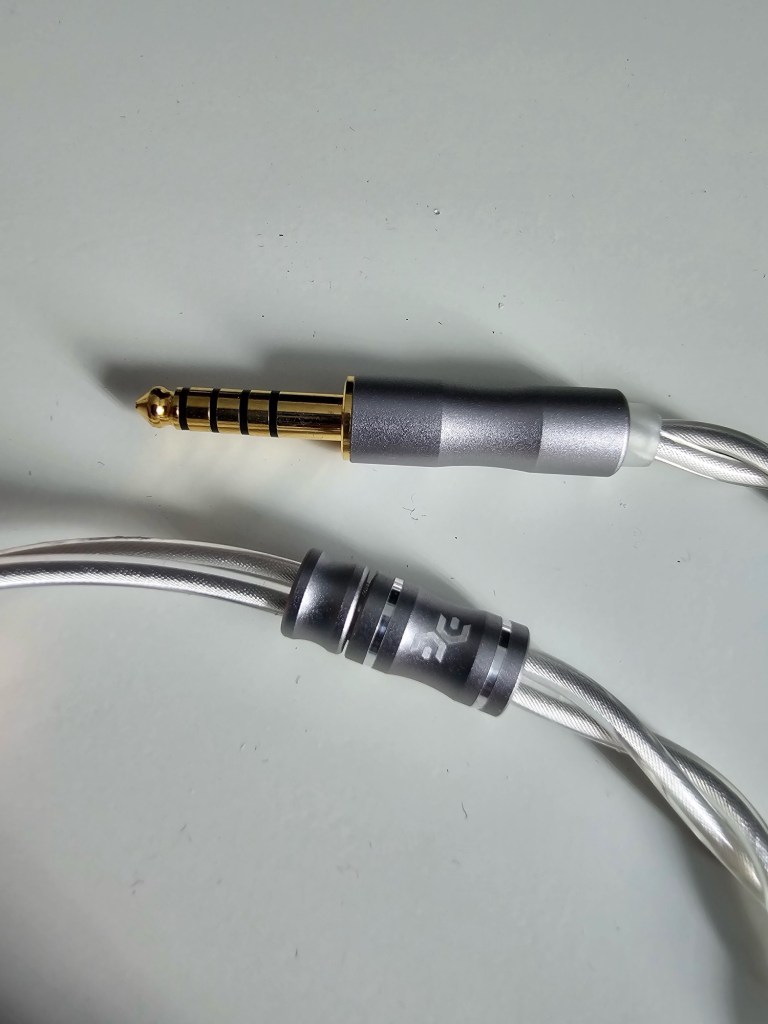
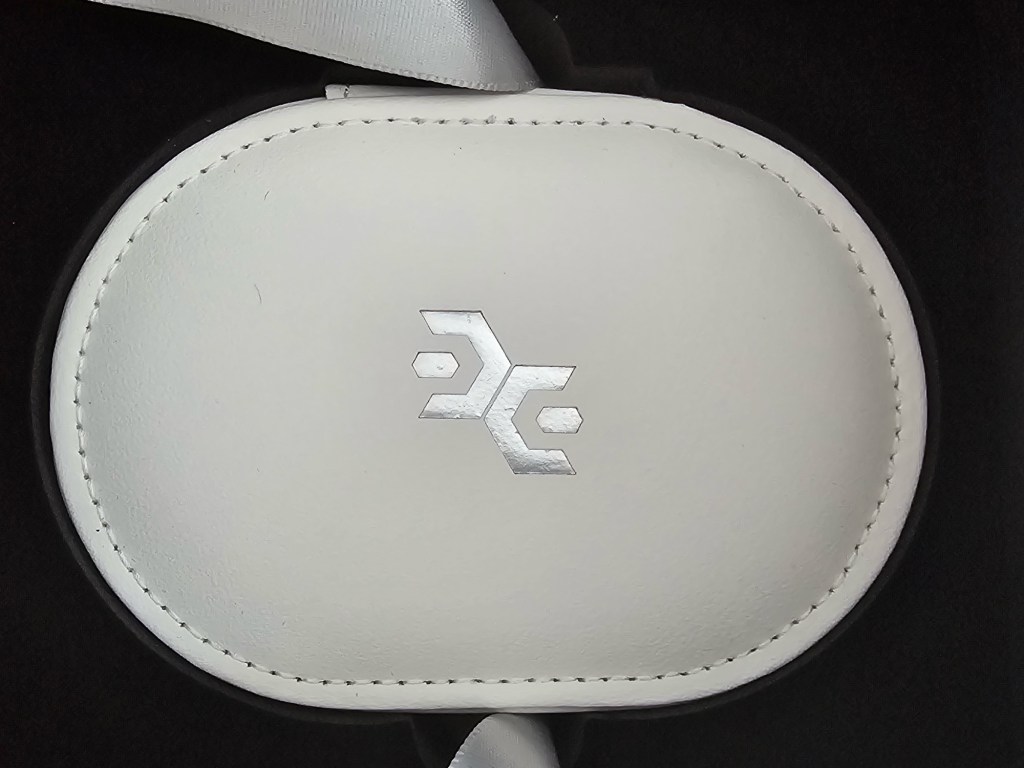
Opening up the box, the Pilgrim IEMs are displayed in a nice cardboard mount, highlighting the very striking shell design. Diving down into the layers, you will find a white leatherette IEM case (very classy looking and “on theme” but possible the least practical colour there is for a case), a silver coloured cable (4.4mm in my case) and some Spinfit tips. There is also a standard IEM cleaning brush and a nice metal warranty card nestled in among the other items, giving a loadout that isn’t overflowing with items, rather keeping it simple but very classy. The cable is terminated with a Pentaconn connector, making it a little less likely that the average IEM user will have other cables laying around, but it’s of a sufficient quality in both build and sonics not to feel that it needs to be changed. Ditto for the case – despite the colour way, it is a nicely thought out and spacious ovoid puck shape, leaving plenty of room for the Pilgrim, cable and a small selection of tips.
Overall, the package is classy and well thought through, and gives a nicely “high end” sort of vibe when you are opening it – I definitely have no complaints.
Design and ergonomics
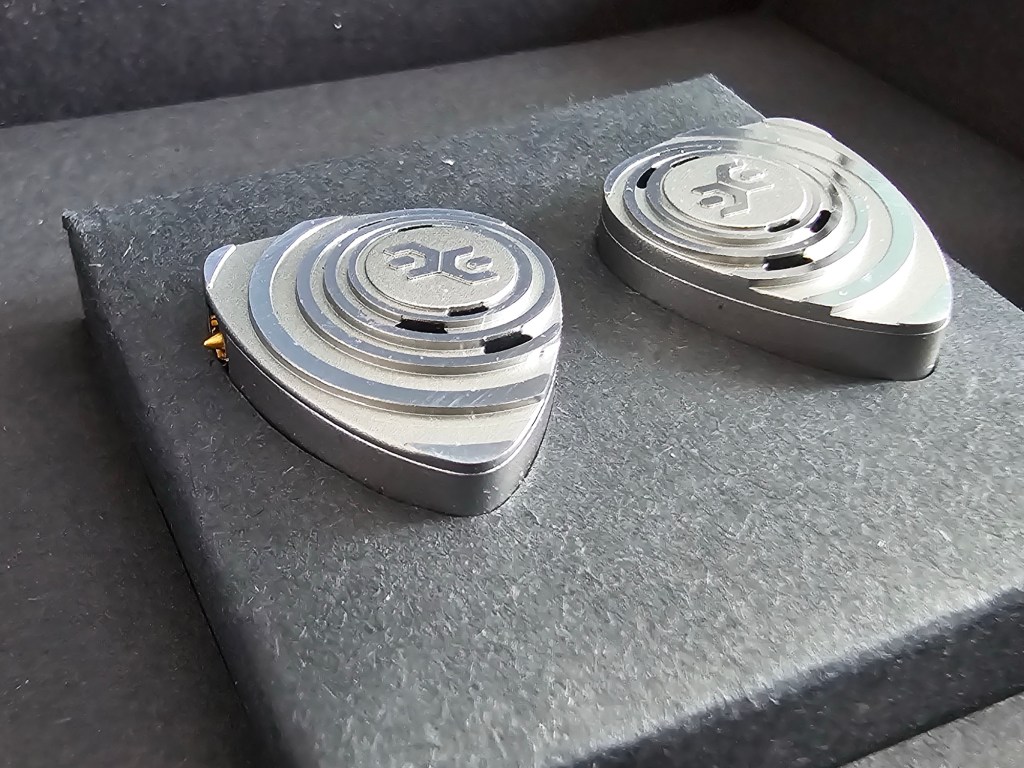
The Pilgrim are definitely a unique looking IEM. The shell is basically wedge shaped, with a fairly deep matte silver coloured metal shell that looks a little like the 64 audio universal designs (barring the much shorter IEM nozzle on the Elysian model). It is nicely contoured on the inner face of the monitor, sitting smoothly and comfortably against the surface of the ear for me (caveat – I do have very large ears and ear canals).
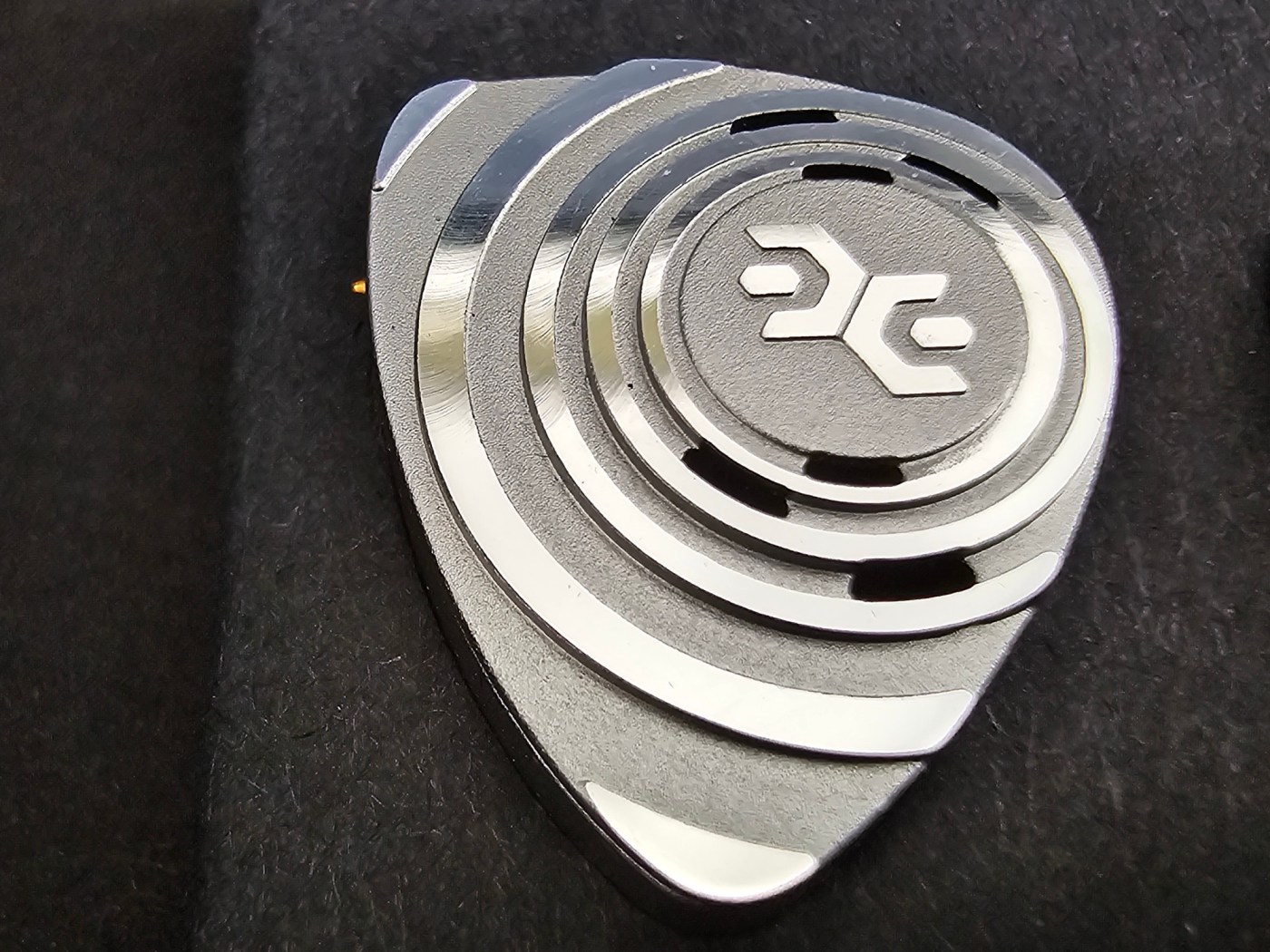
The entire shell is made of metal, with the faceplate carrying an intricate design of concentric polished and matte circles, with the Elysian “EE” logo forming a focal point in the middle of the circles. The circles also raise slightly as they get smaller, giving a nice 3D effect to the faceplate and an interesting texture in the hand. Another unusual feature of the faceplate are the multiple vent holes – there are 6 small holes on each faceplate, providing ample ventilation for the dynamic driver. Isolation is still pretty good, given the solid metal nature of the shell, but these won’t be the most isolating things you can use given the sheer amount of vent holes.
As mentioned, Elysian have gone for a Pentaconn connector rather than the more popular 2-pin or MMCX connections. This is likely to make cable rolling more difficult unless you already have a stock of IEMs that use the newer Pentaconn connector, but on the flip side, the connection is simple and solid, and always feels easy to connect and disconnect without worrying the IEMs will part company with the cable at some inopportune moment or that you will pull half the drivers out when you finally get the cable to detach.
The cable itself is a thick silver looking cable with Elysian branding on the y-split. It is a 2-wire cable with a relatively thick gauge, and looks visually impressive, matching the colour of the IEMs and the case. The wire uses preformed heat shrink tubing on each earpiece as an ear guide – it’s soft and supple, but makes sure the cable drapes nicely over the ears in use. While I only have one other Pentaconn IEM cable to swap with, I probably wouldn’t think about cable rolling anyway, as the stock cable definitely looks “good enough” for the Pilgrim both in terms of looks and build.
In terms of fit in the ear, the Pilgrim sit pretty flush – the IEM shell itself is pretty deep so they will protrude a little from your ears so not a great IEM for side-sleeping with, but they lock in securely and don’t cause me any issues in protracted listening sessions. Again, please be aware that I do have very large ear cavities, so people with smaller ears may have a different experience if parts of the metal shell touch the outer ares of the ear.
Initial impressions on sound
It’s fair to say that my previous experiences with Elysian products left me a little… apprehensive about the tuning of a mid-fi version of their “house sound”. I have listened briefly to the much lauded Annihilator, Diva and Gaea at different points over the last couple of years, and while I have been able to appreciate their technical finesse, I never quick clicked with any of the models sonically. They have always run a little too lean and a little too bright for my personal preferences, so without knowing much about the tuning of the Pilgrim prior to receiving them, I was expecting a similar sort of sound.
I was wrong. VERY wrong. On slipping the metal IEMs into my ears (running using the stock 4.4mm cable and supplied Spinfit tips out of a Lotoo PAW6000), I was very pleasantly surprised to hear a sound that is both warm, weighty and vivid, with a very good sense of musical balance throughout. To my ears the tuning hovers somewhere around a classic “W” shape, with a strongly emphasised sub-bass that slopes down through the midbass, picking back up again to push the mids forward, and then sculpting the treble response to add some zing to the higher registers.
The sub-bass is voluminous, and of superb quality – not just superb quality for the $399 price bracket, but superb quality full stop. The LSR dynamic driver that Elysian are employing here does an exceptional job, filling the lower end of the stage with plenty of rumble and weight but without losing any tightness or control. The speed is also very quick for a traditional dynamic driver, allowing the downward sloping mid-bass to impart a nice sense of warmth and weight to the overall sound signature without blooming out and muddying the sound. The midbass is more on the punchy and tight side rather than matching the sub bass for quantity, which means the Pilgrim has weight in the low notes, but doesn’t have a hugely present mid bass. To be fair, the midbass never feels lacking, but this tuning is definitely more basshead-adjacent than basshead.
Mids start rising slowly, ending with a peak in the upper midrange that accentuates vocals (more female than male). They aren’t the richest or most organic sounding mids you will ever hear, the single Sonion 2300 BA driver doing a very good job of dragging out all of the detail and clarity in the music at the expense of a little heft. In fact, like the bass, the Pilgrim isn’t just detailed for the price, it’s a highly resolving IEM compared to a lot of current models on the market, with bags of resolution on offer. This does come at a slight cost, however – if you’re looking for an in-ear to smooth over a rough recording or romanticise your poorly mastered music collection, you probably want to look elsewhere. The Pilgrim can be quite unforgiving in parts with harsh or scratchy music, so feed it well.
Treble is pretty zingy, showing high levels of detail and a refreshing amount of air and sparkle. This mainly comes from a quite aggressive push in the brilliance region of the frequency response, which may bother some treble-sensitive listeners. I usually count myself in that bracket, but the spike is located outside of my usual “trouble spots”, so I don’t personally find the Pilgrim fatiguing or hot on long listening sessions with treble-centric music. As always, your mileage may vary.
Overall, the tuning is sculpted nicely, with a very solid sub-bass foundation, some emotional midrange and very impressive treble and technicality. For the price bracket, this is a seriously well tuned and engaging IEM, and another refreshing deviation from the sea of Harman-tuned clones out there at the moment in the sub-$1k price bracket.

Bass
Kicking off my usual test tracks, “Heaven” by Emile Sande starts with a weighty sub bass thrum, the Pilgrim giving the track plenty of low end vibrations in the ear to balance out Sande’s sharp vocals. Similarly for “Disc Wars” by Daft Punk, the brooding synth and timpani that start off the track sound deep and powerful, with the the orchestral flourish at the 30 second mark carrying some proper gravitas. It manages to avoid icecream headache territory playing back “Resplendence” by Foy Vance (which can turn your forebrain into soup on proper basshead gear), so this isn’t an overpowering sub bass, but there is definitely a significantly north of neutral amount of decibels going on in the tuning. As mentioned above, for an otherwise even-sounding IEM, it helps give the Pilgrim a good sense of weight.
This is nicely illustrated with another Daft Punk track, “Get Lucky”. The slinky bass notes aren’t; overly emphasised, but the extension and weight on the underneath of each note is damn near perfectly rendered, with the Pilgrim giving a highly nuanced and resolving rendition of the iconic bass line that really allows the mastering of the track to shine. This track can sound a little flat or “one-note” in the bass on some of my cheaper gear, but the Pilgrim navigates it expertly. Texture and density is excellent, and musicality is also very good on this track.
Looking for a bit more mid-bass, a little bit of Elvis and the Royal Philharmonic Orchestra helps to highlight the relative lightness of the midbass compared to the dub frequencies. On fully basshead IEMs the intro to “You’ve Lost That Lovin’ Feelin’” is weighty and fat, but here it feels nicely round but almost neutral, the bass guitar lacking that last bit of weight and presence to really fill out the lower end of the track. It’s still musical, but the slightly reduced emphasis allows Elvis’ stellar vocal and the delicate guitar and orchestration some additional room to shine. Similarly with “Hello, It’s Me” by Sister Hazel and “Drift Away” by Dobie Gray, the slinky bass lines that dominate both tracks is highly detailed but not as fat or dominating as it can sound on other gear. The Pilgrim concentrates on digging out every single detail of the reverberating bass strings, giving them a light and almost chalky feel in-ear rather than the more velvety and unctuous rendition you get with a more pronounced midbass “thumb” in an IEM tuning.
In terms of slam, the Pilgrim definitely punches harder than an all-BA set, but doesn’t pulverise the ears with sonic impact like some DD models can. Lining up “Bad Rain” by Slash, the low end of the track sounds as good on the Pilgrim as I’ve ever heard it on any IEM (including the various TOTL gear I’ve heard and/or owned). This song is all about the aggressive growl of the bass guitar and the slamming kick drum beat, and while the Pilgrim gets a passable amount of oomph into the kick to drive the track along, it’s the texture and clarity of the bass line that really highlights how impressive their new LSR DD is. The note attack and decay in the low end is so clear you can practically visualise the bass strings vibrating with each plectrum hit – if that sounds like hyperbole, it probably is a little bit, but I challenge anyone to listen to this track and not be impressed by how much detail and texture the Pilgrim manages to extract in the lows without overshadowing or distracting from the grungy guitars and falsetto vocals going on above.
Another good tester for bass texture is “Palladio” by classical fusion outfit Escala, and again the Pilgrim ace the test, with the bowed cello intro positively dripping with textural detail. This track is also one of my testers for bass masking, and the Pilgrim does a good job of uncovering the subtle click in the foreground of the track around the 20 second mark which can be buried with a beefier bass tuning.
In terms of low end speed, the LSR dynamic driver Elysian have chosen here is pretty special for a non-armature set, easily keeping pace with tracks like “Holy Wars” by Megadeth without any blurring or loss of clarity. Drums are clean and clear as they pound along, and the bass has just enough weight and more than enough definition to keep everything clean and separated in the ear. Completely changing genres, that separation and cleanliness shows up very well with “We Shall Not Be Moved” by Mavis Staples. There is a low baritone male singer int he chorus who can either fade into the background or blur into the other chorus vocals on lesser gear, but the Pilgrim pulls out every drop of his low and gravelly vocal, the rasp of his voice adding another layer of texture to the sweeter and cleaner gospel stylings of the rest of the track. Like with “Bad Rain”, the Pilgrim renders the low end on this track probably as well as anything else I have in terms of pure enjoyment, so that is definitely no small praise.
Finishing off with some more upbeat rock and electronic testers, the Pilgrim handles “Beat It” by Fallout Boy decently enough, just lacking a little overall slam and physicality to really compete with some of my higher end bass-prominent gear. To be fair, it works well for the overall tuning (the Pilgrim is an excellent IEM for rock and guitar based music), but I do sometimes prefer something that can render more of a visceral slam and punch to the music on tracks like this.
In summary, the bass leans more sub-focussed, easing off a little on the quantity as it moves up the frequency range but zooming on on the detail, with an almost perfect balance of clarity, speed and texture. I don’t think it’s an exaggeration to say that the DD driver and acoustic implementation Elysian have come up with here woudn’t be out of place on a much more expensive model, and certainly trades blows in terms of raw quality with plenty of $1k+ IEMs. It wouldn’t surprise me if this isn’t the last we have heard of this particular DD driver in the Elysian lineup – hugely impressive stuff.

Midrange
The midrange on the Pilgrim is excellent in terms of sheer resolution, painting a fairly taut sonic image that isn’t overflowing with substance but definitely isn’t lacking anything in terms of clarity. As mentioned in the tip section, if you want to thicken up the sound through this range then there are a few options like the Kiwi Ears tips I mention, but for the sake of simplicity the bulk of these impressions are done with the stock Spinfit tips.
Starting with some guitar based music, “Mother Maria” by Slash and Beth Hart sounds excellent, Hart’s smoky vocals feeling raw and realistic, and the guitar carrying just enough weight and a nicely analogue tonality. One thing that immediately jumps out is the timbre of these in-ears, with the Pilgrim sounding very true to life rather than accentuated or stylised. Piano tones especially sound ultra lifelike, with the Pilgrim matching my previous source of reference the Spirit Torino Twin Pulse IEM for sheer realism in this frequency range.
Sticking with Slash, both “World On Fire” and “Shadow Life” show the speed and bite of the midrange driver, WoF coming in crunchy and jagged in the ear without being unpleasant or raw. Again, it’s not the fattest rendition of this driving riff I’ve ever heard, but the crispness of the replay really drags the listener in to the sound on this one. With Shadow Life, the staccato riff is again neutral in weight, but when it starts chopping and shifting around the 50 second mark, the Pilgrim takes a virtual stranglehold on the track, capturing the dynamics very nicely. If I’m nit picking, what would make the Pilgrim perfect would be a splash more weight behind each “chug”, but I’d much rather take something this clean and resolving over something weightier but lacking the natural resolution and speed the Pilgrim has in spades.
Using one last Slash track for mid analysis, the dissonant harmonics of “Starlight” push through and border almost on the unpleasant, but just carry enough smoothness round the edges to avoid getting too harsh. It’s a close run thing, so son’s expect the Pilgrim to play too nicely with really rough mastering or poor quality recordings – it definitely needs to be fed well. This track does help reveal how much detail the Pilgrim is capable of resolving – on good gear, the soft vibrato on the electric guitar and the subtle room noises around Myles Kennedy’s vocals emerge from the background, and it’s pretty easy to hear them clearly on the Pilgrim. Elysian have definitely tuned a sackful of detail into this IEM, but it’s subtle enough not to force this issue, just sitting there in the foreground rather than dominating the sound.
Again, some common sense applies – these will not out-resolve a detail monster like the 64 Audio U18T or other megabuck contenders, but it definitely gives a lot more detail than it has any right to for this price.
Sibilance and vocal harshness is kept under control in a similar way, with the Pilgrim sailing close to the wind on Starlight and also on “Whiskey And Me” by Chris Stapleton. Stapleton’s vocal is whiskey-rich and gravel-raw on this track, and the Pilgrim plays both elements equally, presenting a raw and emotional version of the track with just enough weight to remain convincing. It definitely leans more towards sandpaper than silk on the tone though, the subtle echoes in the room noise you can hear just taking the edge off the main sound.
In terms of emphasis, the Pilgrim slowly slopes upwards in quantity, so female vocals feel slightly more full and emphasised, the Pilgrim borrowing some of the tuning of their sister model the Diva to really throw a spotlight on that area and make it a real tuning highlight. Tracks like “High Note” by Mavis Staples sounds glorious, Staples’ rich and throaty voice pouring into the ear like velvet, and the gospel chorus never failing to put a smile on my face every time I listen to it with the Pilgrim.
Male vocals in contrast are still highly resolving, just a little less full and chesty. This can work to the Pilgrim’s advantage in terms of detail with some male rock singers, but if you want a lower midrange that is full and velvety, these IEMs probably aren’t the first choice.
Overall, while the midrange is subjectively the weakest aspect of the tuning, it still turns out an exceptionally well detailed and enjoyable sound, with plenty of speed and clarity and a fair dash of soul. It’s just lacking that last bit of weight and push in the lower mids to really elevate the mids to that rarified TOTL level, but for a $399 IEM, it’s pretty impressive, especially for a single balanced armature setup.
Treble
Treble on the Pilgrim is crisp and airy, adding a nice sense of space in the top registers. As previously stated, this isn’t the widest or most expansive sounding in ear, but there is definitely no feeling of constraint or lack of extension in the dual-armature driver setup here. There is a definite push in the brilliance region which could be a little sharp for some, although it can be alleviated by using something like the Kiwi Ears tips if that is a problem. My natural preference is for treble that is clean and clear rather than hot and spicy or overly forward, but the spike here doesn’t bother me in the slightest, so it will depend on your own personal treble tolerance as to whether this is a concern or not.
Listening to “Chia Mai” by Bond, the violins push forward into the front of the sound as the high notes flood the track, giving a nice contrast against the bassy soundscape underneath. Putting on some Chemical Brothers, “Go” has suitably swirly synths, balancing nicely against the pumping beat. I use this track to check for cymbal tone and speed, and the driving hi-hats feel crisp and natural, with a relatively quick decay, hanging around just long enough to sound real but not splashy.
Sticking with electronica, “Written In The Stars” by Tinie Tempah again has crisp and airy synths floating around the track and opening out the sound. Treble sounds like it slowly dissipates into the air around the music rather than boxing it in, and it’s fair to say that I haven’t noticed any lack of extension in any of my really treble-heavy tracks.
I always find treble the hardest element of the sound to evaluate thoroughly, but in all my usual metrics (sense of space, airiness, cymbal tone and decay etc) the Pilgrim is a high level performer, with a pleasant emphasis that adds some liveliness to the overall tuning and a nice sense of urgency and energy to most rock and metal tunes. This is high quality stuff, and while not quite on the same tier as the bass, it’s still a lot better than it has any right to be for this price (noticing a theme here?).

Soundstage, separation and layering
The first thing that strikes me about the Pilgrim’s stage is the height – this is an IEM that definitely presents a taller and physically larger sonic image than a lot of my mid-fi gear. I don’t hear a huge amount of depth, and the width just extends a little way outside of each ear, so while the stage feels spacious enough it isn’t cavernous or overlay extended. It feels like a shallow oval, spreading music across the X and Y axis nicely without a huge amount of depth to really make it 3D. That isn’t a knock, as to expect that sort of ability from a $399 is probably a little unrealistic, but the Pilgrim technically performs at such an impressive level you sometimes forget you are dealing with a relatively cheap in ear.
Layering is very good, aided by the height of the stage, with the separation of each instrument and different elements of each track verging on excellent. The Pilgrim never sounds congested even in the most busy of tracks, doing a sterling job of placing each instrument and singer in its own little area of black space on the stage. Imaging is in a similar class, placing instruments precisely along the horizontal axis and painting a very specific picture in the mind of where each musical contributor is coming from. Listening to “Mother Maria” by Slash and Beth Hart, the Pilgrim does an excellent job of nailing Hart down to the middle of the stage, with the subtle acoustic guitar locking down the left ear and the multiple guitar strands all overlaying each other without crowding the stage or losing clarity.
Overall, the Pilgrim has no right to be this accomplished in all three elements, with only the overall stage size stopping this from being a grand slam in this area.
Power requirements and synergy
The Pilgrim are reasonably easy to drive, with a 9 ohm resistance and 101dB sensitivity. In real world usage, that translates into around 40/120 on the volume pot on my PAW6000 on high gain, giving the Lotoo plenty of headroom to play with. You can definitely make these IEMs uncomfortably loud pretty easily with most sources, so a little discretion with the volume controls is definitely recommended.
In terms of synergy, the Pilgrim definitely scale with the quality of source. They sound nice and lively from the Shanling M1S, but putting them through higher tier DAPs like the A&K SE180 or PAW6000 definitely give the listener more in terms of both staging and resolution. in spite of their relative “cheap” pricing, the drivers and tuning in the Pilgrim definitely won’t be the bottleneck in any audio chains south of about $1.5k.
Tuning wise, the punchy neutrality of the Lotoo is a very good fit, and my personal favourite out of all the sources I’ve tried. A slightly warmer source also works nicely with the naturally crisp tuning of the Pilgrim, playing off against the natural zing up top without losing the detail that permeates the tuning. The LSR DD will also slam nicely with a more bass-prominent DAP, so if you need maximum impact in the eardrums, something from a maker like Shanling would probably be ideal.

Tip choice
The Pilgrim is a tale of two in-ears when it comes to tips. On the one hand, the nicely ergonomic (for my ears) shell design means that it naturally sits quite securely in the ear, not requiring a huge amount of assistance from the tip to get and maintain a good and secure seal in the ear. From that perspective, the included Spinfits do an excellent job for me, but retry much anything in my tip collection also plays nicely with their shell angles, so it’s a case of just slapping on your preferred tip of choice and away to go.
With regards to how the tips actually affect the sound, the Pilgrim is slightly pickier. The default spinfit setup gives a deep and voluminous sub-bass presence, with a crisp treble and slightly less prominent mids. If you want to tweak those crystalline highs down a tad, or bring some more density in to the midrange, the pilgrim does seem to respond very well to experimentation.
I personally wasn’t a fan of the slight extra zest that JVC Spiral Dots or Tri Clarion tips give the Pilgrim, but have been pretty happy with Dunu S&S tips if I’m looking for a slightly less bassy and more mid-prominent sort of sound. My final rec for a different “flavour” for this IEM are the new silicone tips released by Kiwi Ears – the softness of the tip allied to the relatively short design mean they almost make the Pilgrim disappear in terms of wearing comfort for extended listening sessions. The Kiwi Ears tips do also protect the nice low end presence while also giving a little bit of an extra nudge to the mid bass and lower mids in terms of quantity . There is a trade off where they will take a small amount of zip out of the treble, but if you don’t mind having slightly less crispness up top, they do an excellent job of adding some more weight and richness to the upper bass and low mids without muddying the sound or losing any clarity. I’ve never heard the Pilgrim Noir, but from what I’ve read about the tweaked tuning, the Kiwi Ears sound like a much less pronounced nod in that general direction.

Comparisons
Pentaconn Scyne Alpha-01 – single 10.2mm dynamic driver, c. $850
The Scyne is a new release from cable and connector manufacturer Pentaconn, and sits in a slightly higher price bracket than the Pilgrim, so a fairer comparison would probably be the Pilgrim Noir. Given the reported closeness in performance between the OG and Noir Pilgrim models and the all metal design of both in ears, I thought this would be a useful comparison though.
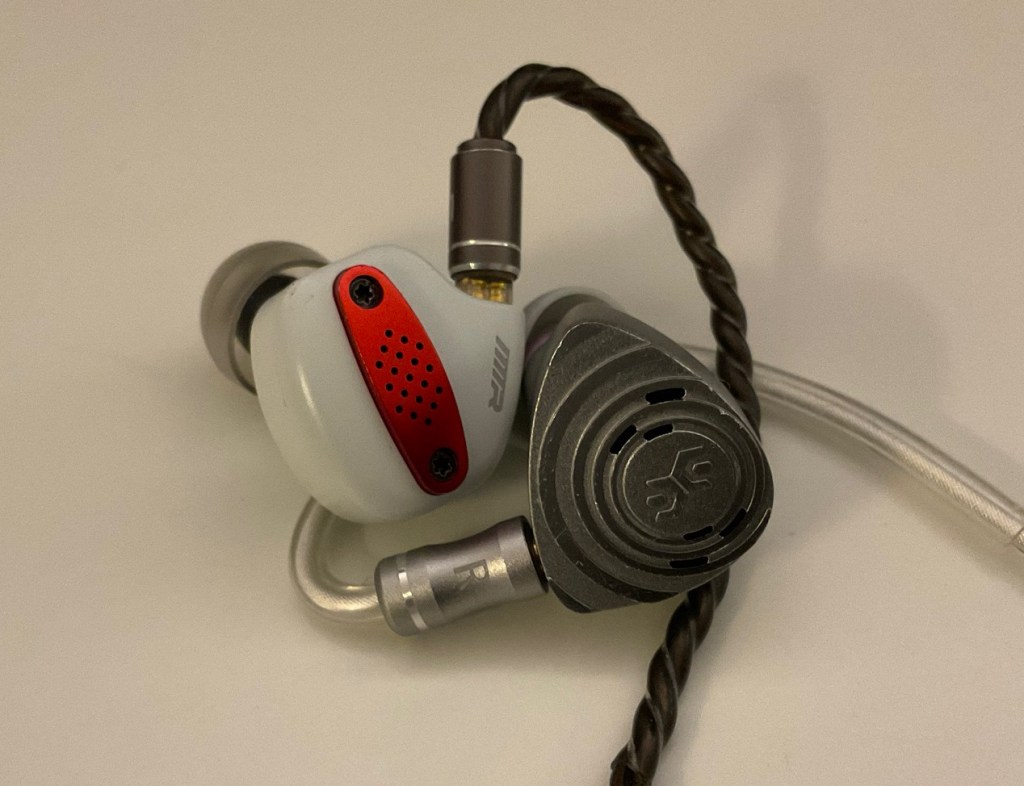
Starting with the unboxing and loadout of both in-ears, the Scyne and Pilgrim are remarkably similar, sporting smallish boxes with a very classy presentation and premium accessories, In the case of the Scyne, this comprises of a nice leather puck case, four pairs of Pentaconn’s premium Coreir AL tips (which usually retail at $20 a pair) and a very similar silver looking SPC cable with Pentaconn connectors. Even the IEM design is similarly striking, with the Scyne going down the slightly more industrial route pioneered by brands like Acoustune (a frequent Pentaconn collaborator), with an all metal shell made out of bronze and plated in matte-effect platinum. The Pilgrim is definitely the better looking of the two IEMs, but the Scyne design is still pretty nice and definitely eye-catching.
Sound wise, both IEMs are actually quite similar, with the Scyne carrying a similarly deep sub bass and a good slug more mid bass presence than the Pilgrim. The Scyne is supposed to be tuned as a reference monitor, but it skews more toward natural, with a healthy dose of low end in the sound if it’s mixed into the track.
Bass is pretty equal in terms of detail and resolution as well, which is pretty impressive given the performance of the Pilgrim, but both models excel here in terms of tightness and clarity from their respective dynamic drivers. If I had to split hairs, I’d day the Scyne has a bit more slam and visceral impact than the Pilgrim, and the Pilgrim has a little more roundness and weight to the ultra-lows.
In the midrange, both IEMs are equally good with tracks like “Mother Maria”, the Scyne pushing sounds a little more forward on the stage than the Pilgrim. The Scyne stage size is a little larger in terms of width and depth than the Pilgrim, with an even bigger note size. It puts the listener a little closer to the stage, with a bigger sound, so if you prefer intimate IEMs, this one might tick a few boxes on that front. Detail-wise, it’s again pretty even, with the Scyne resolving equally well but presenting a slightly thicker note, giving a little less air between each instrument.
Treble is extended and crisp on the Scyne, leaning a little crisper and more bright in tone than the Pilgrim. It’s more even as it climbs, lacking the push in the brilliance region that defines the Pilgrim’s upper end, but carrying a similar or slightly enhanced crunch and sparkle.
Ergonomically, the Scyne is a much smaller shell given it’s a single DD design, and it fits a lot deeper into the ear canal with the Coreir tips. It feels solid but comfortable in the ear, and once fixed in with the tacky surface of the Coreir into the ear canal, it will stay put comfortably for a multi hour listening session. Both IEMs are comfortable for me, but if you have small ears, the Scyne would probably give you less issues for long listening periods.
Overall, both IEMs are relative newcomers in the current landscape, and both are seriously impressive in their own right. The Pilgrim wins easily on pure value for money and has the slight edge in musicality and warmth of tone, but if you prefer that genuine DD slam and visceral impact across the board, and are looking for something with similar technical capabilities but a more forward and “larger” sound, I could see the Scyne coming out as a better recommendation.

IMR Acoustics Seraph – 1xDD, 2xBA, 1xMEMS, c $750 on used market
The Seraph is a recent model from troubled IEM boutique IMR Acoustics, sporting a similar all metal construction and a hybrid design with a similar enough driver loadout to make it a useful comparison. In the case of the Seraph, it has a 1xDD, 2xBA setup covering the full frequency range, and a USound MEMS driver covering the treble. The USound MEMS driver is nominally a full range driver as well, but IMR are running it without its energiser, so it rolls off drastically in the mid to low frequencies, hence acting as a passively crossovered tweeter in this particular setup.
The Seraph is tuneable, with over 50 different nozzle and filter combos available, so for this comparison I’m running it with maximum bass and treble filter setup.
Sonically, the two IEMs are actually quite similar, with the Seraph possessing a little extra quantity in the mid bass. The ADLC / CNT driver IMR use is no slouch here, but it just lacks the final bots of detail compared to the exceptional LSR driver Elysian are using. Mids on the Seraph are more pronounced and a little sharper. They have a little more weight, but the overall tonality is a little cold, unlike the warmer and more organic Pilgrim. The Seraph is pretty vivid with male and female vocals, giving a more stylised and energetic take compared to the smoother and more musical Pilgrim. Detail is roughly even here, with the Seraphdoing a good job of digging out plenty of resolution. It’s even less forgiving than the Pilgrim on hot or harsh tracks, and can get a little hot with some of my sibilance testers.
Treble is very extended on the Seraph, but actually doesn’t feel any airier than the Pilgrim, again feeling a little colder and brighter, leaning a little more crystalline in presentation.
Overall, these two IEMs are very closed matched in terms of resolving power and overall tuning, with the Pilgrim just taking the edge on bass and midrange detail and having a slightly more musical and enjoyable sound signature overall.
Tech Specs

Final thoughts
I came into this review having read a little about how impressive these IEMs were but genuinely not expecting much. It’s fair to say that Elysian have made me a convert with this model – it’s beautiful looking, well put together and supremely musical, with bags of resolution and technical capability that wouldn’t be out of place on something considerably more expensive. As with any in-ear, there are always some things that could be improved, but in this price bracket, I genuinely can’t think of anything else that comes close to this level of sound quality and just general musicality and enjoyment that’s priced within $300 of this IEM.
As the phrase goes, sometimes less is more. With the tuning and technical refinements that Elysian have managed to incorporate here, along with that magical DD driver, this is a masterpiece in simple design done exceptionally well. Hats off to Lee and his team, they have produced something that truly sets a benchmark for sound quality in this sort of price bracket, and gives listeners more than a small flavour of what a real TOTL sound signature sounds like. These are a real no brainer for anyone who likes deep bass, a hint of warmth and plenty of detail in their sound – if you get a chance, you should definitely check them out.
 glassmonkey
 jackpot77
 TheOneInYellow
 trekasaurus
 Timothy Cose


 Audio Primate
Leave a comment