


Introduction
Living in the relative audio desert that is the United Kingdom (for over and in ear gear, anyway), my favourite time of the audio year is always July. The sun finally comes out, the rain stops for a few days and Canjam London rolls into town. I think this is my fifth or sixth Canjam now, and after a few quieter years post-Covid, it was definitely back into the full swing of things this year. Sadly my calendar meant I was only able to attend for one of the two days this year, so these impressions are from my trip on Saturday. Due to the slightly truncated nature of my visit, these are some very selective impressions – there was just too much interesting gear to get round in a single day. As always, thanks to Ethan, Jude and the many other Head-Fi staff and volunteers that made the day so well planned and enjoyable. Looking forward to next year already!
Please note – any impressions given below are taken using the Lotoo PAW6000 on high gain unless otherwise stated, and using the balanced 4.4mm connection wherever possible. I listen to music at an average playback level (but please take into account the busy demo room conditions and take all impressions with the requisite bucket of salt, as they were formed over the space of 5-10 minutes listening at most).

Viking Weave
One of the cool things about a hobby like audiophilia is the people you meet along the way. It’s such a small world that the same characters inevitably crop up again and again, occasionally wearing some unexpected new hats. This is the case with Viking Weave – I first came across Viking’s main man Sebastian / Skedra on a an audio chat group on Telegram for mainly UK based audiophiles, and subsequently keep running into him both online and at various London Canjams. In the years since that initial connection, Seb has taken a side-hustle of hand-making his own high end audio cables for a few friends and acquaintances and turned it into a fully fledged new business complete with in-house 3D printed components, providing the stock cables for some brands like Lime Ears and a few other notable IEM houses. Viking Weave is now offering one of the nicest looking and most comprehensive selections of IEM and headphone upgrade cables in the business, as well as some unexpected “new additions”.
Given they are a cable manufacturer I probably should have listened to a few different cable models, but I always find determining the subtle sonic differences between cables different enough in a controlled environment with volume matched IEMs, so trying to do it on a noisy demo floor surrounded by a thousand people didn’t seem like a great use of my time. Instead, I gravitated to the two quite frankly crazy looking pairs of over ear headphones he had sitting on the edge of his stand.
Demo cans 1 – these are an open back can with two dynamic drivers firing into a central tuning chamber in the cups, a big sound and a crazy multi-angled 3D printed design. The headphones are still in the tuning stage so I won’t go into too much detail, but the staging is definitely very 3 dimensional, with a fun and mildly warmish tuning with plenty of bass and a nice push forward in the mids. Listening to “Elevate” by The Winery Dogs, the various Mike Portnoy drum fills and flourishes and fills that litter the track stage right across the back of the head, giving a good rendition of both width and depth. Cranking a bit of AC/DC, the guitar tone on “Stiff Upper Lip” sounds suitably organic and gritty – there may be a slight warmth and hint of veil on Brian Johnson’s vocals through the demo cans on this track, but they sit pleasantly forward in the mix.
I only managed to grab a couple of minutes with this model, but I was picking up a slight emphasis in the mid / vocal range on the tracks I did hear, so this could possibly be a little forward for some listeners whip prefer a more v or u shaped presentation – again, that’s not a definite oven the lack of time I had with these, so will be interested to hear where the final tuning ends up. They are definitely a good musical listen, and feel like if Viking Weave end up pricing them under 2k then it will definitely be a good enough technical performer to generate some decent traction and attention. One other point to make is the comfort – they have gone with a ZMF style gimbal headband with suspension strap, and between that and the ultra-light 3D printed cups, it’s a very comfortable can to wear (and not very heavy either, considering it has two drivers).

Demo can 2 – this model uses the same cup design and double DD setup, but it came across a little warmer and a lot bassier to me, not quite sounding as crisp and punchy as the first model. It was still detailed, though, just less obviously so due to the added warmth. It actually sits much more towards my own tuning preferences – it’s a big sounding can, but still carrying enough clarity and resolution to keep the listener interested.
Bass booster module – when speaking to Seb as I was getting up to leave the table, he offered me a chance to listen to something else he’s been cooking up in the lab, which are “booster” modules for the headphones that add c. 18dB of pretty clean bass boost to the tuning without flooding the mids. Think the Fatfreq Scarlet Mini, but in open back over-ear form and you won’t be far wrong. With the two booster blocks clipped on, demo can 1 turns into by far the bassiest cans I’ve ever heard (open or closed), including things like the Spirit Torino Radiante. If he can nail the design and turn it into something that can either be accommodated in the headphone shell itself or clipped on to the casing like the Hifiman R2R dac modules they use to make their over-ears wireless, I think it could be a very interesting development for bassheads looking to give their open ears a proper kicking down low. that’s a stupid amount of clean bass to throw into things (18db), so to implement it without drowning the rest of the FR is definitely an achievement.

Fatfreq
Fatfreq are a Singaporean brand that have been making waves recently with their very bass-capable IEMs, so it was nice to see their full crew in attendance at a Canjam on this side of the world – to my knowledge, this is the first one they have attended in person.
After a brief chat with one of the team, the first IEM I was handed was the Maestro Mini, which is probably the model that really catapulted Fatfreq into the minastream consciousness with its ridiculous bass shelf. Slipping it into my ears, I was impressed with the small shell size and excellent ergonomics – it really is a good fitting IEM for my larger than average ears. Playing some tunes, I can see where it got its reputation from. There was a lot of sub bass on display on “Heaven” by Emile Sande, but despite the huge additional boost in the low end. Sande’s sharp voice still manages to cut through clean – it’s a good implementation of massive bass without flooding the whole tuning. “Disc Wars” by sounds suitable epic, too, with plenty of weight and gravitas to the orchestration. It isn’t the cleanest or tightest bass you’ll find for the price, but it’s good enough not to bother anyone but a purist. In terms of slam, it gives a very punchy rendition of “Hello, It’s Me” by Sister Hazel, giving the drums and the crunchy guitar lead plenty of vinegar.
Checking for detail and bass masking, “Palladio” by Escala has the foreground click at the 20s mark clearly audible, which is always a good sign. Overall, the mids and treble aren’t anything mind blowing for the price bracket, with a decent amount of clarity and forwardness. It definitely isn’t the most resolving IEM, but is enjoyably musical if you aren’t looking for the last word in layering, separation and the other marco and micro elements of sound. This is an IEM that gives access to a ridiculously cleanly implemented sub-woofer of an in ear at a very reasonable price, so if you are looking for L-shaped basshead that doesn’t lose its mids in the mix, it’s a decent shout.
Trading up to the basshead’s basshead follow-up model, the next IEM 8 listened to was the Scarlet Mini. The first thing I notices was that it needs a lot of power (about 20 clicks more on the PAW6000 to get to a similar volume level). The tuning is again basshead L-shape, but with an even more impressive / oppressive bass shelf (to my untrained ears, I’m guessing it must be at least +20dB).
This time round, the click on “Palladio” is far harder to distinguish, but the bass is almost oppressive in terms of how large and forceful it is. Again, it doesn’t really mask anything above, so it’s a pretty impressive feat of engineering. the sub-bass actuallyy feels like it’s humming really loudly on Heaven, giving an almost bone conduction feel to the sonics as the shell vibrates with the woofer.
Slam is an order of magnitude more impressive than the Maestro Mini, “Bad Rain” by Slash sounding like someone has strapped two kick drums to my ears when the bass drum kicks in. Shadow Life is very fat in the guitar – not blisteringly quick but it’s nicely analog in tone, helped by the voluminous low end. There is no getting away from it, It’s a basshead’s fantasy IEM.
Regarding things non-bassy, the Scarlet Mini has a rich and organic tone, but leans very warm and slightly veiled to my ears compared to some other similarly priced models. Detailing and overall presentation of the mid and treble is present in the mix, but nothing to write home about in clarity or resolution. The selling point here is that nothing else has this sort of bass reproduction.
The final model I trialled was the Grand Maestro, which comes in a much thicker and deeper metal shell, evoking some of the old JH Audio metal monsters. The tuning still has a very present bass, but an order of magnitude less than the basshead models. Given the significant price differential, the tradeoff is that the GM has a much more impressive staging and note definition – “Disc Wars” sounds far more nuanced, with plenty of tiny detailing floating around through the soundscape. “Bad Rain” articulates the bass drum hits a lot better, and the fine detail on things like vocal lines and guitars is TOTL end, rather than mid-fi – there is just more of everything, and it’s tonally sweet, balanced and damn addictive sounding. Overall, I found the sound hugely impressive but it doesn’t do anything well enough for me to justify the awkward fit. It’s some people’s end game sort of IEM, just not mine.

Noble Audio
The Noble table is always a good place to spend some time, with the family Moulton (Jim, Kai and Jim’s better half all manned the desks at various points during the day). They whole team were more than happy to chat about anything and everything, and as always, there was some interesting (and interestingly tuned) gear to listen to.
I previously listened to the Kublai Khan (loved it and bought it) and Spartacus (loved it but couldn’t affford it) at the last Canjam, so this time I was keener to listen to Noble’s newer forays into portable audio.
The first model was the Apollo ANC over ear headphones, which according to Noble are the first over ear to sport a dynamic driver and a planar driver in a hybrid configuration. It’s designed as an “out and about” portable headphone, and it definitely looks the part, coming across to me like a slightly less angular (and infinitely more comfortable) take on the B&W PX87 / PX8 but without the crappy fabric pads. The build, feels impressively refined and light on the head, and the cushioning on the headband and the plush and plump ear pads give the impression that this will be a very comfy headphone for commuting or long-term listening sessions.
I mainly tried it in wired mode, so the ANC was off – with ANC on, the Apollo definitely seems like it can keep pace with the current market-leaders. It’s always difficult to gauge how close they managed to get to the big players like Sony or Bose in terms of killing noise across the spectrum in the peculiar confines of the Canjam demo floor, but it definitely makes a notable difference to background noise levels, and the passive isolation on its own is excellent with the big thick pads, so again I’d hope it will get the job done on that front.
Firing some music through, “Get Lucky” by daft Punk shows a nice bass texture, with a decent extension down low on the underside of the bass guitar notes. This is a contender for a nice commercial bassy sort of ANC can tuning, with plenty of low and impactful bass, warm and forward vocals and a decent sense of detail retrieval. The stage is about right for a closed back, mainly localising the notes inside the listener’s head. This is a musical XXx sort of tuning that reminds me of a few of Noble’s previous IEM models – lots of bass, intimate and soulful vocals that sit forward in the mix and enough treble to cut through the warmth but without sounding overly bright.
They do very well with a few tracks from Infected Mushroom, showcasing decent speed on the dual drivers and minimal smudge or blurring to the bass notes in “Never Mind”, which can congest less technical gear quite easily. Switching genres, “Free Fallin’” from John Mayer’s live acoustic album is beautifully rendered, with the delicate strums of Mayer’s guitar and the his breathy voice both coming through equally strong.
“Over The Hills And Far Way” by Led Zeppelin has a beautiful tone on the acoustic guitar, sounding very musical., and when the song shifts into gear at the 1:30 mark the Apollo gives plenty of additional oomph. The warmth of the tuning comes through here, so while there isn’t a huge sense of treble air or space in these cans, for their purpose I think this will be a very amenable “audiophile grade” tuning for general purpose listening and commuting. I liked them so much I’m pretty sure I’m buying one when they launch.
The other model I tried was the DD / MEMS dual driver hybrid rims the XM-1 – this IEM is designed to run direct from any USB-C source, as it requires an energiser in the cable to actually drive the MEMS tweeter that have implemented (the xMEMS Cowell, from memory). To this end, Novle supply a very attractive braided USB cable with some JH Audio style proprietary 4-pin connectors on the IEM side to lock into the chassis.
In terms of build, this is a very attractive IEM, with a nice ergonomic fit in the ear, and that IEM cable looks very premium. Overall sound profile is definitely more consumer than audiophile, with a big bombastic bass and warm mids. There is decent enough clarity for the price bracket, but this DD does slam pretty hard so it’s not for the faint of heart. The sound is very warm, so it does feel like it loses a little detail, even though the dual drivers keep up well with tracks like “Holy Wars” by Megadeth, not giving in to blurring or smudging when the track really starts firing. “We Shall Not Be Moved” by Mavis Staples shows good articulation in the vocal, pulling the chorus apart quite well and hinting at what the XM-1 might be capable of when the tuning isn’t warming things up. For me, the tuning probably gets in the way of the raw technical capability of this IEM, but it wouldn’t be a poor choice for a daily driver if you commute, as long as you don’t mind a very warmish sheen to your music.

Pentaconn
I love finding new brands, and while Pentaconn definitely isn’t a new name on the audiophile circuit, discovering they are now making their own in-ears in house was definitely a surprise.
Scyne Alpha-01 – this IEM is their maiden in ear product, and looks like it’s borrowed heavily from the Acoustune school of industrial design. The Scyne runs a single LCP diaphragm / LCR surround dynamic driver setup, with some clever acoustic chambering toward the front and back of the driver and an all metal construction, mainly in brass and platinum. On speaking to their very helpful sales team, they pointed out that the tuning is designed for “reference”, so I was expecting something quite neutral and sterile. What I actually got was a very musical but natural sounding in ear, with some gorgeous deep bass (down to 10kHz) and excellent detailing and clarity for the price. Soundstage is enveloping, the fit is very good and overall, it’s an excellent debut. They are pricing this around the $800 mark internationally, and it comes with a very nice circular leather carry case and 4 different pairs of their Coreir metal IEM tips in the AL / aluminium variant (which retail at around $50 for 4 sets) along with a Pentaconn cable (as you’d expect).
Listening to some demo tunes, “Disc Wars” by Daft Punk sounds deep and impactful, with plenty of thrumming sub bass in the lower part of the soundscape. “Get Lucky” by the same band is crisp and punchy, with a nice roundness to the bottom of the liquid bassline. Switching to some guitar based music, “Hello It’s Me” by Sister Hazel has plenty of texture to the fat and growly bass guitar and a nice punch to the electric when it cuts in across the top, with Ken Block’s distinctive baritone vocal sounding smooth but gravelly at the same time. The more time I spend listening, the more I suspect the resolving power of these IEMs is actually a lot higher than the very well balanced tuning lets on. There is certainly no hint of bass masking, with the subtle foreground click at the 20s mark of “Palladio” by Escala coming through crystal clear.
The actual tuning is pretty even handed – the 1.4 Tesla DD gives plenty of body to the bass, but keeps it nicely proportionate to the slightly intimate vocals and midrange and the softly sparkling treble. There is the slightest hint of zip and bite up top on certain tracks, but generally this is an IEM that will stick closely to how a track is mastered and your source is presenting it, without imparting much in the way of additional colouration. It’s not W-shaped, but it almost feels like it should be due to the way the IEM brings each different element of the tuning into the mix. I guess you could say this feels like transparent done right.
The other model hasn’t been named yet as far as I could discern, but is a more “live” tuned IEM, again using a single dynamic driver but with a more present bass and a wider and airier stage. it was also excellent, but didn’t quite capture me as much as the Scyne, sacrificing some of the finer detail the Scyne is pulling through for a little more fun and bombast. The shell design is certainly funkier, so depending on how they price this, I could see both models going pretty well in their respective price brackets.
Coreir Aluminium / Brass eartips – I’ve seen a few recs for Coreir on some of the higher end HeadFi IEM threads recently, but this is the first time I’ve got a change to sample them myself. The AL version come as standard with the Scyne, and remind me of the AZLA Xelastec in composition, with a sticky rubber-type compound that forms a pretty solid seal with your ear when inserted and warm. The main difference is the core of the tip, which is made from solid metal, and intended to keep the nozzle spout rigid rather than deforming in the ear. In practice, if this means you get the benefits of the Xelsastec’s tacky fit with a rigid metal core so they won’t deform over time, I can see this being an expensive but definitely “best of both worlds” sort of ear tip.
I tried both versions on the Scyne, and the brass tips do seem to take a little fizz and presence out of the upper treble, in exchange for a slightly warmer and more organic tone to the midrange and bass. It isn’t veiled as such, but it definitely softens and warms the sound a bit, so I’m guessing it will pair very nicely with colder and hotter IEMs whereas the AL version bring out a bot more presence in the upper regions so would suit a naturally warm and bassy in-ear you are looking to open up.
I left the show with a few items to review (or just to enjoy listening to), and the Scyne and both flavours of eartips were in my leaving bag, so I will be writing up a full review in due course.

Fiio
Tried a few things at the very busy Fiio table, and had a quick chat with the always amusing Chris from AMP3, who were their reps for the day.
Fiio K19 (tested with the IMR Enigma+) – the K19 is a very smooth and powerful sounding DAC/AMP. Nice looking, pretty thin and very sturdy looking, with some clever ergonomics with the clip on headphone stand when the unit is in the vertical configuration. With plenty of wattage on tap, the K19 drives the DD/AMT/MEMS/EST setup inside the Enigma+ phenomenally well, with pinpoint placement on the footsteps on the intro to “Thriller”. Tonality from this setup is neutral and measured rather than imparting any articulate flavour of musicality to the sound. It’s a mirror to the music, nothing more. The amp section has plenty of grip, and I can’t see it struggling with much of the gear out there at the moment, so this looks like a very good Swiss Army knife setup if you’re looking for an all in one desktop unit.
Fiio FT3 – this was pleasant sounding, with nice ergonomics and a very space age sort of look. Nothing bad for the price bracket and very listenable through the K19, but definitely not in the same mid-fi to high end tier as the rest of the gear I have been listening to today. It’s a nicely balanced, musical take on an open back with decent bass and OK details for the pricing, and very good comfort.
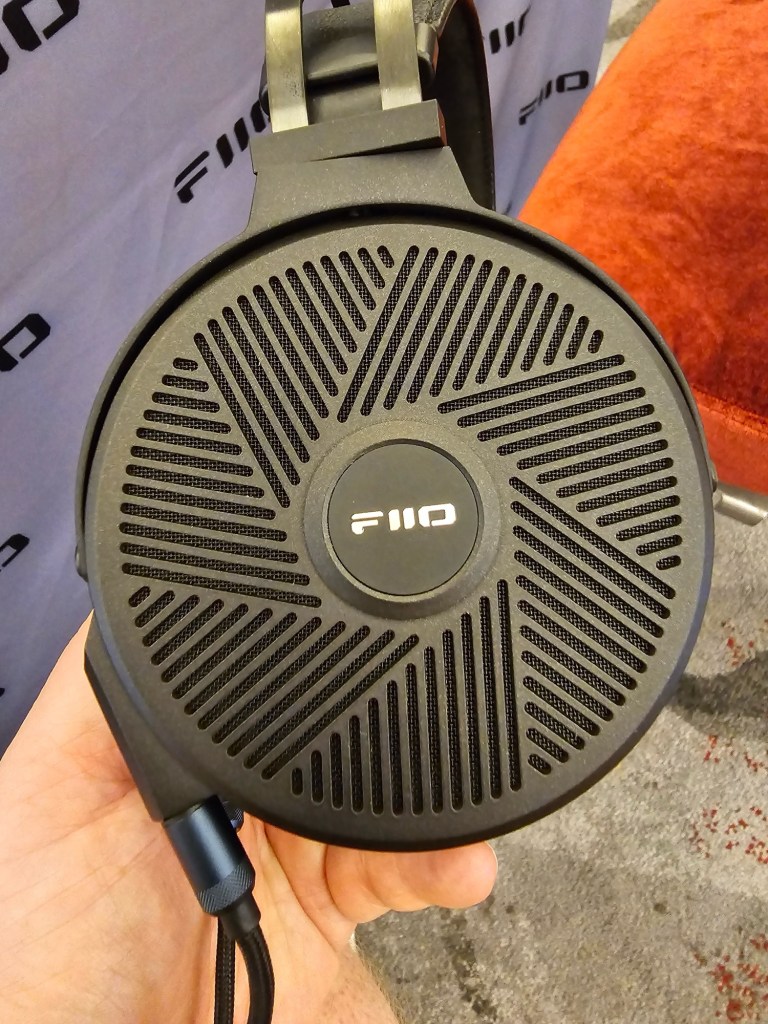
Fiio FT5 – this sports a much more elegant look than the FT3, and a much more expensive feel to the build and materials. Immediately noticeable there is a jump up in crispness and detail over the FT3, but it does need significantly more power to move the large planar driver. It sits very nicely on the head, but feels heavier than the FT3. It’s surprisingly resolving (as far as I can tell in a busy demo hall, anyway). I’ve seen someone describe these as a mini Empyrean, and they are nowhere near that velvety or warm, but they do seem to be a very capable over ear that punches well over the price bracket in terms of resolve. Very amenable tuning.
Fiio FH19 – Palladio is deep and textured, with the right click. Shell is very ergonomic and feels solid. Rich bass. Plays nicely in the 1k bracket, but not mind glowingly good. Would have to hear more of them to work out, but a very enjoyable listen. Standard XXX W shaped tuning.

Elise Audio and Nightjar Acoustics
I didn’t have much time to peruse the various tables Elise had set up (something like 6!) due to the sheer volume of people always in attendance, so these are some ‘from the hip” takes on the IEMs I did manage to listen to.
Dunu Glacier – comes with a nice all white cable with some sort of fabric covering and their patented interchangeable connectors, and the IEM itself has a beautiful all-metal design, with a classic pseudo-custom sort of fit. The entire IEM is just one highly polished chunk of stainless steel (apart from some very subtle embossing), and I have to admit it looks visually fantastic. That unfortunately is where the positives end, though. The IEM actually feels like a chunk of solid stainless steel, as it is very heavy in the ear. The custom-like fit somewhat offsets that, but it doesn’t seem like it will stay put for an extended length of time without readjustment due to the sheer heft of it, and I can also imagine it might be uncomfortable for long sessions as the user is definitely aware of it sitting in the ear at all times. Given this is in the $1k+ price bracket, the tuning is very underwhelming and just seems to be a competent Harman sort of approach with nothing standing out as either impressive or egregious across the board. For me, it’s a good looking, giant bag of meh for the price they are asking for.

Canpur CP74E – This is another Canpur flagship (it’s genuinely difficult to keep track of their product range), and prices in at the multi-kilobuck level. I’m sad this was one of the things I discovered last, as it was possibly the best “high end” thing at the show that I listened to. The tuning is rich, velvety and detailed, Plenty of weight behind tracks like “Disc Wars” despite no DD drivers in play in the low end, which is always impressive. In fact, the bass was impressive for an all-BA construction, with a decent amount of presence and impact and bags of detail. The CP47E also gave lots of crunch to guitar tracks like “Shadow Life” by Slash, showcasing a very realistic timbre and control over the cymbals in this track. It’s fair to say my ears could hear LOTS of detail everywhere – the overall impression was that the CP47E is very well balanced, and genuinely musical. Also of note was the big note size and good staging. Given this is an all BA and EST set, this is some Impressive stuff by Canpur. I would also note that unlike last year’s demo of other Canpur models, the CP47E sat almost perfectly in my ear – I don’t know if that’s specific to this model or whether they have changed their IEM designs, but it definitely sat a lot better than previous models I’ve tried.
Nightjar Singularity – spent a fair bit of time with that IEm last year, so had to o back to check if I was remembering how good it was correctly. I was, and it still remains something that I really enjoy and would love to own – rich, velvety, fat bass and enough technical chops to carry you into the music. Definitely deserves the hype it’s picked up.

Eminent Ears
These guys were the last table I visited before heading off for the day, and I[m glad I did. I had a very enjoyable chat with their rep (sadly forgot to take his name), and spent some time with a new model they are looking to launch later in the year called the Sapphire. This is a 1DD / 4BA / 1 Bone Conduction tribrid, with the BC driver pulling duty to add texture and nuance in the bass and low mids.
I didn’t take detailed notes, apart from to note down that with the Pentaconn Scyne and the Canpur CP47E, it was the other really impressive IEM I heard today. nice bass presence, wonderfully smooth and velvety midrange with plenty of vocal presence and a delicate treble, with plenty of detail and clarity across the board. The BCD driver seems to add that additional layer of realism to the sound that a good implementation can, and it’s telling that various people at the show have noted that at the expected retail of around $1300, it probably sounds better than their current flagship the Ruby, which retails for north of $2000. It’s amazing what a second iteration of a product incorporating the learnings of the initial release plus some clever tuning and engineering can do.
I can’t give any more technical appraisal than to say it’s rich, very musical and just damn enjoyable – definitely one to watch out for.

ZMF Headphones
I spent a bit of time in the ZMF suite on the upper floor of the show, but sadly due to the fact that Zeos Pantera from Z Reviews was filming a segment with Zach up there and the rest of the room was littered with people queuing up to listen to his amazingly beautiful headphone designs, I only got to listen to the Bokeh. That was pretty intentional, I I have been looking for something for at-home listening in the closed back can category, and having previously owned the Verite Open and Atticus, am a bit of a fan of the ZMF house sound.
The Bokeh is a great looking can (as long as you like Zach’s wood cups – my other half things “it looks old”, so you can’t please everyone). The headband and fittings seem a little lighter than the more expensive models, and the comfort overall using the stock pads is execellent, with good weight distribution and a solid clamp and seal. The sound is classic ZMF – not too much heft in the sub bass but a nice mid bass hump, forward and tonally realistic vocals that still sound a little coloured and “romantic” and respectable treble. There is a slightly analogue “sheen” to the music that almost comes across as a veil on some tracks, but disappears once you get used to the headphone. Overall, I was impressed enough at the Bokeh to pick up a pair to bring home with me, so I’ll write up some impressions in due course.

Altiat
The Altiat table was the first headphone table I visited, and I’m sad to say I didn’t get a chance to go back and listen to their open and closed back electrostatic cans (under the Kaldas Research brand) as a closed back estat is definitely something to take notice of, and something no one has actually pulled off yet.
My time there was spent chatting to a few of the team, and listening to their unusual looking Cal.1H dynamic driver headphones. These are an open back 50mm DD that come in a few different designs, mostly made out of aluminium. Altiat make all elements of the headphone themselves, and it’s fair to say it’s a very good looking and visually striking design. On the stand they had metal model in some of their prestige automobile paint colourways (think high end car finish, but on a headphone chassis), a few more subdued painted options and one version with the shell made entirely of wood. Apart from looking completely different to the others, I immediately gravitated to that as it’s almost half the weight of the solid metal chassis all the other models sport, making it superbly light in the hand and on the head with a practically identical tuning.
In terms of tune, the Cal.1H is a nicely balanced take on musical neutral. The sub bass is present if not overwhelming, mid bass is again good but not too overdone, with vocals that sit a little shade further forward than dead neutral and a refreshingly clear and zingy top end. On some tracks the Cal.1H could get a little zesty, but generally this is a tuning that reminded me a lot of the Meze 109Pro – something that leans fairly close to neutral, but doesn’t lack body or character, and looks visually stunning too.
They are definitely a headphone brand worth looking at, and I will be following up with a review of the wood Cal.1H shortly, as I ended up taking a demo model home from the show at a very generous discount.

Soundz Custom
This was another brand I discovered at last year’s event, and ended up liking so much I picked up their best-selling model, the 8BA Flame. Roll on another year and I walked past the table to be greeted by both the Soundz team like a long lost friend – two genuinely nice people, and very personable.
I listened to most of their lineup last year, so just picked out a few things this time around. The first was their new ambient sound design m which the developed for use with stage musician belt packs but are intending to offer to the audiophile community. It basically consists of a small microphone being placed into the shell design on each IEM earpiece, which plays external noise through the IEM mix via a small USB dongle and the use of a three-connector IEM cable. It’s a lot of tech, but in practice think of it like the transparency mode on a TWS, just infinitely more configurable and able to be used to make binaural recordings and lots of other interesting applications. Bottom line – I imagine this will mainly be used by guys on stage, but it’s always good to see trickle down tech like this make it into the audiophile domain, so I’m sure plenty of people will find it useful.
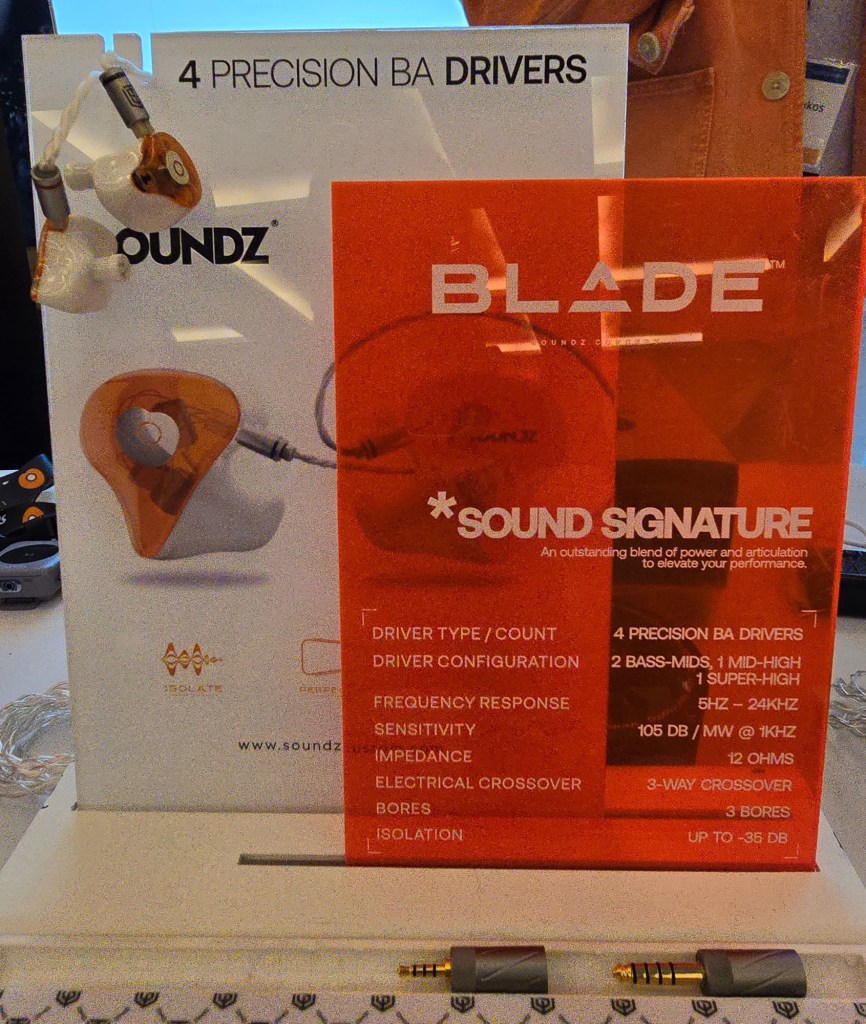
I spent the bulk of my time listening to the Blade, which is their 4 BA model and coincidentally the bassiest IEM in their lineup outside of the Flame (with the tuning switched flicked up). Like the other IEMs in their range, it comes with a tuning switch on the faceplate which will add a few dB of bass across the lower end – I was quite happy to use the “bass enhanced” mode to listen. In practice, this comes across almost like a Flame light – there is very good detail for the $550 price, and a very solid and un-BA like bass output that slams pretty hard for an armature. The tuning is nicely musical but not overly coloured, and the other technicalities punch about the price. The Flame is one of my current daily drivers and an all time favourite IEM, and as you would expect it beats the Blade pretty much across the board, bringing a similar tuning but more of everything good – if you can’t afford to stretch up to the sub-$1k range for the Flame and still want that musical Soundz tuning, the Blade would be a very good substitute.
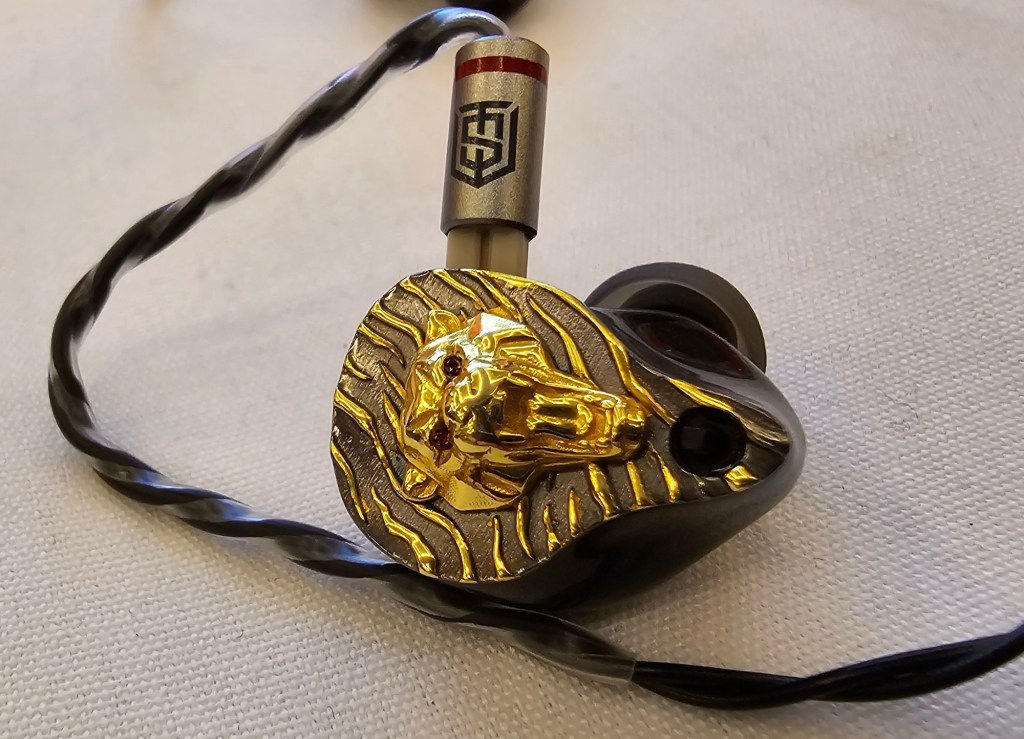
I also had to listen to the custom faceplate version of the Flame – it’s sonically identical, but I think it’s possibly the craziest looking Lions-head 3D design I’ve seen at Canjam, and a real head turner. It’s also worth noting that Soundz now ship their IEMs with stock cables form boutique manufacturer Satin Audio, offering interchangeable connectors. it’s good to see a new brand really embracing the various things that make the audiophile space tick – they nailed the tuning and technicalities last year, and now with the upgraded and more functionally cables and more aesthetic options, this definitely seems like a brand that is moving places pretty quickly. One to watch.
Final thoughts
It was another excellent Canjam, with plenty of new gear on show and a refreshing amount of people milling around the various tables. It was nice to see some new manufacturers in attendance, and much like last year, the general trickle down of audio innovations from higher end IEMs now means that it’s actually quite hard to find gear that is objectively bad any more – it’s all pretty impressive these days, so it’s more about taste and preference rather than raw performance.
That being said, the stars of the show for me were almost all not the top models from their respective brands, or if they were, definitely weren’t in the multi-kilobuck price brackets. I think even in two days I would have struggled to listen to all the gear I wanted to, but I guess that just leaves more to pick up next year…
My favourite models of the show (in no particular order):
Pentaconn Scyne Alpha-01
Eminent Ears Sapphire (unreleased)
Canpur CP74E
Noble Audio Apollo (unreleased)
ZMF Bokeh
 glassmonkey
 jackpot77
 TheOneInYellow
 trekasaurus
 Timothy Cose


 Audio Primate
Leave a comment