


Acknowledgement
I came across the Soundz Custom brand for the first time at Canjam London, spending a very pleasant few sessions on their table over the course of the Sunday I was there. I listened to their 6, 7, 8 and 10 driver models, and was so impressed by the Flame that I ended up taking one home (with a generous show discount). This review and any opinions expressed within (however misguided or ill-informed) are 100% my own, with no input or incentives (monetary or otherwise) sought or received from the manufacturer.
I would like to pass my thanks on to the Soundz team for being so welcoming and open to chat about all aspects of their business to a random show attendee on the day – genuinely nice people who also happen to be selling some excellent products, which is always a good combination.
Introduction
Soundz was formed by audiologist Alexis Papatasios in 2016, growing out of another existing business focussed on hearing rehabilitation and protection (Earmedical, founded in 2011). For the first few years, Soundz concentrated on producing custom earplugs and hearing protection for the professional musician / DJ market in and around Greece, expanding into custom in-ear production in 2019, taking advantage of the COVID quarantine restrictions in place to refocus the business and concentrate on developing their first (three model) line of in-ear monitors.
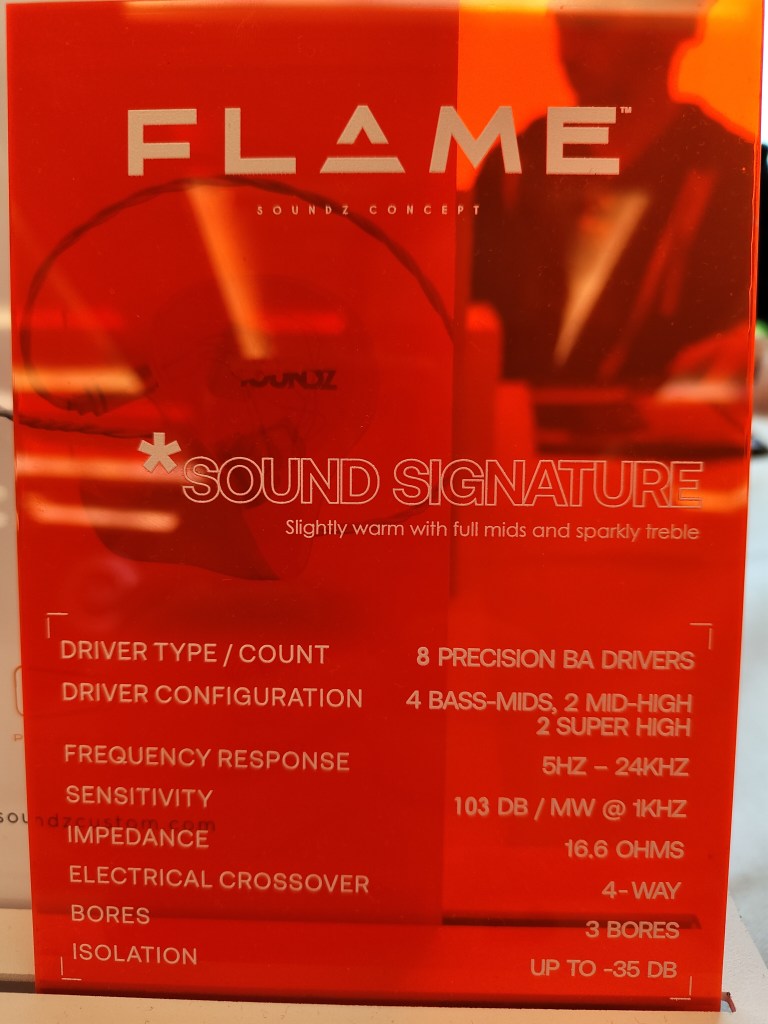
Finding some success in their local markets with their initial lineup, the team at Soundz released the second generation of Soundz IEMs in late 2022, consisting of 6 different models, all designed using the latest Sonion balanced armature technology. They are aiming for both the studio and professional musician market as well as the audiophile community, focusing on producing high-performing models at various price points that are technically proficient as well as being enjoyable to listen to.
With the launch of the new range, the brand are keen to push into the wider audiophile space. I imagine they will become more of a regular fixture on the trade show circuit over the coming months and years.
Unboxing
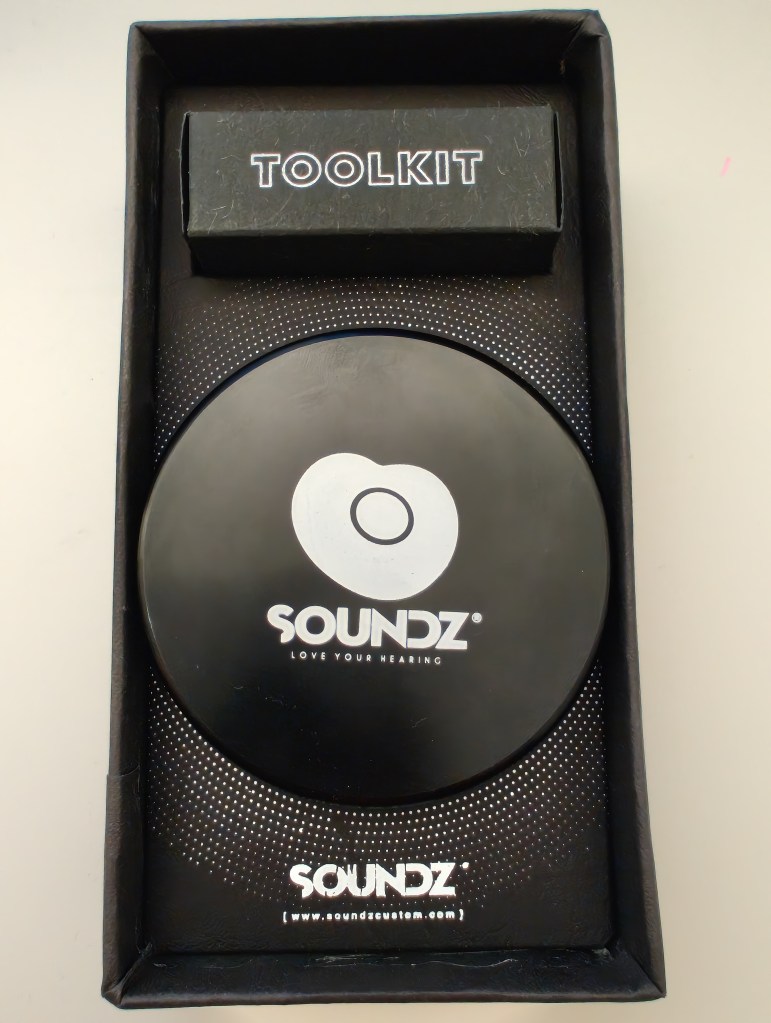
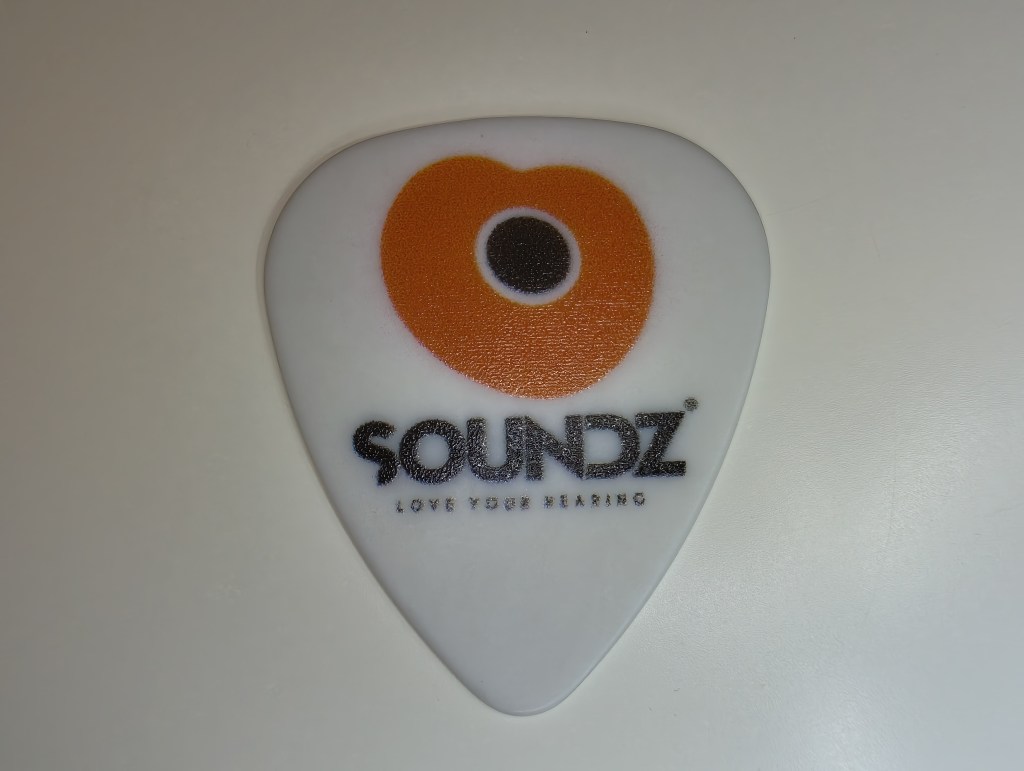
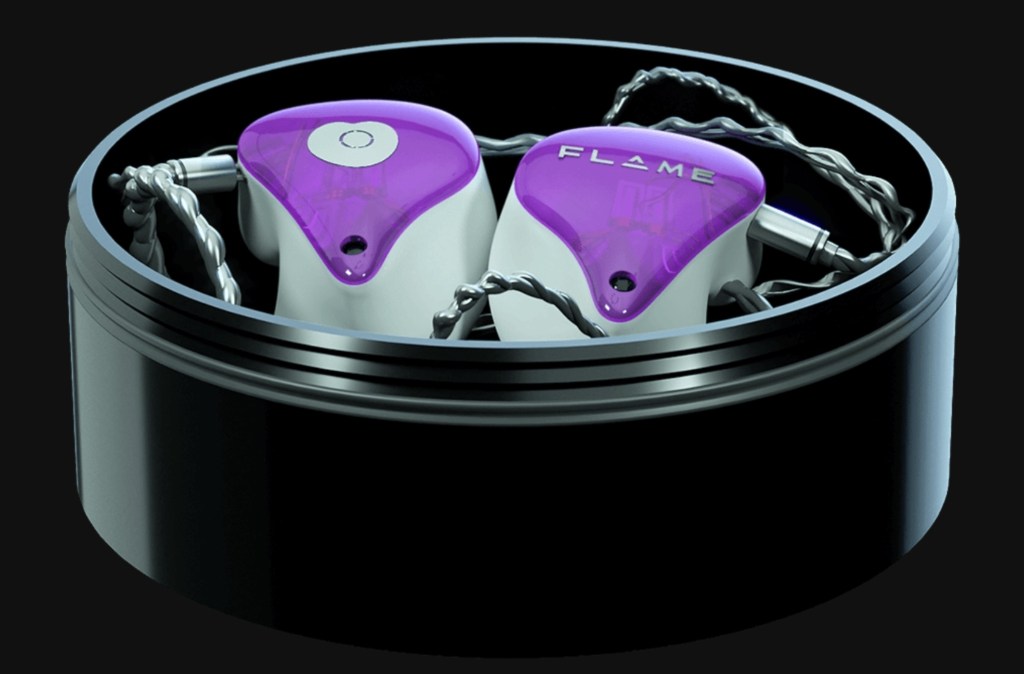
The Flame come in a nicely compact cardboard presentation box, with a nice Soundz graphic and the model name on a paper-effect sleeve. Sliding off the sleeve and opening the box reveals a black paper insert welcoming the purchaser to the Soundz family (which also doubles as a warranty card), a solid metal puck-style case with the Soundz logo on, some nice monochrome graphics and a small cardboard insert with the word “Toolkit” emblazoned on it. Opening up the toolkit, you will find some standard accessories (IEM cleaning brush, micro fibre polishing cloth and assorted ear tips in both silicon and hybrid silicon/foam design) and some non standard accessories (a guitar plectrum with the Soundz logo and a Soundz sticker). Finally, unscrewing the metal puck reveals the IEMs themselves, and a nice silver coloured 2-pin cable.
The accessories are pretty well considered – there aren’t a huge amount of items, but the load-out feels well considered and everything generally feels useful (unless you don’t happen to have an old guitar laying around somewhere). I particularly like the puck style case – it isn’t the thickest or heaviest design I’ve seen, but the addition of a rubber gasket around the threads ensures a solid and probably waterproof seal when it’s closed (I imagine that’s pretty important for stage musicians). Likewise, the generous rubber lining around the hard surfaces on the inside should ensure that your precious cargo of in-ears doesn’t get scratched or damaged by the very thing that you are using to protect them.
Soundz aren’t shooting for absolute luxury here, but if opening boxes is your thing, you won’t be disappointed with the amount of thought and effort that has gone into the design and layout of this packaging.
Build and ergonomics
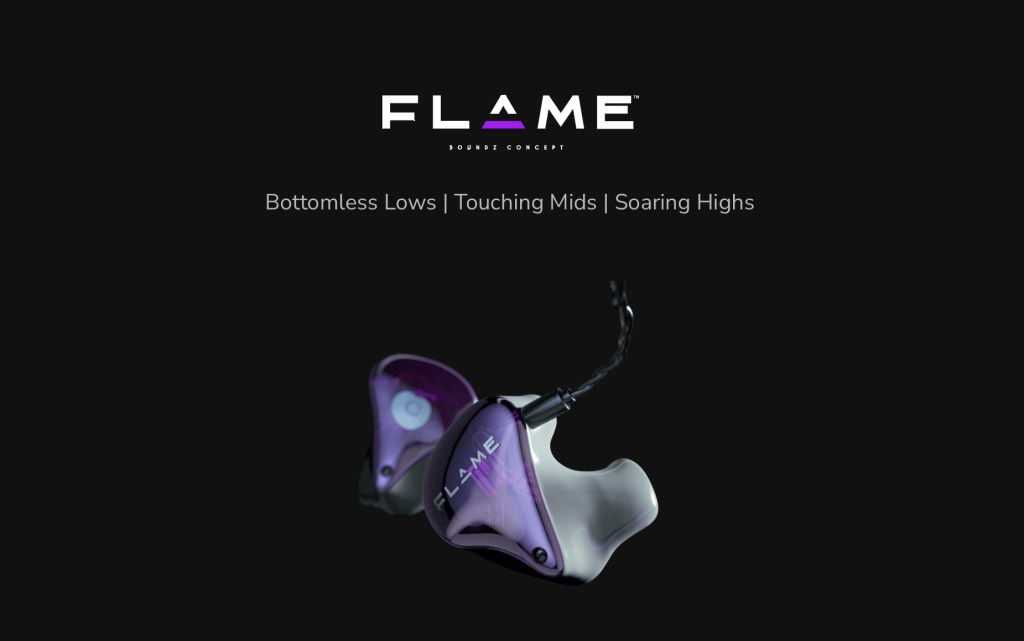
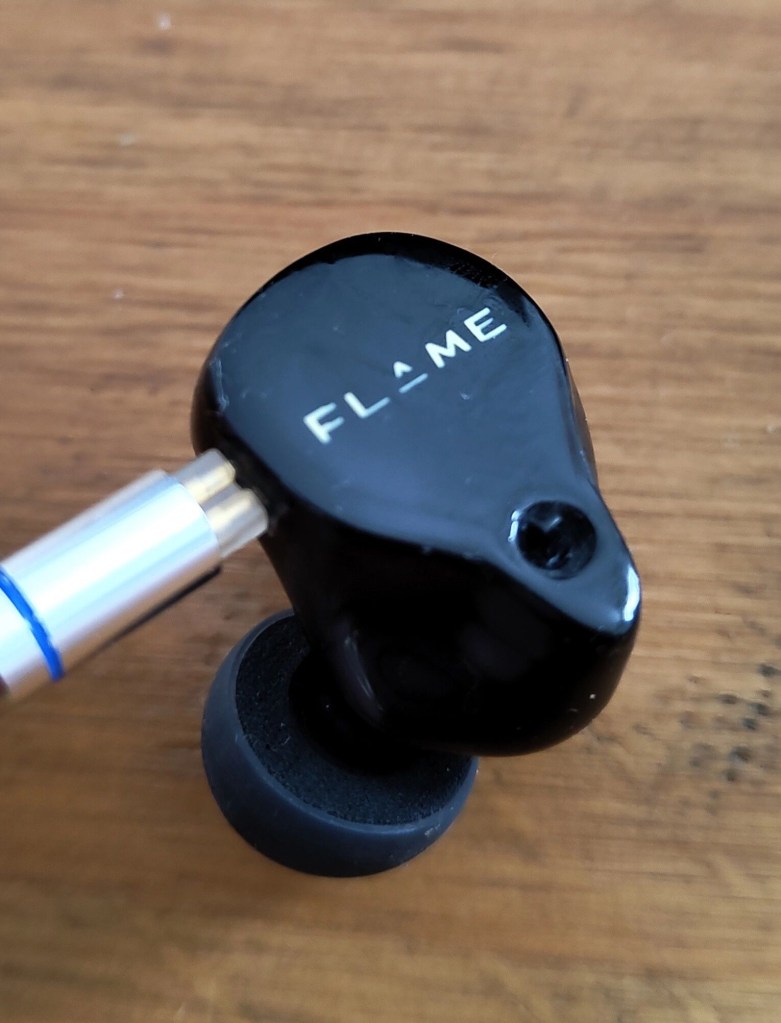
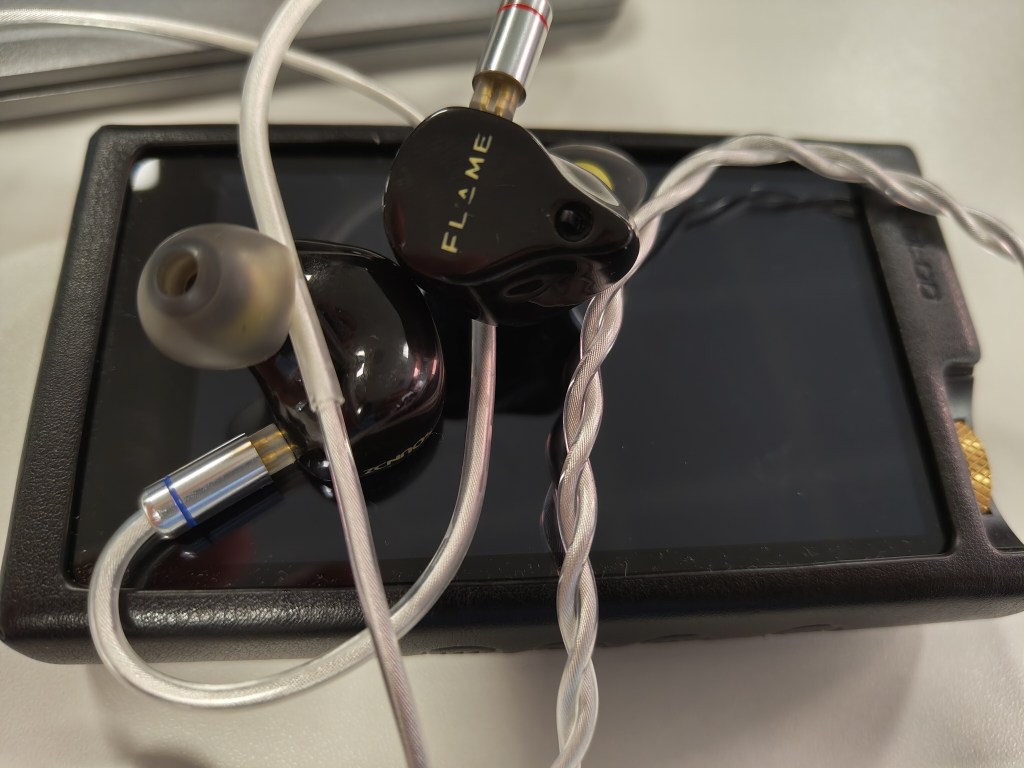
The Flame are a pseudo-custom shell design, actually looking more custom than universal at first glance. The Soundz website allows you to design your own IEMs, with five different shell colours and 7 different faceplate colour ways to choose from, along with various additional tweaks like logos or their proprietary “Flexfit Pro” semi soft nozzle design (which I believe is for customs only). As this was a show demo model, my Flame is a black on black design, with the model logo on both shells.
In terms of sizing, the Flame is fairly small for an 8-driver model, although it does have a decent amount of depth, so while these don’t feel huge in your ears, they won’t be the flattest or flushest IEMs you will ever come across. The shell design is excellent in terms of comfort, fitting almost as well as some of my actual custom IEMs in terms of how it locks nicely into the inner ear (providing you have the right tips on, obviously). The inside contours of the IEM are exceptionally comfortable, and these are up there with the StageDiver series from German manufacturer InEar for me in terms of just how well they fit and seal.
Nozzle length is about medium, allowing for a very good seal in the ear without feeling like you are indulging in Etymotic levels of ear canal violation to get it. The nozzle is a classic triple bore design, so there are no wax filters or mesh covering the ends – depending on your own ears, you will probably want to use a tip that provides a little room for separation between the nozzle and and the tip opening (or an inbuilt wax filter) if you don’t want to be cleaning these out regularly.
The 2-pin socket on the IEMs is a flush design, which probably helps with the overall size of the shell but does mean that the pins take the brunt of any lateral movement – this shouldn’t be a problem in day to day use though (and Soundz definitely aren’t alone in using this design).
One final design element on the faceplate of the IEMs is a very small tuning switch. It’s so small it’s almost flush to the faceplate (the actual socket the switch is situated in is slightly recessed, which helps with this) – despite that, it’s very easy to flick up or down using a fingernail while the IEMs are in your ears, so not difficult to use or access. The switch has a nice amount of stiffness too (unlike my only other switch-enabled IEM (the Zeus-XR from Empire Ears), which will practically flick between modes in a light breeze. Once these are set, they stay set, and while I can’t speak to the longevity of the design as I’ve only just acquired them, they certainly feel sturdy enough to me to survive plenty of daily use.
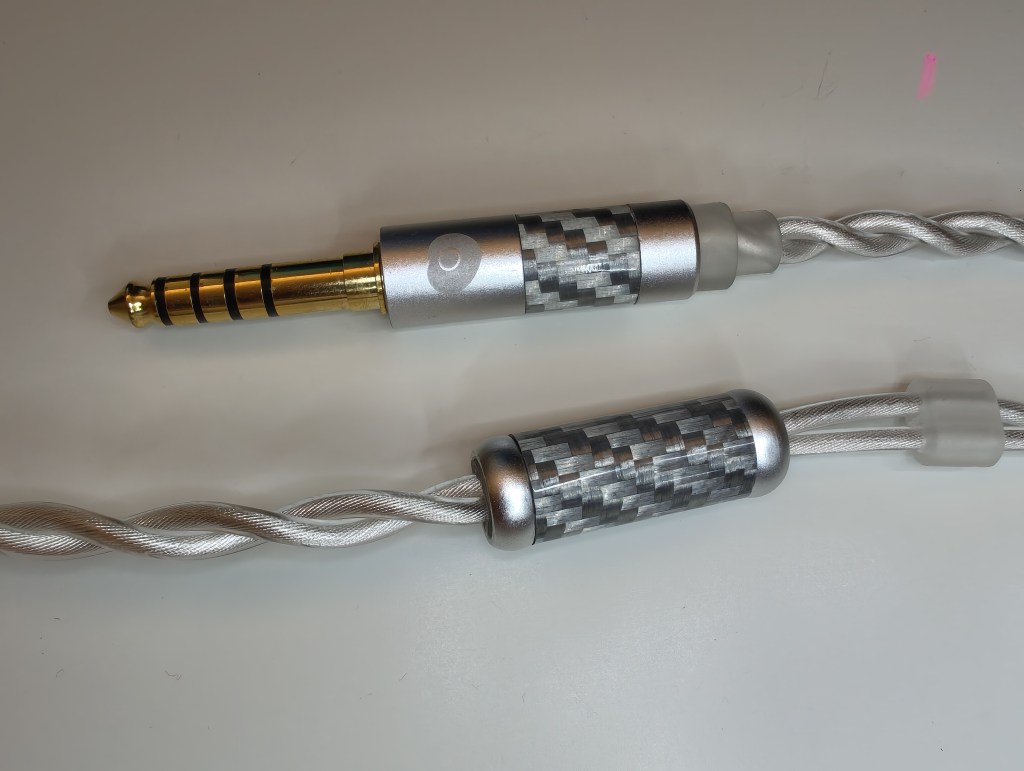
The cable included with the model I purchased was their 2-wire premium cable (terminated in 4.4mm). It’s a nice silver design, with silver-grey carbon fibre inserts on both the y-split and 4.4mm connector. The cable feels quite thick but is very flexible, sitting nicely behind the ears in use. Their standard cable is made by Singaporean cable manufacturer NullAaudio – the “premium” cable actually has Soundz Custom branding on the connector, but it wouldn’t surprise me if this was also a Null Audio collaboration. Either way, it’s a nicely finished and very ergonomic cable that definitely feels the part for a 1000 Euro in-ear.
Initial impressions on sound
Overall, these are a neutral-with-a slight-bass-lift tuning with the tuning switch off, and a W-shaped bass-prominent but not basshead masterpiece of engaging and fun tuning with the switch on. The latest-gen armatures in use allow a lot more technical proficiency to underpin the fat bass and crunchy upper end, giving a sound that feels like it’s turned up to 11, but without losing that sense of detail and clarity that you get with a proper high end in ear. Note size is fairly large, and the stage positioning is fairly intimate, pulling the sound close to the listener. Stage size is decently large, managing to get a little out of the head in all directions. There is detail everywhere, and plenty of emotional engagement and warmth to the tuning in either configuration, allied to a crunchier than expected treble to give something that feels organic yet sharply defined at the same time.
If you want something flatter and more “reference”, you can disengage the tuning switch and bring the mids and treble into sharper focus – the bass is never lean, but feels a little more etched and 3-4dB less emphasised overall in the “off” position. It’s fair to say that my preference sits squarely with this IEM having the bass dialled up, so the impressions below will mostly be written with the bass switch set to “on”. Like most tuneable in ears, having flexibility is fantastic, but once you find the tuning that clicks with your preferences, there just isn’t much need to change it.
Bass
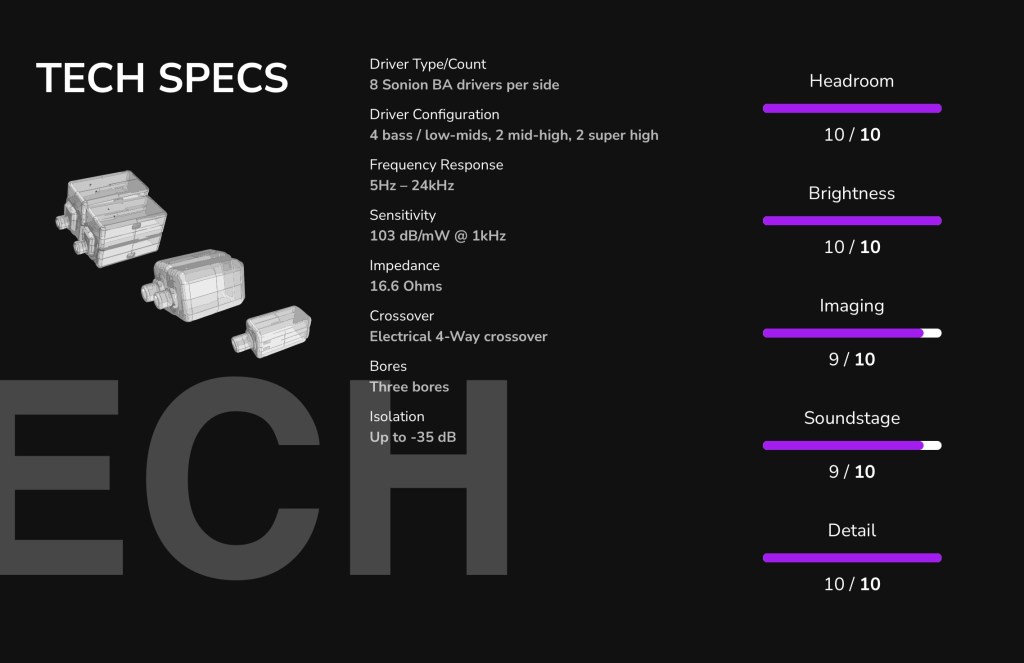
Kicking off the test tracks with some Emile Sande, the sub bass on “Heaven”is substantial, with her vocal cutting through a little crisp and sharp. There is plenty of thump coming from the all-armature design, which sounds a lot more DD than BA in terms of physicality and slam. Soundz use the newest generation of Sonion bass driver in a quad-BA stack (presumably vented) for lows, and it’s a beauty. The Flame also does a fantastic job with “Disc Wars” by Daft Punk, painting a soundscape that is both thick and thrumming with sub-bass, adding plenty of dynamic swing to the track as the timpani start pounding in the background. It’s a powerful and deep sound that you don’t normally get to hear from all-armature sets – it doesn’t quite have the visceral slam of a large dynamic driver in ear due to the physics involved, but there is definitely a strong foundation of sub frequencies that give the Flame a pretty solid foundation to build on.
Sticking on Daft Punk, and moving up to the mid-bass, “Get Lucky” punches pretty damn hard, with the flame definitely moving some serious air for an armature, again with very good low end extension that adds a nice solidity to the underside of each bass note. The sound produced isn’t stereotypically dry like a lot of BA designs, with lots of liquidity and roundness to the bass guitar or synth notes. “Hello, It’s Me” by Sister Hazel is a good example, with a nicely liquid slinkiness to the intro bass line, while still retaining a good texture. The track feels thick, but you can still hear the fine grain and texture of the bass strings resonating.
Going for another texture test, the “Bad Rain” bassline is dirty and aggressive, just as it should be. There is a high level of clarity in the bass reproduction, which isn’t always expected when you have as much quantity down low as these IEMs do with the bass switch up. The notes themselves are fat, but there is still plenty of definition, without any flab or wooliness. Listening to “Palladio” by Escala, this is one of my usual test tracks to check both weight in the low and mid ranges, and also to pick up any masking in the bass.
There is a click in the lower left half of the stage around the 20 second mark (some room noise from one of the orchestral players, presumably), which can get lost quite easily on gear that blurs the bass to mids transition, or beefs up the low end too much. On the Flame, there is fantastically clear detailing on the click, surrounded by lots of texture from the cello and strings.
Overall, low end technicalities are at a pretty high level for the price tag, with “We Shall not be Moved” by Mavis Staples showing fantastic detailing in the chorus and just general instrumentation. The baritone vocal in the chorus is clear as a bell but quite low in the mix, as it should be. It’s overall very good with choral vocals full stop, leveraging the technical benefits of armatures without needing to resort to analysis. Similarly, “Cello Wars” by The Piano Guys sounds rich and dramatic, with plucked cello notes and bow strokes competing with various Star Wars themed sound effects and a pulsing light saber without ever feeling blurred or messy. It’s difficult to describe how the Flame makes what is essentially a mashup of sci-fi soundtracks sound realistic, but it does.
Given the preference previously stated above in my initial impressions, it’s worth reiterating that all of the above impressions were taken with the bass switch in the “on” position, which is definitely my preferred sound profile out of the two on offer. Flicking it off for the sake of comparison, the bass is still a little north of true neutral, but feels about 3-4dB less emphasised to my semi-trained ears. Tracks like “Disc Wars” lose some of their dynamic sweep and grandeur, but the sub bass is still audible and extended, just with a little more breathing room for the mids and highs to shine. You can hear the sub-bass intro to “Heaven” quite audibly, you just can’t feel it in the same rumbling way without the bass switch engaged. It tilts the overall tone of the monitor far more towards a natural / neutral sort of presentation overall. You can imagine the Flame being used for studio monitoring with the bass off, and stage monitoring with the switch engaged – it’s a very well considered system that gives genuine flexibility for most users and use cases.

Mids
Moving up to the midrange, the first thing that strikes me is the timbre of the Flame. For an all armature set, there is none of that plastic edge to notes or metallic sheen that could colour all armature designs of years gone by. The tone of instruments like acoustic guitar is sweet and organic, imparting a warming glow to the softer instrumentation. the intro to “Millionaire” by Chris Stapleton chimes and sings sweetly in the ear with a delicate lightness, contrasting to the power of the bass and Stapleton’s gravelly rasp. The weight of the instrumentation helps with the realism here, with the Flame not artificially thickening the body of the guitar notes, just playing back what was actually recorded.
Similarly for piano, the tone on these IEMs is rich and weighty but realistic – listening to “Superman” by Five For Fighting, it sounds like it would if you were sat next to a large grand piano, lending some of that warm and euphonic tonality to the sound you get from a live performance. Accurate these might be, but cold they definitely aren’t.
Listening to more electric guitar based fare, “World On Fire” by Slash comes through the nozzles as crunchy as you like, actually bordering on harsh. i’m not usually a fan of brighter signatures, but this doesn’t actually bother me, so it’s just on the right side of the line to give zest without being unpleasant. The high level of natural detail and clarity on these IEMs helps here, presenting the edges of each riff in sharp contrast without getting fatiguing (which was an initial concern in my show impressions of these IEMs). I still wouldn’t suggest pairing the Flame with a naturally bright source unless you like your mids extra-zesty and full of crunch, but with a warmer or more musical DAP these will absolutely sing.
Sticking with Slash, the quick fire riffing of “Shadow Life” is staccato and crunching, with a real bite to the transients. The weight of the notes hovers somewhere between natural and slightly weighty – it isn’t lean, but there isn’t a huge amount of extra body to fill out the harmonic-laden phrasing in tracks like “Fill My World” (again by the ex-GnR man). Each note is clearly depicted in the soundscape, allowing you pick apart each riff and focus in on individual notes with pretty impressive clarity. For guitar based music, the Flame sits somewhere between the organic sheen and weight of the well know JH Audio “house sound” on IEMs like the Lola and Jolene and more clinical and sharper IEMs like the Rhapsodio Galaxy.
The last Slash track in the random Slash rotation is “Starlight” – the dissonant harmonics that pepper the start of the track are off the scale pinpoint and crystalline but not hard to listen to at all. Similar results occur with Chris Stapleton and his sibilance masterpiece “Whiskey And You”; the thickness of the vocal notes are good enough to fill out the air around the edges of each word in that problematic chorus and make them pleasant but audible, in a very gritty and emotive rendition.
in terms of positioning, the Flame pack a midrange that isn’t particularly recessed compared to the bass or treble but isn’t stage forward either. The size of the notes helps here, with a slightly larger and more intimate feel to music due to the size of the sonic picture being painted in the ear. Detail levels and clarity are definitely impressive, not giving the feeling of being artificially emphasised or sharpened with any obvious spikes in the frequency response but imparting a LOT of information around each note, and allowing the listener plenty of space on the stage to pick things apart. I
t isn’t an analytical tuning, but the technical prowess here is very impressive for the price, and definitely more than capable of trading blows with gear in a much higher price bracket for raw resolution. If the bass is the thing that immediately grabs your attention when you pick these up, the rawness and emotional engagement factor that the mid tuning manages to capture is what keeps your attention for the long haul.
Treble
Switching up top to my treble tester playlist, the first track out of the gate is “Go” by The Chemical Brothers. The swirly synths swoop and glisten where they should, permeating the top end of the soundscape alongside a very crisp and easily identifiable hi-hat that cuts through the fat basslines underneath and drives the track forward. Cymbal decay here feels realistic – not too splashy and metallic, but not to dry and clipped either. The synth that sweeps across the stage from left to right at the 1:18 mark shows good imaging, pulling your attention across the imaginary head stage as it exits over the right shoulder of the listener.
Sticking with British electronica, “Omen” by The Prodigy sounds very high energy, with the warbling synth in the top right of the stage wending in and out behind the other electro noise in the track very clearly. They have obviously tuned the upper frequencies to be robust enough to cut through the wall of bass being produced underneath, and it works pretty damn well here. “Written In The Stars” by UK artist Tinie Tempah is a decent test for some IEMs – the initial vocal can be a little sharp on poorly tuned gear (it isn’t here), but more importantly there is a really faint pattern of cymbals that drops in to the track around the 23 second mark.
It’s so faint and low in the mix that on most bassy in ears it gets swallowed entirely into the background, but the Flame does a very good job of resolving enough to cut through the big bass kicks going on underneath. Dropping the tuning switch to the “off” position brings them into slightly sharper focus, but it’s still buried deep in the overall mix, so kudos to Soundz here for packing enough resolution into the upper end to still bring this out.
Overall cymbal sounds are tightly controlled, decaying quickly rather than splashing endlessly. There is just enough of a tail to avoid cutting the notes short or making the IEMs sound clipped – the team at Soundz have done a very good job here of making symbols sound lifelike rather than emphasised or blunted, which are the usual two choices.
To summarise, treble on the Flame is brighter than neutral, but not thin or unpleasantly sharp. There is enough weight and wetness to the edge of notes to make the crispness enjoyable, and it works very well with the warmer and beefier tuning of the instruments and frequency range underneath, giving a good counterpoint to the power and grandeur of some of the bass. I’m usually a fan of clear and thick treble over something that is more sparkly or crisp, but the Flame have done a good job converting me here. It’s an impeccably judged tuning, with bags of detail and a good helping of air. If you are treble averse then these may be a little too much for your preferences, but I urge you to give them a chance anyway – the Flame packs one of the best treble renditions I have heard yet in an IEM, and that isn’t something I say lightly.

Soundstage, separation and layering
The Flame has a stage that reaches out a little way outside of the ears on either side of your head, with comparatively less forward or backward projection due to the close placement of the listener to the instrumentation on the stage. Note size is on the larger size, with a corresponding sense of scale and height to the music too. It reminds me of something like the Campfire Audio Atlas, giving a big sonic picture that wraps around the listener’s head and gets close to that much-maligned audiophile term “holographic”.
The excellent resolution and clarity translate into pinpoint imaging. Putting any Ray Lamontagne on these IEMs is a treat – apart from the warm and soothing way they render Lamontagne’s voice, the instruments and voices in his famously spread out music all present in their own little part of the universe, allowing the listener to put them all in very specific parts of the stage. “I Was Born To Love You” spreads the rim shot from the drum beat into the far left (upper) of the stage, with the softly strumming acoustic guitar sitting equally stage right, and the drums sitting a little off centre to the left. This isn’t a “three blob” presentation of left channel – centre – right channel, not ny a long shot. Wherever the mixing engineer or the recording studio put the musucian, that’s where you hear them.
Separation and layering are similarly high-level. It’s fair to say in terms of technicality, the Flame is comfortably flagship grade – it may not have quite enough in its eight armatures to take down the current kings of the high end IEM scene, but it definitely packs enough in the way of technicality to hang in that sort of crowd. Playing “We Shall Not Be Moved” by Mavis Staples, you can follow every vocalist in the chorus without any effort. The Flame doesn’t inject an excessive amount of space between each of them (or between instruments in general, unless they are placed in different parts of the stage) – it achieves the layering and separation by the cleanliness and clarity of its reproduction, keeping everything crisp and avoiding any blurriness or blending of notes even in the busiest passages.
Power requirements and synergy
As an all-armature design, the Flame doesn’t need something with a nuclear power station attached to it to get the reeds moving. I can get ear-bleedingly loud levels of playback at about 50/100 on high gain from my Lotoo PAW 6000, and I certainly never move above medium gain on the A&K Acro CA1000. Dropping down a tier, the Mr Walkman modded Sony A55 handles these with plenty of headroom to spare too, so unless you have a source with practically no power output you shouldn’t struggle to get the music flowing.
In terms of quality, it’s a slightly different story. These scale to the capability of the source, but in a slightly different way. They don’t “unlock” hidden potential with more wattage or a better DAC, they are just transparent enough to reveal how good (or bad) your chain is quite clearly when you change something. Given the natural brightness of the high end, I would recommend pairing these with a source that leans neutral to slightly warm, and is as technically capable as you can afford. I personally run these off the PAW 6000, as I find the slightly more “planted” physicality of the Lotoo’s sound signature and overall musicality really leans into what these IEMs are good at – it’s a fantastic pairing for me.
Tip choice and isolation
This is an interesting one for me. The initial loadout from Soundz is good, with some foam/silicone hybrid tips alongside the more usual silicone is good, but I found with my abnormally large ear canals (I have a head the size of a small cow), I would occasionally lose that perfect seal, and with it some of the voluptuous bass that these IEMs do so well. After rolling through every tip in my collection, I settled on the Soinfit CP155, which allows me to get a fully flush fit with the pseudo-custom shells which still giving a deep seal and locking in the low end goodness. In fact, the fit and seal is so good with these that it almost feels like I am wearing custom IEMs, which is fantastic.
Honourable mentions here also go to JVC Spiral Dots and AZLA Xelastec, but I felt the Dots just pushed the IEMs a little bit further out in my ears and the Xelastec felt a little like overkill, although the grippy fit pretty much glues in the IEMs, so would definitely work if you intend to take them out and use them on a trampoline. TRI Clarion are good as well, taking a little weight out of the mid bass and lower mids in favour of a dollop of extra crispness and focus on the detail.
Comparisons
Empire Ears Athena VII – (8xBA custom IEM, c. $1500 when originally launched)
As Soundz are primarily a custom IEM maker, I thought it would be fun to pit them against a couple of current CIEMs in my collection. The Athena VII shares an identical loadout of 8 balanced armatures generating the sound, this time in a 2 low / 3 mid / 3 high configuration. The Athena was one of the higher end models in the Olympus series from Empire, so has some of their proprietary technology like the Anti Resonance Coating (ARC) on each BA driver, and a complex 5 way crossover system directing frequency traffic to the various drivers. Power-wise, the Athena requires about 15 less clicks on the volume dial on my Lotoo PAW6K than the Flame to reach the same volume levels – it’s a famously sensitive monitor, although like the Flame, it doesn’t hiss on the Lotoo.
In terms of sound, the Athena come across as lighter in the bass, with a more “in the head” presentation. They aren’t bass-light, but they lack the physicality and presence in the sub and lower mid bass that the Flame possess, giving tracks like “Written In The Stars” by Tinie Tempah less oomph and bombast. They compete fairly well on detail (an Empire Ears trait), but on tracks like “Palladio”, the Flame do better at drawing out the additional texture of each bow stroke on the cello intro, and highlighting the little click in the lower left stage around the 20 second mark. The overall tone of the Athena is quite dense and almost vinyl-like in the mids, whereas the Flame is much crisper and cleaner sounding in tone.
The additional crispness also translates to a more precise sonic image, with the Flame staging wider and deeper than the Athena, and putting instruments much more clearly into 3-dimensional areas of the stage.
One area where the Athena competes on an even footing is in the vocals – this was always a strength of the EE Olympus line, and the Athena definitely doesn’t disappoint. The voices are presented more stage-forward on the Athena, with a slightly denser feel and weight to them. Again, the Fire has the edge on detail, but not quite as prominent as in the highs and lows, with the Athena having a really high level of natural clarity.
In a lot of ways, the tuning of these two IEMs is like comparing a good version of a modern Harman Curve to something like the HD650. Extension and technical capability go to the Flame, along with a much more physical rendition and sense of power and dynamics. The Athena fires back with a richer and more analogue tone to the mids, giving up a bit of resolution and clarity for a darker and more velvety tone.
The Athena have been a long time favourite of mine (and ironically, another IEM I acquired at my first ever Canjam in London back in 2018), but if I had to chose one now, I’d go for the Flame. The additional vibrancy and resolution really makes the sound pop, and edges my recommendation here.
Stealth Sonics C9 – (1xDD 8xBA hybrid CIEM, c. $1500 on launch)
Stealth Sonics were a CIEM manufacturer based in Singapore that have sadly ceased trading recently. The C9 was their flagship in-ear, with a 9-driver hybrid design and some interesting pressure balancing technology inside. The brand was mainly focused on the stage and professional music market, following a similar tuning philosophy to the Soundz team.
In terms of overall sound, despite having a 10mm dynamic driver pushing out the low end, the C9 are actually slightly less bossy than the Flame. The DD on the C9 has been tuned to keep pace with the balanced armature drivers responsible for the mid and high frequencies, but that seems to come at a trade off of some of the typical viscerality and slam you usually get from a hybrid model. The Flame actually produces more physical slam and kick on “Bad Rain” by Slash, giving the bass guitar a more audible growl and sharpening the details in the mid and treble ranges to present a slightly colder and crisper sound.
It actually competes pretty well with the Flame in terms of detail, with the Flame coming out just ahead in terms of overall clarity and resolution of fine textural details. The C9 has more of an organic tone, with a slightly more forward midrange that holds a hint more warmth and body, with less definition on the trailing edge of the guitar notes compared to the Flame. It just sounds like it is pulling “more” out of the track here.
Treble is more evenly matched – the C9 is more laid back and less bright tonally, but has a fantastic extension due to 6 of the 9 drivers being used for highs and super-highs. The cymbal work on “Bad Rain” by both IEMs is exemplary, the hi-hats sounding clean and realistic and cutting through the loudness beneath to drive the track along. The C9 feels slightly more subdued on the cymbalwork, the notes decaying a shade quicker than the marginally splashier sounding Flame.
Technicalities are reasonably even – both IEMs image at a flagship level, with the Flame sporting slightly more noticeable separation between instruments due to the more organic sound of the C9 and the slightly inferior overall detail retrieval. Soundstage is similar, with the Flame pushing out just a shade wider to my ears on the X axis.
Overall, both IEMs are reasonably evenly matched, with the Flame just pulling ahead in most of the major technical areas, and sounding the more “reference” and less exciting of the two IEMs when the Flame has the bass switch engaged. The C9 have been a go to for me for the last few years when I just want an IEM to listen to something musical but not too coloured, but again if I had to pick just one, the additional technicality and engagement of the Flame (and the extra bass slam!) would just put it ahead for my personal preferences.

IMR Acoustics Seraph – (1xDD 2xBA 1xMEMS hybrid IEM, c $1200)
The Seraph is one of the latest hybrid designs from boutique IEM maker IMR Acoustics. IMR are known for their tuneable filter system, with 6 lower filters and 8 tuning nozzles allowing for over 50 different variations to the baseline sound. For the purposes of this comparison, I am running the Seraph with the maximum bass and maximum treble filters (blue and back respectively) to give a very musical W shaped tuning, as that is my current preferred configuration.
The Seraph was one of the first commercially available IEMs to make use of the new xMEMS driver tech, packing one full range monolithic MEMS driver into the IEM shell alongside one 11mm CNT dynamic driver coated with ADLC and two balanced armatures. It should b noted that the MEMS is technically a full range driver but isn’t being run full range according to IMR – the driver is installed without the transformer unit due to the size of the IEM shell, which naturally rolls off the driver in the lower frequencies, so this act is as a mid/high tweeter in effect.
Compared to the Flame, the Seraph in my favourite config is actually fairly similar in tuning. It is capable of more bass (IMR are a basshead manufacturer), with the dynamic driver kicking out a lot of air and slam, along with a decently large quantity. The Flame keeps up surprisingly well here, and doesn’t sound particularly anaemic or underpowered in the low end in comparison, which is impressive. Detailing in the lows go to the Flame, although timbre is a draw, with the Seraph sounding the more organic of the two due to the dynamic driver.
Mids are slightly more prominent on the Flame, with a larger note size and more noticeable fine detail. The Seraph is still a very detailed IEM, but it’s slightly more laid back about how it presents the micro detail to the listener.
In the treble, both are very detailed, but again the Flame probably pulls away a little bit. The Seraph can sound a little bright on first listen due to the combo of MEMS and BA drivers, but once you get used to it then it doesn’t stray into sibilance. If you find the Flame a little sparkly for you, the Seraph will probably be a little too much.
Technicalities are a draw – the Seraph has one of the biggest soundstages I’ve heard in an IEM (partly due to the vented nature of the shell), and the separation is also excellent, where the Flame pulls ahead slightly in the overall layering and fine texture to the sound. Neither are disappointing in any aspect in their price bracket, so this is more of a preference thing than a better or worse assessment here.
Build on the Seraph is smaller than the Flame, and the all-metal shell in a chunky coffee-bean design fits very nicely into the ear. Accessories are a draw – the Flame comes with a nicer metal case compared to the faux-leather small case of the IMR and the larger nylon presentation box, with the IMR providing more tips and three cables (2.5mm, 3.5mm and 4.4mm) compared to the one higher-quality cable in the Flame.
Overall, these two IEMs offer a very compelling proposition in the $1k+ price bracket. The Flame is more technically impressive, so if you’re after sheer detail in a musical IEM, they would be my recommendation. If you need something that has a huge stage, very good detail and a more explosive and large low end, the Seraph would be the obvious choice here (if you can find one).
Final thoughts
It’s always good hearing new gear and new brands, and what I’ve heard from the Flame and Soundz Custom has really captured my attention. For a brand to hit the ground with such a technically proficient but also well-tuned and just downright enjoyable sounding IEM is pretty impressive. The Flame ticks a lot of boxes – it can play neutral but musical if you refer a flatter tuning, or kick the bass into high gear and provide an almost DD level of physicality to go along with that BA crispness if you want something more flavoured and fun.
Out of all the gear I heard at the recent London Canjam, this was one of the IEMs that grabbed me right from the off, and has consistently been the IEM I have listened to most since that weekend. It blends musicality with detail, you can wear and listen for hours without discomfort and most of all, it just makes music sound good. Soundz Custom are definitely a brand to watch out for – I think they will start to make some serious waves in the audiophile community very soon if this is the standard of in-ear they are capable of producing.
 glassmonkey
 jackpot77
 TheOneInYellow
 trekasaurus
 Timothy Cose


 Audio Primate
wow!! 98Meze 109 Pro – wooden wonder
LikeLike