


Introduction and acknowledgements
Meze Audio are a brand I have known about for some time. What initially started as a Romanian boutique manufacturer making “off the shelf” headphone models back in 2009 has turned into one of the premier headphone and in ear manufacturers in the audiophile space. The launch of the iconic Meze 99 Classics back in 2015 really launched the brand into the audio consciousness, and they cemented their place at the top table with the launch of the Empyrean, which was their first flagship headphone (and still my favourite over-ear can).
Fast forward a few more years and they have added two further iterations of the Empyrean, a closed back flagship (the Liric), a new version of the 99 (the Neo) and five different in-ear monitors to their evolving catalogue.
I have owned a few Meze models over the years – one of the predecessor models to the 99 Classics (sadly long gone with no trace in my scattered audio memories of what the model number was), the 99 Classic themselves (again, now long gone) and then the big dog, the Empyrean, which currently sits in pride of place next to my “at home” listening rig as the most used piece of audio gear I own. I first heard the 109 Pro at Canjam London in 2023, a brief listen leaving the impression of a very listenable mid-tier headphone. R
Roll forward a year and I got to spend some more listening time with them at the Bristol Hifi Show – it’s fair to say that the 109 Pro left slightly more of an impression on me the second time around, as I ended up in a lengthy conversation with the rep from Audio-T about taking them home with me, which I eventually did. The following impressions and review are based on the pair I now own – no input or other consideration (financial or otherwise) has been made or received, so the opinions expressed below (however misguided) are 100% my own.

Technical specs

Unboxing
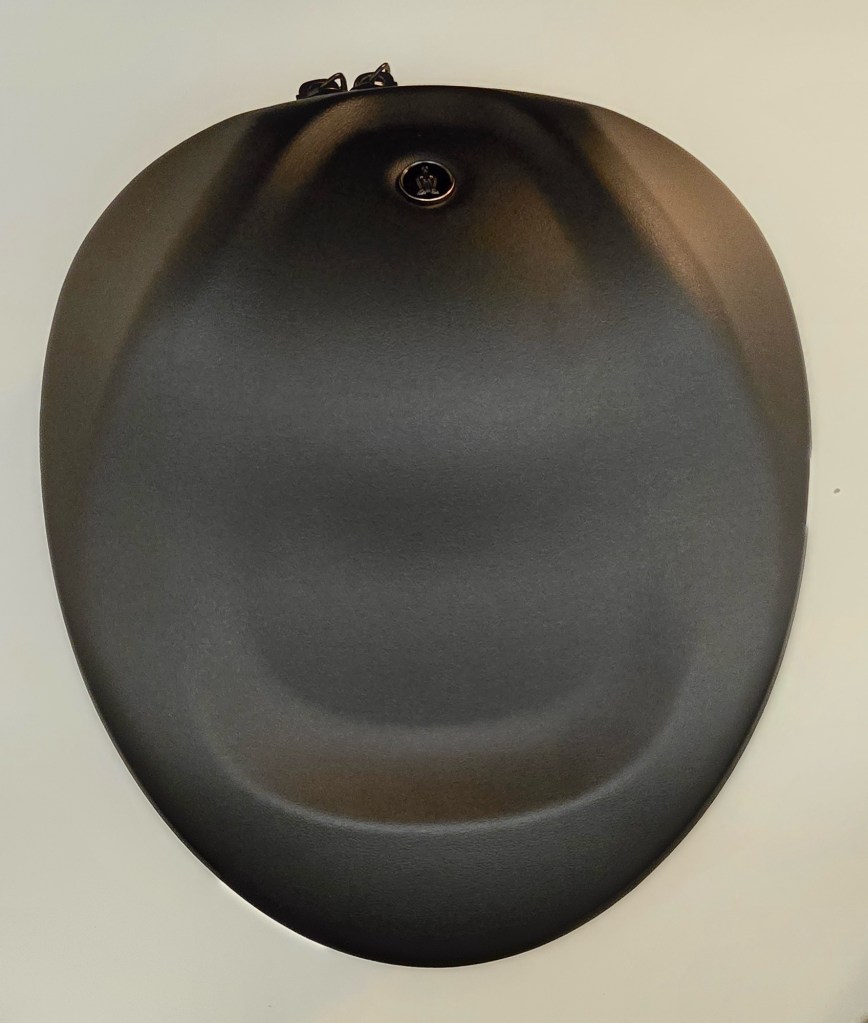
The 109 Pro come in quite a sizeable rectangular black box, with the Meze “harp” logo in gold on the top and a nice gold maze-style graphic on the front which is meant to represent a wooden gate, symbolic of the place these headphones were made. The rest of the box decoration is simple and elegant – a gold “109 Pro” logo on one side, some barcodes on the other and finally a life size black-on-black line drawing of the headphones themselves on the back. The owner of the brand (Antonio Meze) started life as a designer, and it’s clear to see with his more recent releases that philosophy carries right through from product to packaging. Granted, you can’t listen to a box, but for a pair of headphones costing not that far south of a thousand pounds, it’s a nice start.
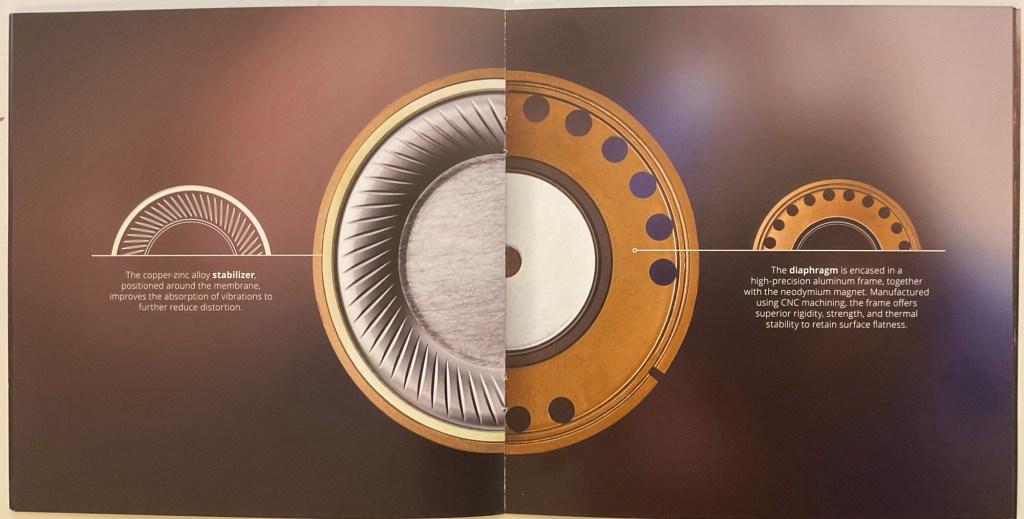
Opening the box, you get a contoured carry case containing the headphones themselves, along with a small leatherette bag containing both the headphone cables (both 1.5m and 3m, terminated in a single ended 3.5mm connector with a 6.3mm adapter included). Taking the case out, there is a nice 20+ page glossy brochure telling the buyer all about the design and technology behind the 109 Pro. While I doubt it’s something you would reach for regularly, it’s another nice touch, and gives some interesting insight in exactly how they have put the whole headphone together from the ground up.
Overall, a very pleasant experience. Not quite as dazzle-dazzle as the mini-briefcase the Empyrean come nestled in, but definitely evokes the feel of a high end and well put together package.

Build and ergonomics
This section will be fairly short and sweet: the 109 Pro are possibly one of the most comfortable headphones you will put on your head. End of discussion. Between the self-adjusting suspension strap mechanism, the weight (<400g), the pivoting earcups and the comfort and size of the velour ear pads, this is a headphone that clamps to your head with just the right amount of force to stay put but feels almost weightless. It isn’t quite the “hugged by a cloud” experience you get with the Empyrean, but the payoff of the headphones staying put on your head while you move around is definitely worth it. If there are more comfortable headphone designs out there than the ones the team at Meze are producing now, I’d love to experience them, but I haven’t as yet.
The one very minor downside to the metal arch design being used is microphonics. If you ping the metal headband, it will resonate, and you will hear it. It isn’t overly loud, and will only happen if you keep scraping the frame while you’re listening. On that front, as long as you aren’t listening to your 109s while crawling through a small tunnel or doing 10 rounds in a boxing ring you probably won’t have an issue with it.
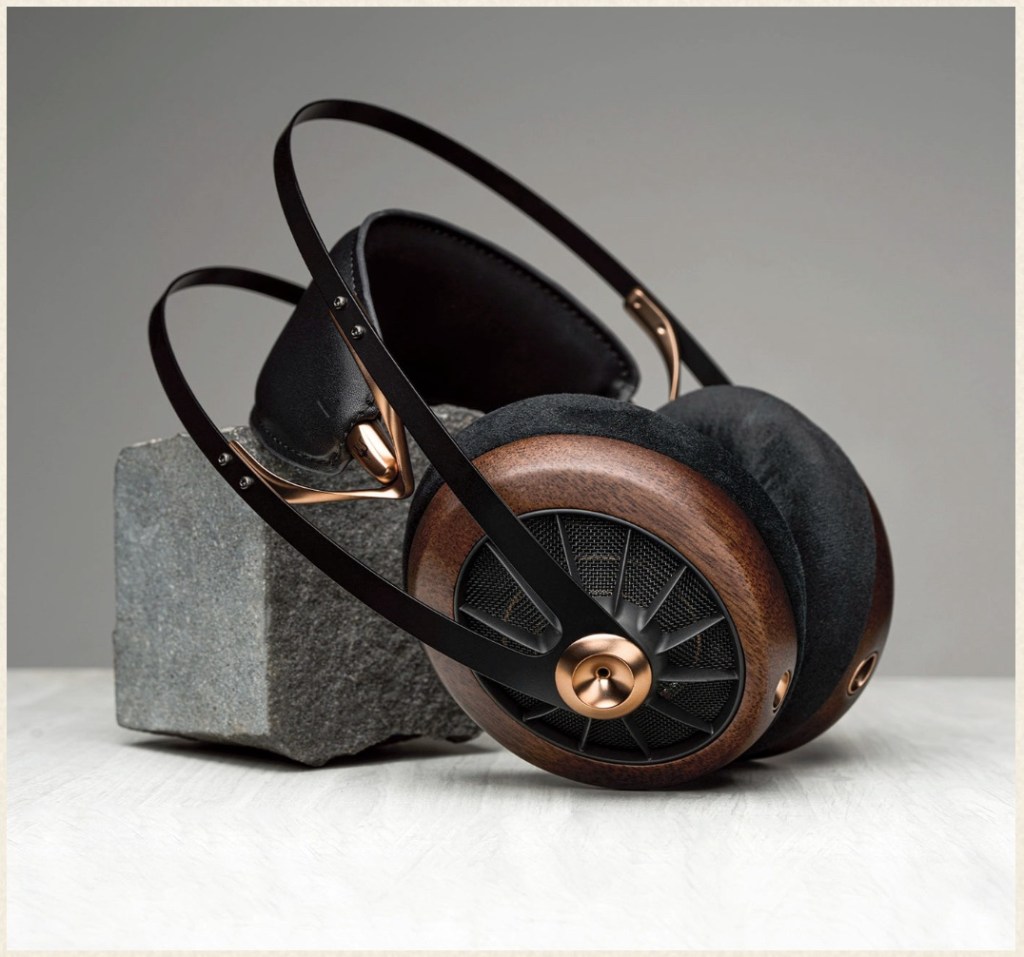
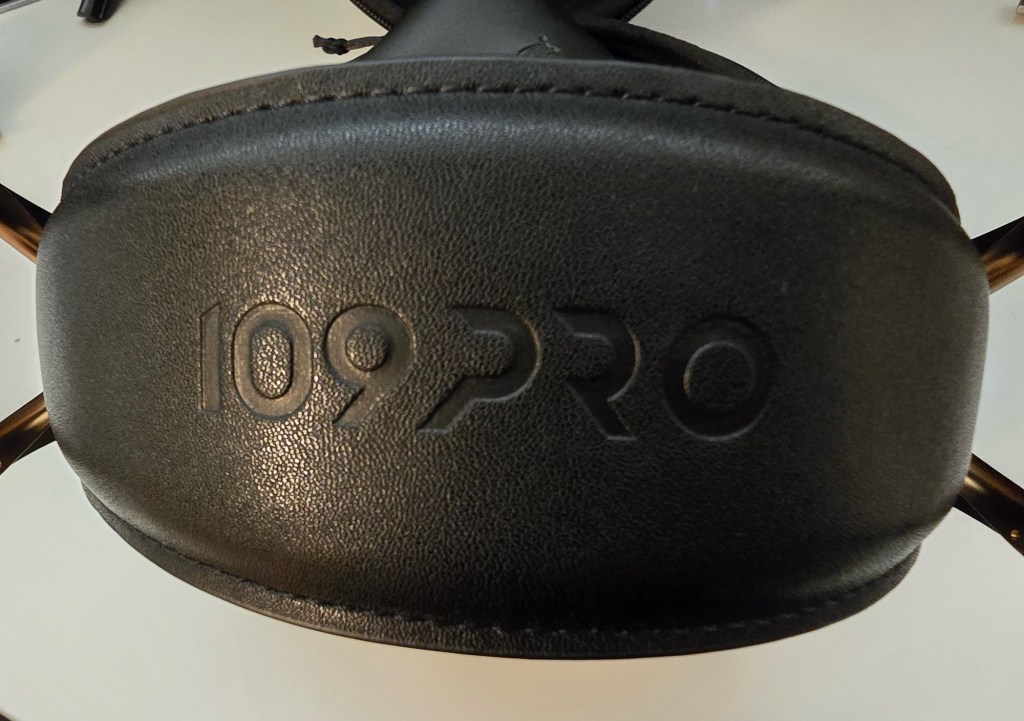
The quality of the build is top notch too. From the elegant black arches that form the main “frame” of the headphone design, through the embossed leather comfort strap to the wooden cups (walnut), this is a headphone that looks like a piece of art as much as a piece of audio gear. Again, it isn’t at the modern art level of its big brother, but it looks and feels fantastic in the hand. The wooden cups form an oval shape around the main open part of the headphone assembly, with a 12-spoke design holding some thin black mesh over the back of the drivers. It is a fully open design, and it’s fair to say these headphone are very open, both in terms of isolation (there isn’t really any) and leakage of sound (there is a lot). Long story short: when music isn’t playing, you will hear what’s going on around you quite clearly, and when music is playing, everyone around you will hear it quite clearly too. Not a headphone for a noisy crowd or a library, then.
Wired connectivity is taken care of by a 3.5mm connector on each earcup. They have reused the recessed connector port first seen on the 99 Classics, so while the 109 Pro should take any standard dual 3.5mm connected cable, they will need a slightly longer connector than you typically see on the more popular Hifiman models so it’s worth checking that any after-market cabling works with the Meze sockets.
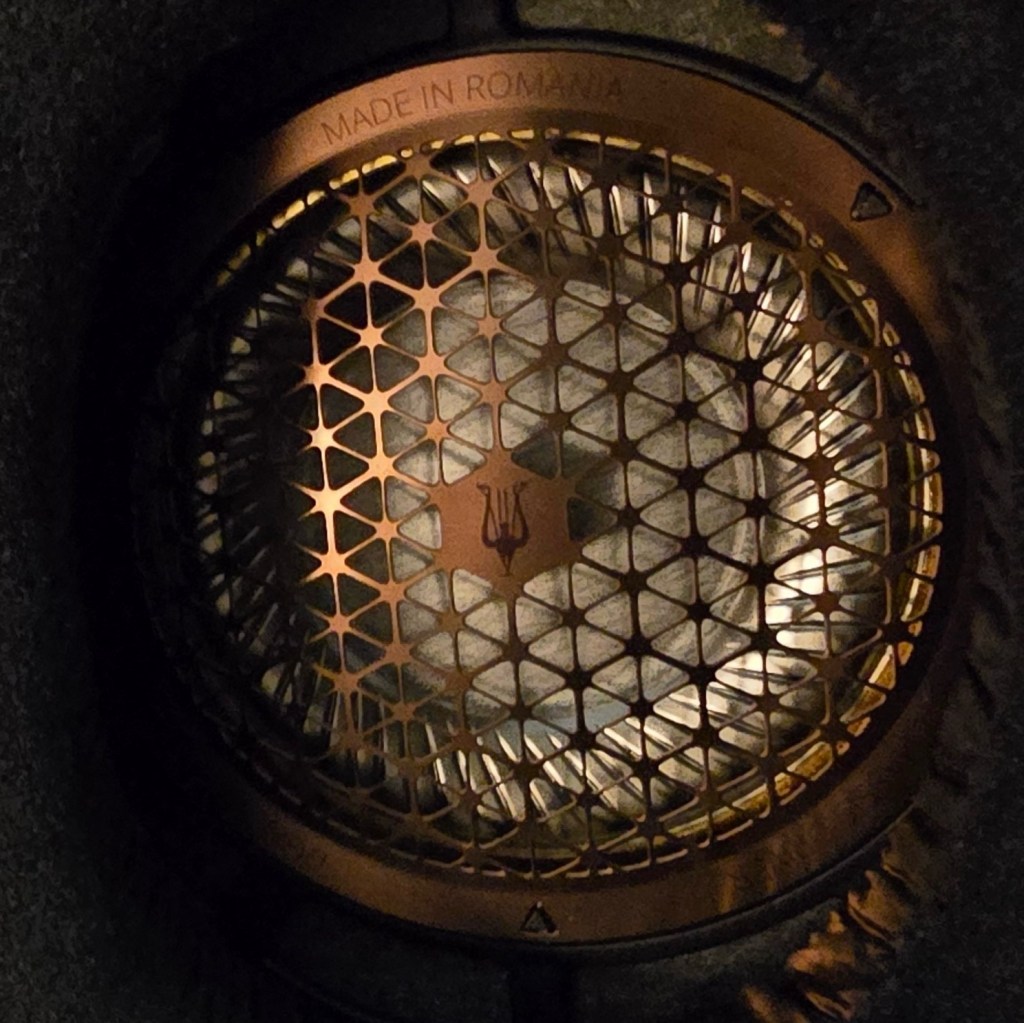
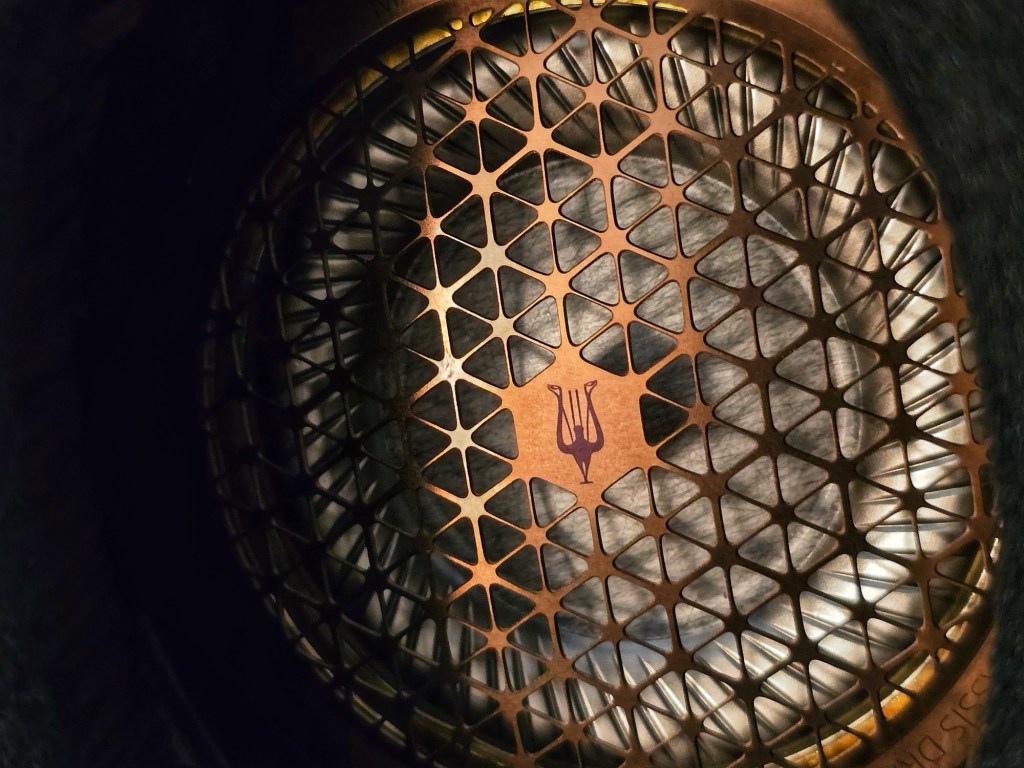
The final point to call out on the design would be the protective covers on the inner face of the cups. Rather than the more standard metal or foam mesh, Meze have opted for a metal plate with a fairly open geometric cutout design made in the same copper-coloured metal as the rest of the headphone accents. It looks visually stunning, and lets you clearly see the driver assembly underneath. Granted, it won’t do much to keep dust or foreign objects away from the driver cone itself, but as long as you treat your headphones with care, it’s worth the trade off.
Initial impressions on sound
The 109 Pro are quite an interesting headphone when it comes to tuning. If you look at the graphs doing the rounds on the usual audio sites, the 109 Pro presents as quite an extended but flattish sort of tuning. Putting them on your ears tells a slightly different story (it was ever thus). My initial feel on the 109 Pro tune is that it’s a warmish, open sounding take on a musical tuning. Bass is present and accounted for, giving a surprisingly physical impact when it’s called on in the music and staying tight and well behaved when it’s not. The midrange is lush, musical but not overly warmed up or veiled, and the highs have just the right amount of emphasis to cut through the warmth.
In terms of classical “shapes”, it feels more like a shallow W-shape to my ears, with just a small emphasis in the mid to upper bass, a similar push to bring the vocals a little more forward and a push up in the treble to give some bite. It isn’t as stylised or emphasised as some brands like to do, but it does just enough to take what would otherwise be a fairly neutral sound and inject some colour and life into it without taking it too far away from the source underneath.
Overall, the first impression is a lot more balanced than its predecessor, leaning more into a classic audiophile sort of tuning but without sucking out too much of the bombast and bass presence that made the 99 Classics such a popular model. It has plenty of detail, and the technicality level is definitely high for a sub-1k headphone, the in-house driver design and acoustics allowing for a well separated and spacious stage and plenty of fine detail thrown into the mix alongside the music. This headphone is a jack of all trades sonically (especially for an open back), but one of those rare jacks that manages to do almost everything well. It isn’t basshead but it isn’t anaemic, it isn’t crystalline or brittle but it does almost border on hot on occasion, and the vocals and mids follow the well worn Meze path of richness and emotion. It’s a good start.
Bass
Starting with the low end, the 109 Pro give an impressively deep and textured low end rendition for a very open backed headphone. The driver is capable of reaching waaaay down into the depths to pull out some seriously low Hz playback, and while it isn’t hugely north of neutral in terms of sheer quantity, there is definitely no lack of low end power with these cans.
Shaking up my usual test tracks, “Time” by 2Cellos is first up. The texture of the bow scraping on the lowest notes of the opening bars is quite apparent, with the raspiness of the cello string contrasting against the more orchestral sweep going on slightly above. The detailing feels like the aural equivalent of running your fingers over some high quality certificate paper, with lots of fine texture layered over the top of a solid and physical note playback. It doesn’t quite steal the attention, but it is noticeable.
Switching out to more electronic sub-bass fare, “We Found Love” by Calvin Harris is suitably bouncy, although the usually thumping sub bass that accompanies the chorus is merely present rather than dominant in the soundscape, adding a decent amount of power and toe-tapping oomph to the song without leaning into proper club banger territory. Similarly for “Count On Me” and “End Credits” by Chase and Status, the bouncy drum and bass choruses are engaging and carry plenty of energy, but it just lacks that real visceral thrum that you can get with these tracks on a proper basshead set of in-ears or headphones. To qualify, I don’t feel that anything is lacking, it’s purely a preference thing for me as they are so close to my personal (admittedly basshead0 preference for a low end tuning.
Listening to “Heaven” by Emile Sande, for instance, there is plenty of low end hum and vibration there to drive the track along, so I’m sure this will be more than enough for most listeners. And in terms of extension, everything does sound rich and deep on these cans – the underbelly of the liquid bass line for “Get Lucky” by Daft Punk practically scrapes across the surface of the dance floor it’s so down and dirty.
Looking at slam and physicality, “Bad Rain” by Slash is up next. The drum into kicks in pretty hard, with plenty of weight to the bass drum. When the growling bass guitar kicks in around the 0:20 mark, the track picks up a notch, the 109 Pro presenting the same sort of deeply textured and weighty tones as they do with cello, except with a little more quantity. There is definitely a subtle uptick in output as you move from sub into mid bass, with the smallest of bass “thumbs” in evidence to beef up the mid-bass nicely. The Slash track has the right amount a rawness and aggression to go along with the weight, the punchy snare and sleaze-rock guitars cutting through the heavy bass lines nicely and marking the 109 as an excellent headphone for guitar-heavy rock music of all types.
Given that the 109 Pro does have a nicely pronounced mid-bass, a good tester to see if it goes into ice-cream headache territory is always “Hello, It’s Me” by Sister Hazel. The slippery bass line is front and centre, treading a nice line between liquid and textured but not overpowering the other instrumentation. There is also a nice layer of texturing audible in the background, the notes being nicely thick but still able to reveal some of the more intricate nuance. It isn’t the most detailed headphone I’ve heard in this particular aspect, but the sort of cans I’m thinking about that dig up more (or avoid masking the fine detail there in the bass guitar lines) cost 2 or 3 times more, so that’s not really a negative.
Similarly for “Drift Away” by 70s soul man Dobie Gray, the bass line is beautifully rich without resonating between your eyes, filling out the track superbly. On a proper basshead headphone this track can make your eyeballs vibrate with the bass quantity, so this is a nicely judged guilty pleasure rather than unpleasant experience. Again, liquidity is noticeable here, adding a a slight warmth and old school analogue “glow” to the track that contrasts nicely with the creamy voicing and crisper cymbals and other treble-dwelling instrumentation.
Overall, despite this not being a massively bassy set on a measurement rig, the 109 Pro almost gives the impression of being “for the basshead”, with enough weight and physical presence to really add some solid foundations and impressive rhythmic drive to the music being played. It’s a very well thought through tuning, and most importantly an enjoyable one.
Mids
Moving up to the midrange, the first thing to note is the crispness and cleanliness of the presentation. Despite the present mid-bass, there isn’t much in the way bleed or masking, with the mids cutting through nicely, sitting just a shade behind the bass and treble staging-wise but having enough of a push forward not to drop into a more classic V or U shape. Tonally, there is a richness to the sound that evokes the classic Meze house sound, but not on the scale of something like the original Empyrean. Voices are throaty and well-fleshed out, but still slightly sweet and euphonic. As mentioned earlier, these aren’t cans that diverge too much from a balanced or neutral sort of approach, but there is definitely just a hint of colour that marks them as definitely Meze.
Starting with vocals, the 109 Pro do a good job of capturing the emotion for male singers. “And The Grass Won’t Pay No Mind” by Elvis and the Royal Philharmonic sounds suitably throaty, with Presley’s thick and mellifluous tones coming through like syrup in the ear against the sweeping orchestration. It’s not overblown, with the delicate acoustic guitar strumming in the background keeping its sharpness and edge and the 109 injecting just the right amount of gravel into the presentation at the 1:43 mark as Elvis really leans into the vocal.
Female vocals are handled in a similar manner, Alison Krauss sounding sweet but sharp at the same time on her collaboration with Union Station “Paper Airplane”. The track starts with some plucked acoustic guitar,and there is a definite sweetness and musicality to the tone that makes the delicate notes almost hypnotic. In terms of timbre, there is definitely a little bit of embellishment going on, but it’s close enough to accurate not to be distracting.
Sticking with female vocals, the Amy Helm track “Michigan” sounds compelling through the 109s, delicate acoustic guitars jangling in the foreground of the left ear with Helm’s rich vocal permeating the centre stage and the Hammond organ and blended chorus fleshing out the rest of the sound. This is a beautiful and delicate song, and the 109 Pro do it justice, with plenty of space around each element and a very enjoyable hint of warmth and sweetness.
Looking for sharpness and sibilance, I usually start with something like “Whiskey And You” by Chris Stapleton. Stapleton’s voice souds throaty and rich on the 109s, with a slightly honeyed tint to his otherwise gravelly roar. You can still hear the ragged edges of his voice as he hits the raw notes in this simple and sparse track, but the 109 does a very good job of rounding out the notes enough on the chorus so it doesn’t grate on the ear. It definitely rasps, but on gear I own that isn’t quite as tonally sweet or bodied in the midrange, this track definitely sounds a LOT harsher on the eardrums.
“Starlight” by Slash and Myles Kennedy is another good tester, with its deliberately dissonant guitar intro that is heavy on the harmonics. You can definitely feel the pinch more on this track, but again, while it’s suitably zingy, there is just enough weight and polish to avoid aural discomfort. Similarly for Kennedy’s vocal, the 109 Pro put plenty of detail and emotion into the playback, giving something that is sharp and pronounced but not overcooked or unpleasant. I keep coming back to the word “sweetness” when I try and describe the 109 Pro midrange – it has an analogue tone and “sheen” to things that make the mids very enjoyable to listen to – it takes a different approach to its famous older sibling the Empyrean, but the end result is still the same: a midrange that most people will be more than happy with.

Treble
I wasn’t sure what to expect when I first picked up the 109 Pro, given my previous two long term exposures to the Meze house sound were the 99 Classics and the legendary Empyrean. The 109 deviates quite a lot from both of those cans, presenting a top end that is still quite easy to listen to, but with a far more obvious sense of top end extension and a LOT more air and sparkle. To my ears, the treble holds quite steady as it rises from the upper mids, then adds a nice splash of extra emphasis in the upper part of the frequency range. This gives the 109 a treble that you can listen to without fatigue, but which still has plenty of gloss and energy. Detail and resolution is also an obvious call out here, with the 109 Pro digging out plenty of macro and micro detail in each track.
Putting some classical fusion through the headphones, “Oceonic” and “Kismet” by Bond both sound fresh and delicate in the upper end, subtle synth notes winding around the cleanly rendered violin and percussion to give both tracks a nicely spacious feel in the top end. Cymbals on Kismet are fresh bot not over-done, the hi-hats tsssking nicely in the ear with a crisp decay.
Moving into more electronic fare, “Saturate” by The Chemical Brothers is also handled well, the splashy cymbal work and slight phasing on the keyboard effects in the background both cutting through the fat distortion underneath. The treble is clean but not cutting, with a decent sense of weight and roundness to the notes that stops the 109 Pro sounding raw or hot, despite the healthy dose of bite.
To summarise, the 109 Pro treble is pretty Goldilocks for my own personal preference – not too hot, but not too blunt or underemphasised, cutting through the weight underneath to give much needed air to the tuning and a very enjoyable sparkle that almost reminds me of an over-ear version of the original shiny treble king, the Campfire Audio Andromeda.

Soundstage, separation and layering
The 109 Pro are an open headphone, which usually comes with a certain expectation around staging. For me, I would categorise the 109s as spacious but not absolutely massive in soundstage. The sonic image is quite large, and sound seems to extend outwards in an almost perfect sphere in all directions, sitting just outside of the imaginary limitations of my head, but is isn’t the most expansive or cavernous open back I’ve come across. Truth be told, that particular trait wouldn’t work too well with the tuning they have gone for, so the more realistic stage dimensions paint a nicely “outside of the ears” sort of image without overdoing things.
This is helped quote a lot by the excellent imaging and separation evidenced by the in-house Meze driver. There is plenty of space between each note and instrument on the stage, and well recorded and mastered tracks lock down each part of the sonics to their own specific coordinates quote proficiently. Play something like “Better Man” by Leon Bridges and the 109 will capture all the subtle room echoes and resonance of the various instruments and vocals, painting an image of the large recording space the track with recorded in. The subtle whistles that form part of the chorus float in from the left, distinctly left and behind of Bridges’ central vocal.
Another good test track for how a driver places things and handles a busy track is “Coming Home” by prog/metal supergroup Sons Of Apollo. The 109s spread Mike Portnoy’s rolling drum fill right across the back of the soundscape from shoulder to shoulder, and the grungy guitar sounds fat but doesn’t bleed into the mirroring bass line from Billy Sheehan underneath or the grimy keys that add the colour to the track. This track can sound like a wall of noise on some of my gear, so while the 109 Pro give it plenty of weight and musicality, they still manage to do that without blurring the edges.
Power requirements and synergy
The 109 Pro isn’t a particularly power hungry set of cans. You can power it off pretty much any audiophile DAP, and get it loud enough to burst an eardrum with most things that someone who is in the market for $799 headphones would own. That being said, the driver Meze have built here is pretty responsive and transparent to the source, so it does generally appreciate better amplification. In my experience, running it off something like the Astell & Kern ACRO CA1000 with its 15Vrms of output power on highest gain does seem to fill out the bass ever so slightly, and take a slightly firmer grip on the sparkle in the treble.
You can power these well off something that doesn’t come with its own postcode for the generator like the Lotoo PAW6000, and at a push they do work from my volume uncapped Sony NW-A55, but my advice for these would always be to feed it the best and punchiest source you have available if you really want to make these drivers sing.
Synergy wise, the 109 Pro leans to the musical side of neutral, so picking a source that leans that way as well plays to the natural inclination of the tuning – I definitely prefer a slightly warmer and more euphonic source with these cans.
Comparisons
Altiat Cal.1H (Open back 50mm dynamic driver, c. $400-500 depending on cup design)
Altiat are a fairly new audio brand hailing from India. Their sister company Kaldas Research made some waves a couple of years back with their RR1 Conquest e-stat, and are currently looking to launch a closed back electrostatic headphone, so between them they are definitely in interesting newcomer to the audiophile space.
The Cal.1H is a 50mm dynamic driver earphone with an infilled PET diaphragm. This headphone comes in multiple different finishes, with all but one consisting of solid aluminium earcups in different paint finishes and styles. The model I have to hand is their only wooden model, with earcups made out of solid ash. According to the very helpful Altiat rep at Canjam London recently, the cup choice makes a very small sonic difference to the overall tuning for the Cal.1H, but a much bigger difference to the wright, with the wooden version weighing exactly half as much as the metal models.
In terms of build and aesthetics, these cans aren’t too dissimilar. The Cal.1H are a little lighter in the hand and on the head than the 109 Pro, and have a similar suspension headband and metal arch design. The headband on the Cal.1H is more similar to the old Hifiman designs, flaring out across the top of the head in contrast to the more semi-circular Meze design. The Altiat build is very good looking, but feels just a shade down from the Meze model, with cups that don’t articulate and a less effective clamping force – overall, the build feels a little less polished and sturdy where the headband needs the gimbals, and in a few other areas. The 109 Pros feel more solid and enveloping on the head, while being just as comfortable.
Sonically, the Cal.1H treads a similar path to the 109 Pro, just with a slightly lighter touch in the bass and less sparkle in the high end. The Cal.1H are closer to true neutral – still not anaemic in the bass, just not quite as meaty as the 109 Pro, and not extending down quite as low in the sub bass. The Cal.1H feel just a little flatter and less three dimensional, with less forwardness to the vocal and mid range instrumentation. It’s definitely less stylised than the 109 Pro giving less of a sheen to vocals and acoustic guitar on tracks like “Paper Airplane” by Alison Krause and Union Station. Krauss’ vocals feel just a shade more meaty and real on the 109 Pro, with the guitars carrying more weight and a more euphonic tone on the Meze.
Detail wise, the Cal.1H is no slouch, keeping fairly close to the Meze on most tracks. The Meze has a slight edge in terms of the dimensionality of the stage and the imaging and layering, so it it the better technical performer (as you would expect for a $400 price differential), but it’s definitely not miles apart.
The difference between the two cans becomes more apparent on rockier tracks. Spinning up “Movies” by Alien Ant Farm, the guitars carry more heft and chug in the ear, with the bass drum having more of a physical thud in the ear and the bass definitely coming in a few dB north of the leaner and lighter Cal.1H.
Overall, the Cal.1H come across like a slightly more reserved, neutral leaning little brother of the 109 Pros – the music just feels a little less rich or 3D, with less flavour and more of a neutral overall depiction. Both are enjoyable headphones in their on right, and the Cal.1H hangs a lot closer than I expected it to given the price difference, but unless the price tag is a consideration, it’s an easy recommendation for the Meze from me here.

ZMF Bokeh (Closed back 50mm dynamic driver, c $1099 depending on configuration and design choices)
Moving a little further north on the pricing scale, the next comparison is to another wooden headphone in my collection, the ZMF Bokeh. This is a $1099 closed back can with a 50mm Liquid Crystal Polymer dynamic driver and ZMF’s patented Atrium damping system and interchangeable pads. It is currently the most affordable and portable model in the ZMF stable, and felt like a good comparison given the similar use case of at-home listening.
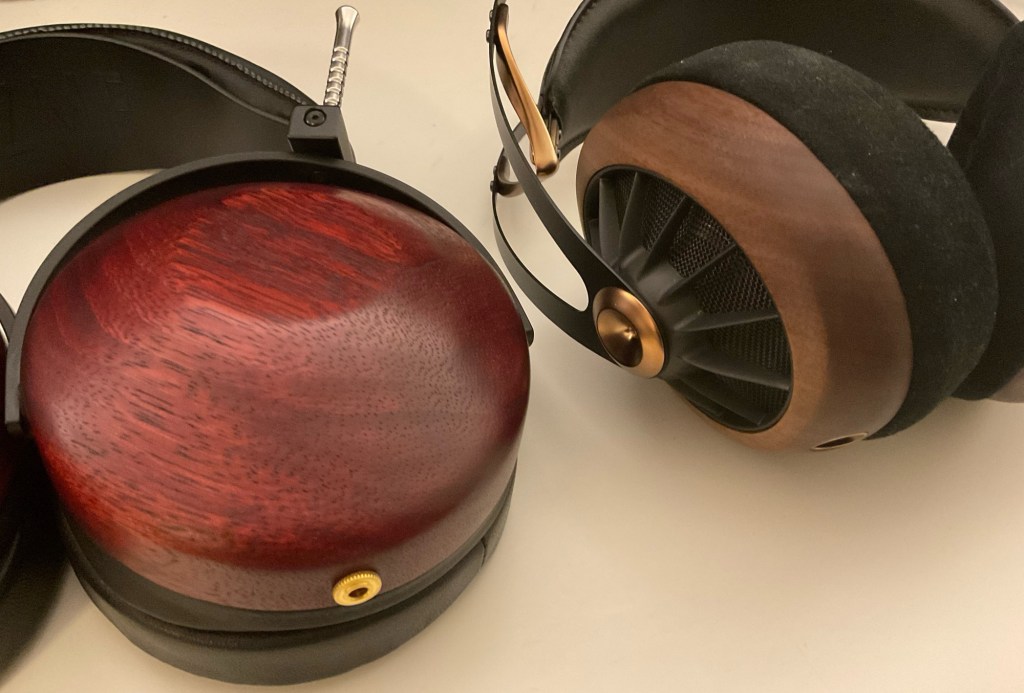
In terms of build and design, both cans are pretty well matched, the Bokeh trading blows with the 109 Pro in terms of aesthetics and comfort. ZMF are famous for their use of different types of wood in their designs, and with my Bokeh, the cups come in a gorgeous stained limba wood, easily looking as striking as the more stylised 109s. In terms of comfort, both headphones are closely matched, with the Bokeh feeling just a shade heavier on the head but spreading the weight equally well with their ZMF pilot pads.
Moving on to sonics, the Bokeh are another reasonably neutral sounding headphone, with a shallow U curve to the sound in the lower and upper frequencies. Like the Cal.1H, it isn’t quite as emphasised as the 109 Pro in the low end – the Bokeh definitely isn’t lacking bass, it just doesn’t quite match the fullness on display with the Meze headphone. The 109 Pro stage a little closer to the listener, being the more intimate of the two cans in comparison to the slightly more distant Bokeh, The 109 Pro just feel slightly “larger”, with the music forming more of a sphere around the head rather than laying out on the more traditional stage construction the Bokeh provides. The best way I can think to describe it is that the 109 Pros bring you into the middle of the recording studio with the band, with the Bokeh putting you a couple of rows back at their live gig.
Both headphones have plenty of emotion in the tuning, with the Bokeh excelling at drawing the emotion out of vocals, pianos and guitar due to the excellent timbre. in contrast, the Meze presents vocals with a slightly more stylised, sweeter tone and a little more throatiness in the lower end of the midrange.
Detail and resolution is also a draw for me – both headphones eke out the subtle nuances in the background of my usual test tracks, and separate and layer the sound well enough both to get swamped on busier mixes. The Bokeh gives an impression of a little more space around the instruments, mainly due to the slightly leaner (in comparison) notes – there is nothing thin about the Bokeh, it just doesn’t paint quite as thick a note or as fat a mid bass as the 109 Pro.
The treble probably differs more than the other two frequency range, with the 109 Pro carrying more energy and sparkle compared to the clean and more sedate stylings of the Bokeh.
Overall, both headphones excel at being a musical and enjoyable listen, with a similar tuning, top class build and accessories and a unique look. There isn’t a huge amount between them sonically, so it depends whether you are looking for something sweeter and thicker with a more intimate sound (the 109 Pro), or whether raw emotion and tonal accuracy are more important, in which case the Bokeh pulls ahead. I would state the obvious open back vs closed back difference, but the truth is that the 109 Pro aren’t that open sonically and neither headphone is particularly usable in transit (they are transportable rather than portable for most people). I can’t make a straight recommendation here, as both are excellent choices unless you are looking for an enormous soundstage or a detail monster of a headphone.
Meze Empyrean (open back planar, c. $2500)
The comparison with the Empyrean isn’t really fair, given the vast difference in price point, but I thought it was worth putting some brief points down here. Firstly, while the packaging and unboxing is good on the 109 Pro, the Empyrean takes it to another level, with a solid metal attache case as the carry case, additional pads and just an overall more premium experience. That carries through to the build – while the 109 is pretty impressive, the comfort, design and overall aesthetic of the Empyrean takes that to the next level, with more intricate cup design and an even more comfortable and pillow-like fit on the head.
Sound wise, these are more different than similar. The Empyrean has more bass heft in the low end, with a warmer and richer bass both in quantity and tone. Layering in the lower frequencies is exemplary when the Empyrean is powered correctly, showcasing the unique planar magnetic driver tech to dig out plenty of weight and gravitas. The 109 Pro is a little lighter in impact but feels a little snappier and more agile as a result.
In the mids, the Empyrean paints a thicker and creamier sonic picture, with vocals taking centre stage. It truly is a specialism of the Empyrean – the 109 Pro actually sounds like it has more surface level detailing due to the brighter and snappier tuning, but the Empy counters with sublime tone and weight, making female vocals almost like a guilty pleasure.
Treble is again more different than similar – the Empy treble is very laid back and gentle, and while it does have good resolution, the 109 Pro presents the details in a more obvious and in-your-face way.
Other technicalities aren’t a million miles apart, with the Empyrean edging the layering and separation but the 109 Pro coming across as the more rhythmic and dynamic (no pun intended) of the two headphones.
Overall, these are two very different tunings, but if you like the way Meze bring emotion and musicality into their headphones, which one you go for will probably either be determined by budget or by your preferred tuning style – there is definitely a lot less distance between them in terms of pure sound quality than the price difference indicates.

Final thoughts
Meze have hit it out of the park with these headphones. I was a fan of the 99 Classics, and the Empyrean was my at-home headphone (and one I thought I’d never part with) for a good chunk of the last two years. Then the 109 Pro came along – it isn’t the Empyrean, and it isn’t trying to be, but in terms of sheer musical enjoyment, this is the headphone that convinced me that you don’t always need the absolute best of everything to have something that is the best for you. It’s technically good, tuned brilliantly and sits on the head like a velvet feather. I was so impressed that I sold the Empyrean a little while back, and the 109s now sit in the same spot next to my desktop amp that the Empy once did.
To be objective, there are headphones out there (like the Empyrean) which will surpass the 109s in terms of layering, or richness and texture, or sheer resolution, but as an overall package, they give enough of everything for the listener to just kick back and lose themselves in the music. They won’t be for everyone, but they cover enough bases to be a contender for almost anyone. Add to the that the very competitive pricing for what is approaching top tier sound quality, and you have a compelling proposition. The 99 Classics brought Meze to people’s attention, and the Empyrean took them to the top table when it comes to pure sonics, but I think the 109s are good enough to become the model that Meze are remembered for, and a true audiophile staple like the HD600 or HD650 from Sennheiser.
So, if you have $799 spare and are in the market for a higher end open back, you coukd definitely do worse than checking these out. Impressive stuff.
 glassmonkey
 jackpot77
 TheOneInYellow
 trekasaurus
 Timothy Cose


 Audio Primate
Leave a comment